


Hotel guests expect seamless experiences that anticipate their needs. The entire hotel guest journey covers multiple guest touchpoints that occur before, during, and after their stay. From initial website discovery to post-stay follow-up, each touchpoint presents an opportunity to either exceed expectations or create friction.
Smart hoteliers recognize that every digital interaction shapes guest expectations. Booking a room is only the beginning — with hotel guest journey mapping, hotels identify touchpoints, strategically engage with guests at different stages, and build lasting relationships that drive loyalty and revenue.
Learn how to transform routine interactions into memorable experiences that guests actively recommend to others.
7 Essential Hotel Guest Journey Touchpoints
Guest satisfaction hinges on seamless interactions across every stage of their journey. The most effective approach combines strategic oversight with tactical execution at each critical moment. We highlight how to use customer journey mapping to identify the most essential hotel guest touchpoints.
1. Building a Responsive, High-Performance Website
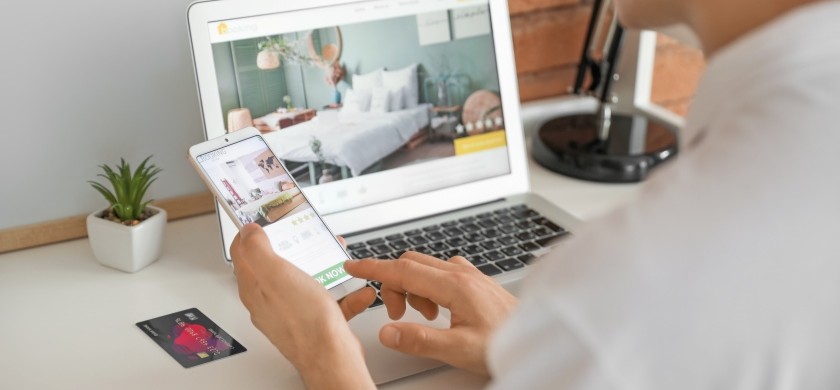
First impressions matter, especially when guests have countless options at their fingertips. Your hotel’s website is typically a first impression, so it needs to resonate with prospective guests through intuitive design and compelling content.
Modern guests expect flawless performance across every device they use. “Over 50% of all hotel bookings happen on mobile devices, especially among younger travelers,” reports Filipe Machaz, GuestCentric Co-Founder. Having a responsive website – one that offers a clean and easy experience across all types of devices – is a fundamental necessity for the first guest touchpoint.
Your website serves as your digital front desk, working around the clock to convert visitors into confirmed bookings. With that in mind, here are the essential elements that drive results:
- Speed and performance: Page load times under three seconds are non-negotiable. Websites that load slower than that lose 40% of visitors, with 53% bouncing after three seconds on a mobile device.
- Intuitive navigation: Clear pathways to booking, amenities, and contact information eliminate friction. Guests should find what they need within two clicks.
- Mobile-first design: With mobile bookings dominating travel decisions, your site must deliver the same seamless experience whether guests browse on smartphones, tablets, or desktops.
- Dynamic content: Real-time availability, pricing, and local attractions help guests make confident decisions without leaving your site.
- Integrated communication: Live chat, instant booking confirmations, and pre-arrival messaging streamline the entire reservation process.
Investing in professional photography, interactive online tours, and other web-related features can also provide high ROI in booking more guests.
Pro tip: Consider adding an FAQ section to answer common questions guests might have before booking. Turn your website into a marketing powerhouse by integrating SEO, social media, and email.
2. Strategic Social Media Presence
Having an engaging social media presence as a hotel guest journey touchpoint is critical for hotels for several reasons. Potential guests overlook visiting the hotel’s website entirely, solely relying on social media search engines and social pages for their information.
According to Expedia, 90% of Gen Z travelers make decisions influenced by social media. Smart hotels leverage Instagram and TikTok to showcase authentic experiences that resonate with younger demographics while building trust through user-generated content.
But beyond connecting with young travelers, social media as a whole is a crucial asset for a wide range of reasons:
- Real-time guest support: Social platforms enable immediate response to guest inquiries and concerns. Quick, helpful responses demonstrate your commitment to service excellence and often turn public complaints into positive testimonials.
- Authentic storytelling: Behind-the-scenes content and staff spotlights humanize your brand while user-generated content provides social proof that drives booking confidence.
- Increase bookings: Social media is a driving force to increase hotel bookings and sales rates, as it is an efficient way to maintain visibility among the proper audience. By leveraging the power of social media as a hotel guest journey touchpoint, hotels can create a strong brand, allow greater exposure worldwide, drive sales, and create and maintain better relationships with customers.
- Share visual content: Guests understand content visually, and social media is a valuable element of a hotel’s marketing toolkit. Without a strong, active social media presence hotels may lose the attention of potential travelers.
By leveraging the power of social media as a hotel guest touchpoint, hotels create a strong brand, drive more bookings, and build loyalty among their customers. Next to having a website, prioritizing Facebook, Instagram, Pinterest, and TikTok is vital when mapping the hotel guest journey.
3. Mobile-First Check-In Experience
Today’s guests expect to bypass the front desk entirely. According to 2025 research by Mews, 70% of American travelers now prefer checking themselves in using apps or kiosks rather than traditional front desk interactions (82% among Gen Z travelers).
Digital room keys and mobile concierge platforms function as 24/7 personal assistants that never sleep. Guests can take care of the entire arrival process before stepping foot on property through pre-arrival text messages and personalized recommendations.
Smart hotels integrate these systems with property management platforms to ensure requests route automatically to appropriate staff members with real-time updates. These systems also capture valuable guest preference data that drives future personalization opportunities and increases direct booking loyalty.
Mobile-first experiences create ongoing touchpoints that extend far beyond the physical stay. Push notifications about local events, weather updates, and exclusive offers keep your brand top-of-mind while guests who engage with mobile services show significantly higher likelihood of choosing direct bookings for future visits.
4. AI-Powered Personalization and Revenue Optimization
In hospitality, customized marketing and upselling techniques are game changers. Hotels can leverage hotel guest journey mapping to understand guest’s preferences and create custom-tailored offers that resonate with them. According to Paul Rantilla, Senior VP at Hospitality Ancillaries, “71% of consumers expect companies to deliver personalized interactions, and 76% get frustrated when this doesn’t happen.”
AI-powered systems can turn booking behavior, past stays, and preference into hyper-targeted offers that feel genuinely relevant. Instead of generic room upgrade pitches, smart hotels present personalized perks like spa packages for wellness-focused travelers or family-friendly experiences for guests with children.
“Research highlights the financial benefits of personalized customer journeys, suggesting that effective personalization strategies could enhance revenue and guest retention ROI by 10-30%,” says Joe Vargas, SVP & General Manager at Infor Hospitality.
The most successful properties have moved beyond basic demographic segmentation to predictive personalization. Their systems anticipate guest needs and suggest early check-in for frequent business travelers or recommend local experiences based on previous activity bookings.
The financial impact speaks for itself. Email marketing in hospitality is one of the most personalized and highest-performing marketing channels, generating $36 return for every $1 invested. Hotels that master this approach build the kind of loyalty that drives direct bookings and reduces dependence on costly third-party platforms.

5. In-Stay Technology Integration
The moment guests enter their room, they expect the space to respond to their preferences without fumbling for light switches or thermostat controls. Smart room technology has evolved from luxury amenities to operational necessities that directly impact guest satisfaction scores.
Modern guest apps serve as universal remote controls for the entire room experience. Guests can adjust lighting, temperature, and entertainment systems before they even arrive at their door. Voice-activated assistants like Amazon Alexa and Google Assistant allow hands-free control of room settings, with Marriott’s Smart Rooms demonstrating how voice commands create seamless interactions that feel natural rather than gimmicky.
Instead of calling the front desk and waiting on hold, guests can request extra towels, room service, or housekeeping through intuitive app interfaces that route requests directly to the appropriate staff members. Hotels using integrated guest app systems see 50% reduction in phone calls to the front desk while maintaining faster response times for guest requests.
6. Request a Positive Review
One of the final and most valuable touchpoints in a hotel guest’s customer journey comes within 24-48 hours of checkout. Your hotel’s reputation can skyrocket when guests share their positive experiences online.
Encouraging guests to leave positive reviews requires strategic timing and genuine engagement. Properties that train staff to actively request feedback see a 57% increase in review volume compared to passive approaches. Here a several ways to request reviews:
- Conversations: The most effective requests happen during positive interactions at checkout or when resolving guest concerns. Staff members can say something like: “I’m so glad we could make your stay special. Would you mind sharing your thoughts online to help future guests?”
- Multi-channel approach: QR codes on checkout receipts, in-room materials, and digital kiosks make leaving reviews effortless. SMS and email follow-ups with direct review links capture guests.
- Compliant engagement: Monthly draws for free stays or exclusive member benefits encourage participation without violating platform guidelines that prohibit direct review incentives.
- Respond to reviews: Hotels should respond to all reviews within 24-48 hours. Thoughtfully responding to online reviews can show guests that the hotel values feedback and is committed to improving the guest experience.
- Social media: Hotels can ask for reviews via social media pages and share positive mentions.
TripAdvisor found that 81% of people always or frequently read a hotel’s reviews before booking. By following these techniques, hotels can seamlessly request positive reviews from guests to bolster their online reputation.
7. Leverage Email Incentives for Future Stays
Email incentives offer guests special deals, discounts, and packages. Not only can this help build loyalty and encourage repeat bookings, but email incentives act as hotel guest journey touchpoints that provide a direct line of communication between the hotel and its guests.
Harness the power of email incentives in many creative ways:
- Predict personalization using AI-powered systems that analyze guest behavior to deliver targeted offers through their preferred communication channels — whether they use email, SMS, or app notifications. Guests receive offers that align with their booking patterns and interests.
- Send post-stay emails to guests thanking them for their stay and offering personalized rewards for future bookings. This helps establish a personal connection with guests and lets them know that the hotel values their experiences.
- Offer special offers and promotions to guests via email to encourage them to book future stays. This may include discounts, packages, and exclusive deals.
- Promote loyalty programs and offer rewards to guests who participate. This can include points for future stays, free upgrades, and other perks.
- Send special occasion emails to guests to promote upcoming events and encourage them to book future stays. This includes holiday promotions, seasonal offers, and guest milestones like anniversaries or birthdays.
- Notify guests who have started the booking process but haven’t completed it with abandoned cart emails. These emails offer incentives to encourage guests to complete their booking.
Optimize the Hotel Guest Journey with Cox Business Hospitality
A key component to enhancing the hotel guest experience and improving guest satisfaction is connectivity. Blueprint RF provides secure and reliable hotel WiFi services to ensure that guests have a high-speed Internet connection throughout their stay.
Via hotel automation and dashboarding solutions, Blueprint RF also helps streamline various aspects of the guest experience journey. This helps hotels better analyze customer data and improve their operations to support strategic initiatives. For more information, request a consultation.