Connectivity Solutions for Conference and Convention Centers: Managed WiFi, Private Wireless or Distributed Antenna Systems?

In today’s always-connected event environment, conference and convention centers are under more pressure than ever to deliver fast, reliable and secure connectivity. Attendees expect flawless WiFi for streaming, realtime collaboration, mobile event apps and digital engagement, while event organizers rely on stable networks for operations, IoT devices and onsite technologies.2 A connectivity failure isn’t just an inconvenience; it can undermine the entire event experience and the reputation of your venue.

This guide breaks down the three most important connectivity options available to modern venues: Managed WiFi, Private Wireless and Distributed Antenna Systems (DAS), and suggests which solution may be best for your facility based on size, event needs and long-term strategy.1  While each technology plays a distinct role, true performance in conference and convention centers is only achieved when they are engineered to work seamlessly together, delivering the high capacity, low latency and mission-critical reliability operators and attendees expect underscoring the essential value of coordinated expertise.

Understanding Your Connectivity Options

What Is Managed WiFi and Why Do Most Conference Centers Start Here?

Managed WiFi provides cost-effective, scalable wireless connectivity for most event needs, supporting laptops, smartphones, and tablets with secure, high-density access. It’s the foundational solution for small and medium venues. It represents the most common and accessible connectivity solution for conference and convention centers. This approach involves deploying enterprise-grade wireless access points throughout your facility, managed by either your internal IT team or an external service provider.

Key advantages include:

  • Cost-effectiveness for most venue sizes
  • Rapid deployment with minimal infrastructure changes
  • Scalable bandwidth that can adjust to event demands
  • Guest network management with customizable access controls
  • Analytics and usage reporting for operational insights

Why it matters: Managed WiFi provides the foundation for most event connectivity needs and supports conferences, trade shows and educational seminars where attendees primarily require reliable access for laptops, tablets and smartphones. A properly designed system can typically handle hundreds of concurrent users per access point.3

When Should Venues Choose Private Wireless Networks?

Private wireless is ideal for mission-critical events requiring guaranteed bandwidth, enhanced security and strong IoT support. It creates a dedicated, venue-controlled cellular network separate from public WiFi. Private wireless is ideal for mission-critical events requiring guaranteed bandwidth, enhanced security and strong IoT support. It creates a dedicated, venue controlled cellular network separate from public WiFi.

Key advantages include:

  • Guaranteed bandwidth unaffected by external network congestion
  • Enhanced security through private network architecture
  • IoT device support for smart building systems and event technology
  • Reduced latency critical for real-time applications
  • Carrier-grade reliability with built-in redundancy

Why it matters: Private wireless gives venues complete control over a dedicated cellular grade network, ensuring low latency, enhanced security and reliable performance even during peak demand. As IoT adoption accelerates, this becomes essential for future ready operations.

Why Do Venues Invest in Distributed Antenna Systems (DAS)?

DAS solves cellular coverage issues in large or complex buildings and supports massive attendee counts. DAS helps amplify and distribute cellular signals throughout large buildings using a network of antennas connected to a central hub. It helps improve phone and data service for all major carriers, especially during high-density events.

Key advantages include:

  • Comprehensive cellular coverage eliminating dead zones
  • Multi-carrier support for all major wireless providers
  • High-capacity handling for dense user environments
  • Improved emergency communications for safety compliance
  • Long-term infrastructure investment with 10+ year lifespans

Why it matters: DAS improves cellular connectivity for all major carriers, solving reception issues that WiFi cannot fix. Strong cellular connectivity enhances attendee satisfaction, exhibitor success and emergency communication. DAS is particularly valuable in mega venues or areas with structural challenges like underground spaces or steel reinforced sections.

Matching Solutions to Venue Size and Needs

Small Venues (Under 500,000 Square Feet)

Small conference centers typically benefit most from managed WiFi solutions as their primary connectivity infrastructure.1 These venues usually host events with 50-500 attendees, making enterprise-grade WiFi both sufficient and cost-effective.

Strategic considerations:

  • High-density WiFi access points in meeting rooms and common areas
  • Guest network management for simplified attendee access
  • Cloud-managed solutions for streamlined IT operations
  • Scalable bandwidth for peak events

Small venues should focus on reliability and ease of management rather than complex infrastructure investments. A well-designed managed WiFi system can handle typical conference connectivity needs while providing room for growth.

Medium Venues (500,000 to 1 Million Square Feet)

Medium-sized convention centers often require hybrid approaches combining managed WiFi with supplementary solutions.1 These facilities typically host diverse events ranging from intimate corporate meetings to regional trade shows with several thousand attendees.

Strategic considerations:

  • Robust managed WiFi as the foundation
  • Evaluate private wireless for high-security or IoT-heavy events
  • Review cellular coverage quality and access the need for DAS
  • Design network segmentation for different event types and security requirements
  • Plan for peak capacity events that may stress standard WiFi infrastructure

Medium venues benefit from flexible infrastructure that can adapt to varying event requirements while maintaining consistent performance standards across all facility areas.

Large Venues (Over 1 Million Square Feet)

Large convention centers typically require comprehensive connectivity portfolios incorporating managed WiFi, private wireless capabilities and often DAS.1 These mega-venues host major industry conventions, international conferences and events with tens of thousands of attendees.

Strategic considerations:

  • Enterprise-grade high-density WiFi
  • Private wireless networks for mission-critical applications and IoT systems
  • DAS for comprehensive cellular coverage
  • Network redundancy and failover capabilities
  • Advanced analytics and monitoring tools
  • Dedicated IT support teams or managed services

Large venues must treat connectivity as critical infrastructure requiring significant investment and ongoing management to meet diverse tenant and event requirements.

When to Choose Combination Solutions

Many modern conference and convention centers benefit from deploying multiple connectivity technologies to address different use cases and user requirements. Hybrid approaches become particularly valuable when:

  • Diverse Event Portfolio: Venues hosting everything from medical conferences requiring secure private networks to consumer trade shows needing high-capacity WiFi benefit from multiple solution types.
  • Building Challenges: Facilities with cellular dead zones, high-RF interference areas or mixed indoor/outdoor spaces often need combined DAS and WiFi infrastructure.4
  • Future-Proofing Requirements: Venues planning for emerging technologies like augmented reality demonstrations, autonomous vehicle displays or extensive IoT deployments should consider private wireless capabilities alongside traditional WiFi.3
  • Security Segmentation Needs: Events requiring different security levels, such as government conferences alongside public exhibitions, often benefit from separate private wireless and managed WiFi networks

Operational Efficiency and Effectiveness Benefits

Enhanced Attendee Experience

Reliable connectivity directly impacts attendee satisfaction and event success.2 Seamless WiFi access enables live social media engagement, real-time polling and interaction, cloud-based presentation tools and mobile event applications. These capabilities increase attendee engagement and provide valuable feedback for event organizers.

Revenue Generation Opportunities

Superior connectivity infrastructure becomes a competitive differentiator that can command premium pricing.2 Venues with robust connectivity solutions can attract higher-value corporate events, technology conferences and international conventions. Additionally, reliable internet enables value-added services like live streaming capabilities, virtual event hybrid models and enhanced exhibitor technology demonstrations.

Operational Intelligence

Modern connectivity solutions provide valuable analytics about space utilization, peak usage patterns and attendee behavior.1 This data enables more efficient facility management, optimized staffing levels and data-driven decision-making for future infrastructure investments.

Cost Management

A smart and effective connectivity design can drive cost savings by reducing manual network tasks, limiting IT intervention and optimizing energy use. Managed solutions also provide predictable monthly costs that simplify budgeting and financial planning.

Implementation Considerations

Bandwidth Planning

Calculate connectivity requirements based on expected attendee counts, device usage patterns and event types.3 Plan for peak usage scenarios while considering background traffic from building systems, exhibitor needs and staff operations.

Security Framework

Implement network segmentation by separating guest access from critical building systems. Consider compliance requirements for events in regulated industries and ensure guest network policies align with venue liability considerations.

Scalability and Future-Proofing

Invest in platforms built for scalability and adaptability, so they can keep pace with changing technology requirements and support future advancements. Consider emerging requirements like 5G integration, edge computing capabilities and increased IoT device connectivity.

Vendor Selection Criteria

Evaluate potential providers based on local support capabilities, network redundancy options, 24/7 monitoring and support, scalability options and integration capabilities with existing building systems.1

Maximizing Your Connectivity Investment

Modern conference and convention centers understand that connectivity isn’t just an expense, it’s a strategic advantage that can drive future growth. Managed WiFi, private wireless and DAS each play a crucial role in creating fast, reliable and secure event experiences. Smaller venues benefit most from strong WiFi foundations, while larger venues often require hybrid solutions that pair WiFi with private wireless or DAS to ensure complete coverage and capacity. By choosing the right mix and partnering with an experienced provider, venues can enhance attendee satisfaction, streamline operations, support advanced event technologies and future‑proof their facilities for the next wave of digital innovation.

Why Coordinated Expertise Matters

Whether you’re managing a small conference facility or a major convention center, choosing the right connectivity partner is essential. Cox Business provides tailored connectivity solutions for hospitality and event environments, helping you deliver high-performance WiFi, secure private wireless and robust cellular coverage.

With Cox, you gain from:

  • Expert Consultation: Our team partners with you to understand your venue’s unique needs and design a purpose-fit solution shaped around your space, event types and budget.
  • End-to-End Support: From planning and installation to ongoing monitoring and 24/7 support, we stay with you at every step to help keep your network performing before, during and after every event.
  • Future-Ready Infrastructure: We build scalable solutions that help you stay ahead of technology trends and support emerging applications like IoT, hybrid events and advanced analytics.
  • Industry Expertise: Through Cox Hospitality Network and Cox Private Networks, you gain expertise for hospitality environments and private LTE/5G deployments, equipping your venue for today’s demands and what comes next.

Let’s design a connectivity strategy that elevates attendee experience, streamlines operations and sets your venue apart.


Works Cited

  1. International Association of Venue Managers. “Technology Trends in Venue Management 2023.” IAVM Publications, 2023. https://www.iavm.org/
  2. Event Industry Council. “Global Event Industry Recovery Report.” EIC Research, 2023. https://www.eventsindustrycouncil.org/
  3. Cisco Systems. “Cisco Annual Internet Report (2018–2023) White Paper.” Cisco Networking, 2023. https://www.cisco.com/c/en/us/solutions/collateral/executive-perspectives/annual-internet-report/white-paper-c11-741490.html
  4. Wireless Infrastructure Association. “DAS and Small Cell Market Report.” WIA Research, 2023. https://wia.org/

A Guide To Social Media Engagement With Sports Fans In Stadiums

Nothing beats watching a sports game in person. It’s little wonder millions of fans leave the comfort of their homes to swarm stadiums and see their favorite teams play live.

In addition to seeing the game in person, stadiums allow fans to sit next to other fans with similar interests, develop a personal bond with the team, and even access live entertainment options before, during, and after the game. Altogether, stadiums can offer the ultimate fan experience.

As the world embraces large-scale digitization, emerging technologies can even further improve how fans experience live sporting events. To attest to this, a study by Statista showed that an average of 69% of sports fans agree that technology has enhanced their viewing experience.

Social media has now, more than ever, become ingrained within stadium culture. More than just a way to keep fans up to date on team news, social media engagement provides a means by which stadiums can market to and interact with fans for a small cost and a high return on investment.

Why Is Social Media Engagement Important?

In an age where almost everyone is online, social media has become an excellent way for brands and businesses to reach a larger audience. This digital familiarity has led to content saturation, requiring a targeted effort in keeping today’s audience interested and engaged with any piece of digital content.

To navigate this saturation, stadiums need to market and push content effectively. When publishing content to social media, the goal should be for fans to actively engage with your content in the form of likes, comments, shares, or saving the content for later.

Social media engagement, however, is much more than gaining a high following. It’s all about communicating in an online community and building a strong camaraderie with fans via your social channels. Not only do you want your followers to interact with your content, but you also want them to feel as if they are a part of your brand’s story.

Social Media Fan Engagement in Stadiums

5 Effective Marketing Strategies for Social Media Fan Engagement in Stadiums

Social media engagement can serve as a particular boon to stadium-owners. Not only can social media help a brand engage with fans in a stadium, but it can also help a brand to reach users across the globe — leading to even more fans flocking to the stadium in the future.

To help you create a memorable experience, we’ve compiled a list of five of the most successful ways to entertain stadium fans and increase social media engagement at sporting events.

1. Implementing Hashtag Campaigns

One key draw of sports is the sense of community. Sports fans love to talk about the game — whether through cheering on their own team or talking trash about another. Hashtags offer a key way to connect fans by segmenting posts based on specific interests.

With a well-thought-out and branded hashtag, stadium-goers and fans at home get an opportunity to interact with the game in real-time. Posting from the stadium using a hashtag, fans watching the game in-person can share footage of high-octane plays directly from the stadium. This allows fans across the globe to take in stadium views and feel incorporated into the live experience. It also gives the stadium account a way to display what fans are doing across the venue, possibly allowing them to highlight certain concessions stand deals or PR events that other visitors may have been unaware of.

When a unique hashtag is created, users are encouraged to use it while engaging in online discussions along with posting pictures and videos. Eventually, this hashtag may expand beyond the constraints of your own marketing efforts, becoming ingrained in fan culture and driving even more revenue to your stadium.

2. QR Code Implementation

QR codes are another excellent approach to encourage online interactions with stadium fans. Stadiums can place QR codes throughout the venue for visitors to scan and automatically open social media apps such as Twitter and Instagram — giving fans an instant opportunity to share their experience online.

Stadiums should strategically place QR codes throughout the venue at key spots of engagement, such as concession stands or photo opportunity booths. Then, fans can scan the QR code to immediately share their experience. QR codes can even prompt stadium-goers to use a branded hashtag — synergizing your stadium marketing strategy.

3. Sharing Online Polls

As mentioned previously, one thing that makes sports so engaging is the ability to discuss opposite opinions on sporting events. When watching a soccer game, for example, the “Man of the Match” varies greatly depending on who you ask. Fans are passionate about these issues, and will jump at the opportunity to share their opinions.

Online polls on social media give fans a more objective way to discover the majority opinion among their peers. Polls can ask targeted questions to stadium-going fans — possibly prompting an in-person debate and rallying fans to encourage others to vote and prove their point.

Online polls are also great for feedback. Stadium-planners can use them to get suggestions, or ask fans about certain stadium features. By engaging in feedback, fans feel like they are a part of a larger community within the stadium as a whole, which works to help increase their investment in the team and drive a positive association with their visit to the venue.

4. Personalized Interactions With Fans Across The Globe

Personalized social media interactions go a long way in improving the stadium experience and subsequently reaching fans anywhere they are in the world.

Because not all fans can attend events in-person, it is important to make sure that your stadium extends its social media presence beyond the venue itself. To do this, there are many tactics the stadium can take to incorporate at-home fans into the experience, such as hosting a live stream where stadium representatives or sports announcers read off Tweets and questions from users in real time.

Additionally, social media can help replicate the environment of the stadium by prompting fans to participate in virtual challenges, utilize image filters, or engage with the stadium’s social channel to possibly win branded prizes. There is also an opportunity to display at-home fans social media images of the game on an in-stadium display and live broadcast.

Simple interactions like these help to establish a positive association with a business and build an online community. As your stadium builds a reputation for personalized engagement that extends beyond its walls, more fans will flock both to your social page and your in-person venue.

Featured On A Stadium Screen

5. Potential To Be Featured On A Stadium Screen

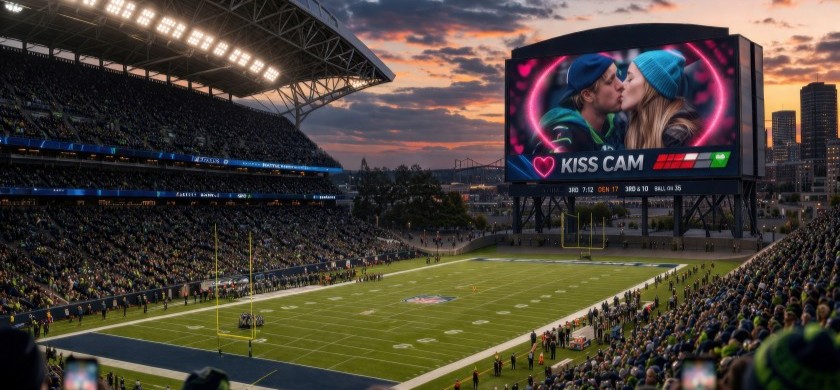
From kiss-cams gone wrong to dance battles, fan camera videos from sporting events go viral all of the time. Fans and online users alike love to watch the spontaneity of an event-goer acting humorously on camera.

Capturing fans in the stadium doing exciting activities and sharing those moments in real time via social media can be a great way to drive fan engagement. By posting online using hashtags and tagging stadium accounts, fans can connect with stadiums to feature themselves on the big screen. Once featured, fans can share that those moments made the big screen — offering yet another opportunity for online fan engagement.

Stadiums should also focus on creating activities people can easily engage with. Stadium screens can be used to pay tribute to long-time match attendees, wish a fan a happy birthday, or get the audience to engage in an in-person game. Whatever the tactic, fans will happily engage in a unique digital experience within your stadium.

Drive Fan Engagement in Stadiums

A great stadium experience boosts fan engagement, especially when using effective social media strategies. In order to implement these strategies and give fans a flawless digital experience, however, stadiums need reliable internet connectivity to allow visitors uninterrupted access to social media.

Cox Business Hospitality offers cutting-edge WiFi solutions and internet connectivity that help revolutionize the fan experience while assisting today’s modern stadiums in providing a higher degree of fan engagement. Reach out to us today for powerful networks and world-class implementation that drives fan engagement in stadiums.

The Hidden Costs of End-Of-Life Hardware

Many hotels around the country are quietly losing millions of guests, and it’s not because of a lack of staff or decreased demand. The truth? This loss is due in large part to end-of-life hardware.

What is end-of-life hardware? End-of-life hardware refers to old computer equipment sitting in back-office areas. It poses more risk and financial drain than anything else.

A recent report on the hospitality industry found that hotels are spending up to 75% of their IT budgets just to keep legacy systems running. This is not a small percentage; it is a structural drain that grows by the quarter.

End-of-life hardware doesn’t fail loudly. Instead, it fails gradually. Over time, the costs associated with this faulty equipment grow incrementally due to unpatchable security risks, increasing repair costs, slow internet speeds and more. Each guest will be able to see every single flaw.

In this article, we break down what these failures cost you in dollars and cents. The good news? You can benefit and even grow your business with a planned, intentional approach to managing your hardware through its entire lifecycle. 

What “End-of-Life” Actually Means

All hardware products have an expiration lifespan. Once that time frame ends, manufacturers will no longer produce or provide security patches, firmware updates and technical support for those products. This is called the “end-of-life” (EOL) and is typically overlooked by most hotel staff until it causes problems.

Hotel-related hardware includes wireless access points, routers, switches, servers, PMS terminals and room-based hardware. Each of these categories is critical to providing connectivity, security and functionality for your guests at all hours of the day.

There is a key difference between a device that’s simply turned on and one that is being maintained. As long as a device remains powered on, its ability to function does not necessarily mean that it will be supported. When the manufacturer’s warranty or technical support ends (or has already expired), the manufacturer’s protection ends as well.

This transition is referred to as the EOL cliff. Typically, a hotel team finds out their property has gone over this cliff after a failure occurs. This failure is often detected late, the result of several months of slow buildup. 

The Security Exposure You Cannot Price

End-of-life hardware risks are not just hypothetical. The Ponemon Institute’s research found that almost 60% of cyberattack victims reported that a readily available patch would have prevented their breach. That sounds just like the access point or switch in your network closet that stopped getting updates last year.

Cybersecurity has become very important in the hospitality industry. The Cost of a Data Breach Report from IBM highlights that the average cost of a breach was $4.44 million globally. Between 2023 and 2024, the cost of breaches in the hospitality industry rose 13.7%, one of the largest increases among the 17 industries IBM examined.

PCI DSS compliance depends on hardware that can receive security updates. When payment processing devices go unsupported, maintaining the standards required for card processing becomes difficult to guarantee. If a property fails an audit, it may have to pay fines, fix problems and possibly have its card processing privileges suspended.

The cost of a breach is devastating enough on its own. But in the hospitality business, the damage to your reputation can last even longer than other industries. Guests publicly share negative experiences with a hotel brand and it can take years to win back their trust.

The Maintenance Money Pit

The first sign that your hardware is beginning to show its age usually occurs after about three years. It will begin to fail more frequently, causing your performance to vary from day to day. Your repair calls will also begin to pile up. Even though the hardware may still be working, the cost of maintaining it this way increases each quarter.

It will eventually reach the point where you cannot find replacement parts for the old hardware. The special vendors who offer support will request contract renewals or undergo business changes, both leading to increased costs. Eventually, the replacement parts will disappear from any reliable supply chain.

This is how the “break-fix” trap operates. Most people see each individual repair as being justifiable. However, if you continue to operate using a pattern of only repairing your property when something breaks (reactive), most likely you will pay your property much more money than you could have paid by operating within a scheduled cycle of replacing the hardware (proactive).

A Deloitte study on proactive asset management reported that poor maintenance strategies can reduce an asset’s productive capability by as much as 20%. When a hotel has a network system that supports virtually all guest and back-of-house functions, that type of loss adds up quickly.

Capital expenditures are worsening the problem. Prices for hardware increased significantly in 2025 and 2026 as a result of supply chain disruptions and tariff-induced price volatility. Hotels that delayed upgrading their networks are currently facing a higher-priced hardware market with older hardware and little ability to adjust budgets.

The Performance Tax on Guest Experience

Aging equipment in your network typically doesn’t suddenly fall apart. Rather, its performance gradually throttles bandwidth, drops connections under heavy usage, and creates “dead zones” during high-traffic periods. Since this decline happens so slowly, most property owners will become accustomed to the decline in service levels before realizing how much ground has been lost.

2025 research conducted by Siemlus found that 92% travelers expect Wi-Fi to be fast and reliable at every hotel they stay at. Additionally, negative hotel reviews about connectivity issues made up almost one-third of all negative reviews.

Weak networks also cause problems outside of the guest room. Many mobile apps will freeze or stall because of poor connections. In-room streaming may buffer due to poor connections. Guest engagement with social media and loyalty apps is reduced due to poor connections. All of these failures reduce what guests came to a property for.

Aging hardware will get through low occupancy times, but peak season is too much for old equipment. When a property sells out for a weekend, many devices are connected to the network at once. This is when complaints from the public arise and when review ratings start to drop.

Don't waste staff or IT resources with old, outdated hotel technology systems.

The Operational Drag of EOL Hardware on Staff

End-of-life hardware doesn’t typically work well with modern hotel software. Current network infrastructure is what hotel PMS platforms, POS systems, mobile key solutions and digital concierge tools are made for. When the hardware can’t keep up, integrations fail, data syncs fail and front-line staff have to deal with the problems.

The workarounds come quickly. Before a check-in loads, a front desk agent refreshes the screen three times. Two systems stopped talking to each other, so the hotel manager has to enter data by hand again. These patches may not seem like much on their own, but they add up to hours of lost work time over the course of a shift.

IT teams have to pay a different kind of cost. Every hour spent trying to fix a hardware problem is an hour not spent making the property better in ways that really matter. It’s hard to break the reactive cycle when the equipment keeps needing your attention.

It’s harder to put a number on the human side of this than a repair bill. But it shows up in staff frustration, slower service, and, over time, in turnover.

The Compliance and Liability Cliff

PCI DSS 4.0 includes an additional requirement that organizations annually identify hardware and software technologies and document a remediation plan for any hardware nearing end-of-life. This is no longer just a recommended best practice for hotels accepting credit cards; it is a requirement.

If your hotel is running equipment past its end-of-life, you may have serious issues when assessors visit. There is no way to update older hardware or software, creating vulnerabilities that the auditors will immediately flag. As a result, you may face fines, forced remediation in a timely manner, or lose the right to process credit cards.

Additionally, cyber-insurance companies are applying similar pressure. Cyber insurance providers are now denying claims and non-renewing policies after discovering unsupported devices during underwriter reviews. In fact, many cyber insurance policies specifically exclude breaches caused by hardware or software that is out of vendor support.

Hotels within large enterprise groups with multiple properties face the most risk. If one un-managed EOL device exists across several dozen properties in a group, it can easily surface in a portfolio-wide audit. “We did not know it was end-of-life” will not protect you from being held accountable if the requirement to monitor such devices is written into the standard.

End-of-Life Hardware Best Practices

Hardware lifecycle management is not a one-off IT project. It is a business strategy that defines how much money a property spends, how reliable the equipment is and how quickly the equipment can adopt technology that guests will expect next year.

Build a Refresh Plan Before You Need One

The first step is identifying what technology you have. An asset inventory across your entire property, mapped against each device manufacturer’s EOL, identifies where exposure lies. When conducting this exercise for the first time, hotel teams typically discover they are operating multiple devices past their support window.

Once you know what you have, a structured refresh schedule replaces guesswork with capital planning. Organizations implementing proactive lifecycle management strategies can experience up to a 25% reduction in operating expenses and a 20% reduction in overall infrastructure costs compared to those running reactive break-fix models. A planned replacement plan converts unpredictable emergency spending into a forecastable budget line that ownership and finance teams can plan around.

In addition to lower operating expenses, modern hardware offers energy efficiency benefits. Newer network equipment and servers run at lower operating temperatures, consume less power and require less maintenance over time. The savings on energy and cooling costs offset a portion of the refresh investment costs.

Work With a Partner Who Knows the Timeline

A managed network partner builds refresh schedules based on manufacturer support timelines, your budget cycles and your occupancy calendar. By scheduling upgrades when the hotel has minimal guests (during low-occupancy periods), you can limit the guest impact. Phasing in rollouts allows for spreading capital investment over multiple fiscal years, so that there isn’t an all-at-once disruption to the hotel’s operations.

In order for hotels to be positioned to effectively incorporate the next wave of guest-facing technologies (such as AI-driven personalization, smart room controls and seamless mobile integration), they need to recognize their infrastructure as a living investment. Otherwise, they’ll spend the next few years playing “catch-up” with hotels that are investing in their infrastructure today.

Get rid of end-of-life hardware and upgrade your hospitality technology

How Blueprint RF Can Help

Blueprint RF was built specifically for hospitality, and hardware lifecycle management sits at the center of what a managed network partnership delivers. Rather than waiting for aging equipment to cause a problem, Blueprint RF monitors network health in real time, tracks equipment performance and works with properties to plan hardware refresh schedules that align with budget cycles and occupancy windows.

The DG2 platform, Blueprint RF’s next-generation server solution, brings modern architecture, end-to-end integration and 40 gigabits per interface that extends the reliability and longevity of modern hotel networks. For hotel teams who would rather focus on guests than on network closets, Blueprint RF provides the proactive oversight, 24/7/365 support and strategic planning that turns infrastructure from a liability into a competitive advantage. Get in touch to learn more.

How To Use Software to Improve Hotel Guest Experiences

Guest expectations are fundamentally shifting in ways that hoteliers must strategically embrace. Today’s traveler arrives with a smartphone in hand, looking forward to a tech-savvy stay. Some travelers are even willing to pay a higher price than they normally would just so they can receive the integrated experience they want.

TrustYou’s research has shown that 61% of travelers today are willing to spend more to personalize their travel experience. Hotels are responding. The hotel and hospitality technology market reached $7.57 billion by 2025 and is expected to grow at approximately 7% per year through the end of the decade.

Hotel guest experience software is the means by which innovative hotels meet this new reality. This type of software meets each phase of the guests’ journey, including when they make a reservation or book online, all the way up to their departure and afterwards.

What Is Hotel Guest Experience Software and Why Does It Matter?

Hotel guest experience software is any digital platform that makes it easier for guests to interact with your property. 

This software includes platforms for pre-arrival communication, digital check-in, in-stay messaging, service requests, loyalty management and post-stay feedback. If it has anything to do with the guest journey, it fits into this group.

This is not the same as back-of-house systems like HR, accounting or inventory management. The business runs on those tools. Guest experience software affects how guests feel about their stay. More and more, the best platforms unify multiple functions. They help operations teams understand what guests need in real time, which directly leads to better business and a better experience for guests.

The guest journey can be simplified into four parts: 

  • Before they arrive
  • When they arrive
  • While they are there
  • After they leave

Guest engagement software can now add tangible value to each stage. When properties don’t keep up with digital tools, the effects usually show up first in online reviews, then in loyalty metrics and finally in repeat booking rates. The digital guest journey used to be a way to stand out from the competition, but now it’s just a basic requirement. When there is a gap, guests notice it.

8 Ways Hotel Guest Experience Software Drives Better Stays

While the right hotel technology will certainly help your property, it won’t turn your hotel into a totally different place overnight. However, if you implement thoughtful applications of hotel technology throughout every phase of the guest journey, those applications can compound to create a seamless operational environment that delivers services rapidly and increases levels of personalized service. 

A good software system makes every part of the hotel customer experience better, from booking to check-out

1. Personalized Pre-Arrival Communication

A large part of what we consider the guest experience starts long before a guest arrives at their destination. With automated messaging capabilities, hotels can begin sending guests targeted email and/or SMS communications prior to check-in to promote room upgrades, dinner reservations and local area attractions, based on historical data in the guest’s profile. A timely communication sent to the guest before they arrive will set the stage for quality expectations, drive ancillary revenue and clearly demonstrate to the guest that the hotel staff is attentive.

2. Seamless Digital Check-In and Mobile Key

A 2025 Mews survey found that 70% of American travelers use apps, chatbots and other digital tools to interact with hotels rather than speak directly with people at a physical property. Hotel guest chatbots help personalize each guest’s experience based on their interests. These same digital platforms also allow hotels to provide proactive support and services, which results in improved customer retention rates.

3. In-Stay Messaging and Request Management

The two-way communication platform allows your guests to send messages to your employees in real time via their smartphone or your hotel’s app. As guests enter their request information into this portal, their requests are documented, routed and completed faster than by phone. Additionally, all requests are tracked and recorded, allowing you to provide your guests with a more seamless experience during their stay.

4. Smart Room Control Systems and IoT Integration 

Guests can now manage their smart room technology controls (lighting, TV, thermostat, etc.) via a connected system in their rooms, using an interface on their smartphone or an in-room panel. When these systems integrate with the guest’s profile data, your guest’s preferred settings can be loaded before they open the door. This type of personalization strategy creates loyalty with your guests.

5. Real-Time Service Recovery

There’s no avoiding the fact that guests will encounter issues during their stay. It’s the speed at which you resolve these problems that differentiates top hotels from others. By using in-stay guest feedback tools to identify guest concerns, your staff has an opportunity to address a problem before the guest posts a negative comment about you online. All hotels that address service failures as soon as possible typically outperform other hotels in terms of guest satisfaction ratings and repeat bookings.

6. Food and Beverage Integration

By connecting mobile ordering tools directly to POS systems, guests can easily order room service, make reservations or request food and beverage delivery to their location without having to relocate to the bar or dining area. If done correctly, apps that allow guests to order food and beverages on-site increase each guest’s average spend per transaction, minimize ordering friction and create additional revenue streams for the property. ]

7. Loyalty Program Integration and Recognition

By connecting CRM systems to all aspects of a guest’s stay, every interaction with the guest creates a connection back to the CRM system. This allows front-line staff to recognize when a guest is a returning guest or a loyalty member and therefore provide personalized recognition without relying on memory or manually noting who is loyal to the brand. Almost 80% of guests cite personalized amenities as a key reason for returning to a hotel, a number that rises to 89% among Gen Z travelers.

Hotel reviews are a crucial step in the customer journey

8. Post-Stay Feedback and Reputation Management

A hotel’s relationship with a guest does not stop once they leave your property. Using automated post-check-out survey and review request tools allows hotels to collect reviews at scale, manage responses to negative comments more quickly and identify underlying operational issues that could negatively affect future guests. Cornell research estimates that a 1-point increase in a hotel’s review score on a 5-point scale (e.g., from 3.7 to 4.7) can enable the hotel to increase its price by 11.2% without any decrease in occupancy. These results are typical of what happens when a hotel takes post-stay guest feedback seriously.

The Network Is the Foundation

All of these capabilities depend upon your network. Pre-arrival messaging, mobile check-in, in-stay request systems, smart room controls and real-time guest feedback rely on fast, consistent connectivity. Where a network underperforms, the software running on that network will also falter. Guests do not distinguish between a bad app and a bad Wi-Fi signal. They just remember a bad experience. The technology investment a hotel makes in guest experience software is only as strong as the infrastructure it runs on.

How Blueprint RF Fits In

Blueprint RF specializes in managed network solutions built specifically for the hospitality industry. From designing and deploying high-performance wireless infrastructure to proactively monitoring network health and planning hardware refresh cycles, Blueprint RF makes sure the foundation stays solid so the software on top of it can do its job. 

Properties that partner with Blueprint RF get a team that understands the full technology picture, not just the equipment in the closet. When the guest experience software your property depends on needs a network that never lets it down, that is exactly what Blueprint RF is built to deliver. To learn more, contact Blueprint RF.

Micro Events: Essentials for a Successful Event Venue

What is a Micro Event?

A micro event is a smaller scale event planned with a more focused, targeted group in mind. While any gathering under 150 people can qualify as a micro event, most host somewhere between 10 to 15 people. As opposed to the larger scale, broader events typically found in convention centers, micro events tend to market towards more niche groups, exploring a single, specific topic or theme with a saturated viewpoint.

A successful concept for a micro event would likely be the topic of a single speaker or panel at a larger-scale event. For example, while a larger event may explore hotel WiFi in general, a micro event would zoom in on upselling & cross-selling hotel guests using in-room entertainment systems. 

Creating Successful Micro Event Spaces Within Your Hospitality Business

For hospitality event planning, bigger isn’t always better. Event organizers are increasingly shifting their focus from large-scale gatherings to more intimate, highly curated experiences that prioritize connection, personalization and impact. Enter micro events — a fast-growing trend that’s reshaping how venues attract guests, drive revenue and differentiate their offerings.

For hotels, resorts and event spaces, this shift presents a major opportunity. Micro events require less space and fewer resources than traditional conferences, yet often deliver higher engagement and stronger returns per attendee. With the right strategy and infrastructure in place, hospitality venues can transform underutilized areas into premium event environments tailored for these smaller, high-value gatherings.

In this blog, we’ll explore what micro events are, why they’re gaining traction and how your venue can successfully design and profit from them. Read on to learn more.

Different Types of Micro Events

Pretty much any concept can be a micro event with the right execution, focus and format. Some key event ideas that are especially successful for micro events include:

  • Educational workshops taking a deep dive into a skill or topic for a more hands-on, focused discussion group.
  • Networking events for specific fields or demographics within those fields.
  • Online connected team-building games for smaller teams or organizations.
  • VIP activations for high-potential future clients and customers.
  • AR scavenger hunts & activities, from online-integrated escape rooms to photo & video challenges.
  • Brand events such as company anniversaries, new product launches or product demos.

Whether using these ideas for activities or any number of other concepts, micro events provide powerful, curated experiences for more niche audiences. Event organizers are taking notice; a Statista study from 2023 found that one out of five respondent marketers looked to increase spending on VIP activations, a notable pillar of micro event planning.

With more & more hosts looking to leverage the power of micro events, making your venue a viable location can lead to substantial revenue generation. What kind of venues, then, can actually host micro events?

micro event venues

What Kinds of Venues Can Host Micro Events?

One of the biggest advantages of micro events is their flexibility. Unlike large-scale events that require expansive ballrooms or convention halls, micro events can thrive in a variety of hospitality environments, including:

  • Boutique hotel meeting rooms and lounges
  • Rooftop bars and outdoor terraces
  • Private dining rooms within restaurants
  • Co-working spaces and business centers
  • Poolside or resort cabanas
  • Executive suites or penthouse spaces

This versatility allows hotels and hospitality venues to monetize underutilized spaces, transforming them into premium, revenue-generating environments. With the right setup, even smaller or unconventional spaces can deliver high-impact experiences.

Benefits of Hosting Micro Events in Hospitality Venues

For hospitality businesses, micro events offer a unique opportunity to enhance both revenue and guest experience without the logistical complexity of large-scale events. Key benefits include:

  • Higher Revenue Per Guest: micro events often command premium pricing due to their exclusivity and personalized nature, driving greater revenue on a per-attendee basis.
  • Increased Space Utilization: Underused areas (such as lounges, meeting rooms or outdoor spaces) can be repurposed into profitable event venues.
  • Enhanced Guest Engagement: Smaller group sizes allow for more personalized service, deeper interactions and stronger brand connections.
  • Repeat Business Opportunities: micro events foster stronger relationships with attendees, increasing the likelihood of repeat bookings, extended stays and future events.
  • Operational Efficiency: With fewer attendees, staffing, logistics and coordination become more manageable while still delivering high-impact results.

Turning unconventional spaces into key drivers of revenue, micro events can add substantial value to your hospitality venue. To run a successful micro event, however, your venue needs to be equipped with the right technological infrastructure.

micro event space technology

What Technology Does a Venue Need to Host a Micro Event?

While micro events are smaller in scale, their technology expectations are anything but. Attendees still demand seamless, high-quality digital experiences, making robust infrastructure essential. Key micro event technology considerations for your venue must include:

  • Durable WiFi Bandwidth: Even at microvents, venues need the right amount of bandwidth to support multiple event participants across several smart devices.
  • Accessible, Dynamic Splash Pages: Responsive log-in portals ensure guests have easy access to your network while keeping non-attendees out.
  • Low-Latency Connectivity:  Real-time applications such as video conferencing, interactive demos and live polling depend on low-latency networks to function without disruption.
  • Scalable Network Infrastructure: Venues should be able to quickly adapt bandwidth and access points based on event size, ensuring consistent performance across different use cases.
  • Integrated AV & Smart Technology Support: From wireless screen sharing to IoT-enabled experiences, modern micro events rely on seamless integration between network infrastructure and event technology.

Implementing these technologies requires a strategic approach and a reliable partner to ensure consistent, high-performance connectivity across every event.

Partner With a Trusted Provider of Wireless Technology to Become a Destination Micro Event Venue

Micro events may be smaller than full-size conferences, but they still demand enterprise-grade connectivity to deliver the high-quality, personalized experiences attendees expect. 

Without a reliable network foundation, even the most well-planned event can fall short.

As a trusted provider of high-speed connectivity solutions, Hospitality Network empowers venues to support everything from intimate VIP activations to tech-driven interactive experiences. With scalable infrastructure designed specifically for hospitality environments, your venue can confidently host micro events that drive engagement, revenue and long-term guest loyalty.

Whether you’re optimizing hotel, convention center or special events WiFi,  the right technology partner ensures every micro event runs flawlessly — no matter the size. Contact us today. 

Key Ideas to Enhance Hotel Guest Experience with Technology

How to Enhance the Guest Experience in Hotels

In this blog, we’ll explore practical, high-impact ways hotels can use technology to elevate guest experiences and drive long-term loyalty. Here’s a quick snapshot of ways to improve guest experience:

  • Deliver seamless, tech-enabled experiences across every guest touchpoint, from booking to post-stay.
  • Use data and personalization to create more meaningful, memorable interactions.
  • Elevate in-room experiences with integrated entertainment and streaming access.
  • Leverage AI and automation to improve service speed, consistency and efficiency.
  • Drive revenue and satisfaction with targeted upsells and tailored communications.
  • Ensure reliable, high-performance connectivity to support every digital experience.

Learn How To Improve Guest Experiences in Hotels and Increase Satisfaction After Stays

In today’s experience-driven hospitality landscape, a comfortable room is nowhere near enough to wow guests. Modern guests expect seamless, tech-enabled stays that exceed the convenience of their everyday digital lives. From the moment they begin to research a property to long after checkout, every touchpoint plays a role in shaping overall guest satisfaction.

To meet these rising expectations, hotels are increasingly turning to technology to enhance both service delivery and operational efficiency. Whether it’s leveraging data to personalize interactions, enabling streaming and in-room entertainment or deploying AI-driven support tools, the right innovations can transform ordinary stays into memorable experiences. 

How To Measure Hotel Guest Satisfaction

Hotels measure satisfaction with guest experiences through a variety of online-integrated methods, including reputation management software, guest experience surveys and social media monitoring. Some of the most effective, widely used methods include: 

  • Reputation Management: Online reviews on platforms including Yelp, Tripadvisor, Google aggregate overall guest satisfaction scores and provide specific examples of feedback.
  • Guest Experience Surveys: Featuring curated questions based on your current business objectives, polls sent to guests after their stay can provide more curated feedback for your hotel. 
  • Social Media Monitoring: Comment sections in popular platforms such as Instagram, Facebook, and Twitter offer fresh, unfiltered takes on guest experiences.
  • Guest Analytics: Integrated PMS platforms track key indicators of guest satisfaction including retention rates and average lifetime value.

From written reviews to more explicit scores, each of these solutions offer unique, valuable metrics for hotels measuring the effectiveness of guest experiences.

ideas to enhance guest hotel experience

Six Ideas To Enhance the Hotel Guest Experience

While there are dozens of ways to enhance guest experiences at your hotel, we’ve curated six of the ones we find most effective. These recommendations offer powerful ways to enhance guest experiences at your venue, whether through analysis of guest satisfaction or through a direct improvement of the experiences themselves. Read on to dive deeper into each.

1. Integrated In-Room Entertainment Platforms

Integrated in-room entertainment (IRE) platforms serve as a centralized hub for guest engagement within the hotel room. These systems go far beyond traditional cable TV, offering interactive interfaces that allow guests to browse channels, access hotel services, order room service and explore local attractions — all from a single screen.

Modern IRE platforms also integrate with property management systems (PMS), enabling personalized greetings, tailored recommendations and seamless service requests. By transforming the in-room TV into an interactive experience center, hotels can significantly enhance convenience while reinforcing their brand identity.

2. Access to Streaming Services

Most integrated in-room entertainment platforms now offer both cable & streaming services, aligning the in-room experience with what guests expect at home. Providing access to popular streaming apps allows guests to log into their personal accounts and enjoy their preferred content without interruption.

This not only improves comfort and familiarity but also increases perceived room value. Hotels that enable secure, one-touch streaming connections (without requiring guests to repeatedly log in) create a frictionless experience that directly contributes to higher satisfaction scores.

Even the most advanced in-room entertainment platforms, however, fail to include every existing streaming service. That’s where integrations such as smart device casting work as another key means to enable streaming access, allowing guests to stream whatever service they want from their own devices.

3. Personalized Guest Experiences

Personalizing experiences for individual guests shows your guests that your hotel puts intention behind each interaction. Personalization affects guest satisfaction, with data to back it up; Medallia found that customers who rate their level of personalization a 9 or a 10 are far more likely to also rate their overall satisfaction as very high. 

Take personalized guest messaging, for example. Sending custom notes for guest arrivals, farewells and life achievements such as birthdays and anniversaries makes your hotel feel like home; they’ll notice when other venues fail to deliver.

4. Targeted Upsells and Cross-Sells

Targeted upsells and cross-sells both generate additional revenue and curate more satisfying guest experiences in your hotel. Hotels have a distinct advantage when it comes to maximizing upsell opportunities; because guests often stay for multiple nights, properties have repeated touchpoints to introduce relevant offers and enhancements throughout the duration of the stay.

Some of the most key opportunities for hotel upsells and cross-sells (alongside types of guests to target for each of these) include: 

  • Early or late check-out for guests with an existing history of making either request.
  • Wellness packages for guests on business trips or known to be digital nomads.
  • Room upgrades for guests with previous stays in upgraded accommodations.
  • Restaurant meal deals for guests in known demographic groups including families, couples and Gen Z travelers.

When executed with intention and backed by customer data, these offers feel less like sales tactics and more like thoughtful recommendations, improving satisfaction while boosting ancillary revenue.

hotel guest experience design

5. Access to AI Chat-Bots

Conversational AI is transforming guest experiences in hotels, and in a vast majority of hotels at that; Wyndham found that 98% of hotel owners have begun incorporating AI into their business as of 2026. These integrations work best as seamless, no-frills implementations that only make guest lives easier. Key examples of these integrations include:

  • Chatbots that answer common questions about hotel amenities, standard check-out times, restaurant hours and more.
  • Multilingual translators for international travelers and domestic guests that prefer another language. 
  • Automated maintenance systems that track task completion and prioritizes high-risk, mission-critical issues first.
  • Booking & reservation management, integrated with online platforms for real-time availability updates and a lower risk of overbooking.  

Using these capabilities, AI chatbots reduce wait times, streamline operations, and provide consistent, high-quality service at scale; in turn, these integrations enhance both guest satisfaction and staff efficiency.

6. Individualized Email Messaging

With artificial intelligence and social media dominating hospitality headlines, it can be easy to forget about more traditional forms of marketing such as email. Doing so, however, would ignore a lucrative opportunity to increase guest satisfaction. 

According to HubSpot, the number of global email users reached 4.6 billion in 2025 and is projected to grow to 4.9 billion by 2028, while a 2023 poll from Statista saw more than half of responding marketing professionals reported a 100 percent improvement rate in their e-mail marketing campaigns’ ROI. 

With billions of global users and consistently strong ROI, email marketing provides a direct, personalized communication channel. Hotels can leverage this medium to:

  • Send pre-arrival recommendations and upgrades.
  • Deliver post-stay thank-you messages and feedback requests.
  • Share exclusive offers tailored to guest preferences and booking history.

When powered by automation and guest data, email campaigns become highly targeted and relevant, strengthening relationships and encouraging repeat visits.

Support Hotel Guest Experiences With Dynamic, Turnkey Wireless Network Design

All of these technologies — from streaming services and AI chatbots to personalized messaging and in-room entertainment — depend on robust, high-performance network infrastructures to function. Without reliable connectivity, even the most innovative guest experience solutions can fall short.

Hospitality Network specializes in designing and deploying scalable, high-speed wireless networks tailored to the unique demands of hotels, resorts and large venues. With low latency, high bandwidth capacity and seamless device integration, these networks ensure that every digital touchpoint operates flawlessly.

By partnering with Hospitality Network, hotels can confidently implement the latest guest experience technologies, delivering smarter, more personalized stays that drive long-term satisfaction and loyalty. Contact us to learn how our solutions can enhance guest experiences at your property.

Why Reliable Private Networks Are Essential for Automated Vehicles, Bots and Humanoids

As automation accelerates across industries, the connectivity layer has become mission-critical. Reliable private networks are quickly becoming the backbone of automation, from autonomous vehicles navigating complex environments to bots and humanoid robots executing precision tasks. These are no longer futuristic concepts, they’re operational realities¹.

Unlike public WiFi, which offers only best-effort service, private LTE/5G delivers reliable, low latency and secure connectivity, which is designed to support mission-critical applications and systems. That means real-time decisioning for AVs, safer human-robot collaboration on factory floors and resilient operations in warehouses and hospitals. In this post, we’ll break down why private networks may outperform shared alternatives, how they enable end-to-end control and what to consider when designing connectivity for next-gen automation. Whether you’re evaluating networks for fleets, AMRs/AGVs or emerging robotics, this is the place to start.

The Rise of Automation and Humanoid Integration

From AVs to Humanoids: What’s Driving Connectivity Demands

The global autonomous mobile robots’ market is experiencing significant growth, with projections showing a compound annual growth rate of 15.8% through 20302. Key drivers include:

  • Surge in autonomous vehicles for logistics and delivery
  • Growing use of humanoid robots in manufacturing and hospitality
  • Increased reliance on real-time data exchange for safety and efficiency

Why Wi-Fi Falls Short for Mission-Critical Automation

Traditional Wi-Fi networks face well-documented limitations in industrial environments3:

  • Shared bandwidth leads to unpredictable latency (often 50-100ms vs. <10ms for private LTE)
  • Limited coverage in large industrial environments with metal interference
  • Security vulnerabilities in open networks, with 68% of organizations reporting IoT-related breaches4

Private Networks vs. Public Alternatives

Private LTE vs. Wi-Fi: Which Delivers Low Latency?

Technical specifications demonstrate clear advantages for private networks5:

  • Private LTE/5G offers deterministic performance designed for <10ms latency
  • Dedicated bandwidth allocation for critical applications
  • Engineered for high availability and predictable performance compared to WiFi being best-effort

Security and Control: SIM-Based Authentication and Network Slicing

Modern private networks provide enterprise-grade security features6:

  • SIM-based access ensures device-level security and authentication
  • Network slicing enables dedicated resources for automation workloads
  • Support features designed for HIPAA, PCI-DSS and SOX readiness

Enabling Real-Time Performance with Private LTE/5G Networks

How Private Networks Power Real-Time Decisioning for AVs and Robots

Industry research shows that real-time analytics “enable businesses to monitor, assess, and respond to events as they unfold, significantly reducing latency in decision-making… facilitating dynamic process optimization, predictive maintenance, demand forecasting, and rapid customer service interventions,” which directly enhances operational efficiency.7

  • Dedicated bandwidth and low-latency connectivity enable instant data exchange
  • Supports AI-driven decision-making for split-second responses
  • Essential for collision avoidance, dynamic routing and safe human-robot collaboration

Deterministic Networking for Predictable Outcomes

Manufacturing operations require consistent network performance8:

  • Can provide consistent performance, even under heavy operational loads
  • Vital for synchronized robotic operations and seamless workflow automation
  • Reduces downtime by up to 35% through reliable, always-on connectivity9

Industry Use Cases and ROI

Manufacturing and Logistics: Private Networks in Action

What’s driving change:

Manufacturing and logistics are undergoing a massive transformation driven by Industry 4.0, with 84% of manufacturers investing in smart factory technologies10. Global supply chain pressures, a projected shortage of 2.1 million manufacturing workers by 203011, and the need for operational efficiency have accelerated the adoption of Automated Guided Vehicles (AGVs), robotic arms and autonomous mobile robots (AMRs). These technologies reduce human error by up to 25%, optimize throughput by 20-30% and enable 24/7 operations12.

Traditional RFID and WiFi setups can lead to spotty coverage and inconsistent data. A reliable private wireless network could help boost productivity without necessarily adding staff and helps to supports hands-free tools like voice and vision picking, along with dependable push-to-talk communication across the entire facility.

Why private networks are essential:

  • Low latency for real-time control: AGVs and AMRs require sub-10ms response times to avoid collisions and maintain workflow continuity. Public Wi-Fi cannot guarantee this level of responsiveness13.
  • Coverage in challenging environments: Warehouses and factories often have interference from metal structures and machinery. Private LTE/5G provides 99.9% coverage reliability compared to 85-90% for Wi-Fi in industrial settings14.
  • Security for proprietary data: Manufacturing involves sensitive intellectual property and operational data. Private LTE/5G networks provide a more secure alternative to WiFi by using SIM-level authentication and end-to-end encryption, significantly reducing exposure to cyberattacks.
  • Scalability for future automation: As factories integrate more IoT sensors and robotics, private networks ensure bandwidth and reliability for thousands of connected devices.

Current applications delivering ROI:

  • Automated Guided Vehicles (AGVs) in smart factories showing 15-25% efficiency gains15
  • Robotics-enabled picking and packing systems have been shown to accelerate throughput by up to 40%, significantly improving processing speed in fulfillment operations.16
  • Industrial enterprises adopting private 5G networks report reduced operational costs, with 86% experiencing ongoing OPEX savings and 60% achieving at least 11% annual cost reductions, alongside measurable productivity improvements driven by more reliable, automation-ready connectivity that increases throughput17.

Planning Your Private Network Deployment

Tactical vs. Strategic Approaches

Why this matters:

Organizations often start with tactical deployments such as enabling connectivity for a single warehouse or hospital wing to address immediate operational needs. As automated operations increase, planning at a strategic level becomes essential to keep technologies aligned and prevent systems from becoming siloed or costly to maintain.

Tactical Deployment Considerations:

  • Single-site deployments for immediate needs
  • Quick wins for high-impact areas (e.g., robotics in a single factory line)
  • Lower upfront investment but limited scalability
  • Ideal for pilot programs or proof-of-concept initiatives

Strategic Deployment Considerations:

  • Multi-site integration for consistent performance across regions and scalability
  • Centralized management for security, compliance, and updates
  • Futureproofing for emerging technologies like AI-driven orchestration and digital twins
  • Aligning network design with business objectives

Key Considerations for Scalability and Security

Why these factors are critical:

Private networks are long-term infrastructure investments with typical lifespans of 7-10 years. Poor planning can lead to bottlenecks, compliance risks and costly retrofits18.

  • Spectrum availability and licensing: Ensure access to licensed spectrum for interference-free operations (Citizens Broadband Radio Service or dedicated licensed spectrum)19
  • Device compatibility and lifecycle management: Plan for interoperability across legacy systems and new IoT devices
  • Cybersecurity frameworks: Implement zero-trust architecture and continuous monitoring to protect against evolving threats
  • Edge computing integration: Position MEC nodes strategically to support real-time analytics and AI workloads
  • Operational resilience: Designed with redundancy and failover to support high availability, helping maintain operational continuity during outages or maintenance events

Why Reliable Private Network Providers Are Essential

Choosing the right provider ensures:

  • End-to-end expertise: From spectrum management to edge computing integration
  • Service-level guarantees: Deterministic performance and uptime commitments
  • Security compliance: Built-in frameworks that could support HIPAA, PCI and industry-specific regulations
  • Scalable architecture: Ability to grow with your automation roadmap without costly overhauls

Where Private Networks Take Your Next

Private networks aren’t just a connectivity upgrade; they’re a strategic enabler and foundation for automation. From AV fleets to humanoid robots, these networks deliver the low latency, security and reliability that public alternatives simply can’t match. As industries accelerate automation, the global private LTE market is projected to grow from USD 6.38 billion in 2025 to USD 11.04 billion by 2030, reflecting rapid adoption across manufacturing, logistics, energy and other mission-critical sectors20.   Investing in private LTE or 5G is no longer optional; it’s essential for mission-critical operations.

A well-designed private LTE or 5G network ensures deterministic performance, end-to-end security and scalability for thousands of connected devices. It’s not just about keeping systems online; it’s about enabling real-time decision-making, helping to protect sensitive data and future-proofing your business for emerging technologies like edge computing, AI-driven orchestration and digital twins.

Why Cox Private Networks Is the Right Partner

Cox brings decades of experience in network engineering and enterprise connectivity, plus a proven track record of delivering customized private network solutions across industries. Here’s how Cox helps you build a network foundation ready for automation:

  • End-to-End Expertise: From spectrum planning to edge computing integration, Cox provides a turnkey approach that simplifies deployment and management
  • 24/7 Support and SLAs: Deterministic performance backed by service-level guarantees means your operations stay resilient and predictable
  • Security and Compliance: Built-in frameworks for HIPAA, PCI and industry-specific regulations help your data stay protected
  • Scalable Architecture: Whether you’re starting with a single-site pilot or planning a multi-site rollout, Cox designs networks that grow with your automation roadmap

When automation is high stakes, you need a partner who understands both the technology and the business impact. Cox Private Networks delivers the performance, security and reliability that modern enterprises demand, making it the ideal choice for powering your next-gen automation strategy.

Explore private network solutions for your business and learn how Cox Private Networks can power your automation strategy.

WORKS CITED

  1. International Federation of Robotics. “World Robotics 2024 – Industrial Robots Report.” IFR Statistical Department, 2024. https://ifr.org/worldrobotics/
  2. Mobile Robot Market – Global Opportunity Analysis and Industry Forecast, 2024–2030. Available at: https://www.nextmsc.com/report/mobile-robotics-market
  3. Palo Alto Networks. “IoT Threat Report 2024.” Unit 42 Research, 2024. https://www.paloaltonetworks.com/resources/research
  4. Ericsson. “Private Networks Performance Benchmarking Study.” Ericsson AB, 2024. https://www.ericsson.com/en/reports-and-papers/industrylab
  5. National Institute of Standards and Technology. “Cybersecurity Framework for Private Networks.” NIST Special Publication 800-207, 2024. https://www.nist.gov/privacy-framework
  6. PCI Security Standards Council. “PCI DSS Requirements for IoT Devices.” PCI Council, 2024. https://www.pcisecuritystandards.org
  7. Olayinka, O. H. (2021). Big data integration and real-time analytics for enhancing operational efficiency and market responsiveness. International Journal of Science and Research Archive. https://doi.org/10.30574/ijsra.2021.4.1.0179
  8. Aberdeen Group. “Manufacturing Downtime Cost Analysis 2024.” Aberdeen Strategy & Research, 2024. https://www.aberdeen.com
  9. Statista. “Industry 4.0 Investment Trends in Manufacturing.” Statista GmbH, 2024. https://www.statista.com/outlook/technology/industry-4-0
  10. Das, S. (2025, August 17). Smart factory: The future of Industry 4.0. Electronics & You. https://www.electronicsandyou.com/smart-factory-the-future-of-industry-4-0.html
  11. National Association of Manufacturers. (2021, May 4). 2.1 million manufacturing jobs could go unfilled by 2030. NAM News Room. https://nam.org/2-1-million-manufacturing-jobs-could-go-unfilled-by-2030-13743/
  12. IEEE Communications Society. “Latency Requirements for Industrial Automation.” IEEE Xplore Digital Library, 2024. https://ieeexplore.ieee.org
  13. Cisco Systems. (2022). Industrial Automation – Reliable Wireless for Factory AGV/AMR Environments (Cisco Reference Design). https://www.cisco.com/c/en/us/td/docs/solutions/Verticals/Industrial_Automation/IA_Verticals/Factory/IA-Factory-CRD1/IA-Factory-CRD1.html
  14. Cybersecurity & Infrastructure Security Agency. “Industrial Control System Security Report.” CISA, 2024. Industrial Control Systems | Cybersecurity and Infrastructure Security Agency CISA
  15. Mordor Intelligence. (2025). Automated Guided Vehicle (AGV) Market Size & Share Analysis – Growth Trends and Forecast (2026–2031). https://www.mordorintelligence.com/industry-reports/automated-guided-vehicles-market-industry
  16. Gitnux. (2025, December 10). Warehouse statistics: Market data report 2026. https://gitnux.org/warehouse-statistics/
  17. Niral Networks. (2025, November 3). The ROI reality check: Why 87% of industrial enterprises achieve private 5G returns within 12 months. https://niralnetworks.com/the-roi-reality-check-why-87-of-industrial-enterprises-achieve-private-5g-returns-within-12-months/
  18. Federal Communications Commission. “Citizens Broadband Radio Service Rules.” FCC Wireless Telecommunications Bureau, 2024. Citizens Band Radio Service (CBRS) | Federal Communications Commission
  19. SANS Institute. “Industrial Network Security Survey 2024.” SANS Institute, 2024. https://www.sans.org/white-papers Knowledge Sourcing Intelligence. (2025). Private LTE Market Report, Size, Share, Opportunities, and Trends: Forecasts from 2025 to 2030. https://www.knowledge-sourcing.com/report/private-lte-market

Stadium Connectivity Solutions: Managed WiFi, Private Wireless or Distributed Antenna Systems (DAS)?

Modern stadiums and arenas have transformed into sophisticated digital ecosystems where connectivity infrastructure directly impacts fan experience, operational efficiency and revenue generation. As tens of thousands of fans rely on mobile devices for sharing, ticketing, concessions and streaming, strong stadium connectivity is essential. Smooth performance boosts the fan experience, while failures create frustration that can hurt season-ticket renewals, reduce repeat attendance and ultimately impact the venue’s reputation. Peer-reviewed research further shows that when fans perceive the in-venue experience as outdated or frustrating, attendance declines and renewal behavior suffers, underscoring how inadequate digital infrastructure can directly erode long-term fan retention.1

Stadium WiFi, private wireless and distributed antenna systems (DAS) each support different parts of today’s venue connectivity challenges. Choosing the right mix for your stadium’s capacity, event types and operational needs is critical for facility managers and IT leaders planning for the digital future. Each technology plays a distinct role. They deliver high capacity, low latency and mission-critical performance when they’re designed to work together, making coordinated expertise essential.

Understanding Your Connectivity Options

Managed WiFi Solutions

Managed WiFi represents the foundation of stadium connectivity, providing internet access through strategically deployed enterprise-grade wireless access points throughout the venue. These systems can be managed internally or through external service providers specializing in high-density environments.

Key advantages include: 

  • Scalable capacity management for varying event sizes
  • Guest network segmentation for security and performance
  • Real-time analytics for crowd management and operational insights
  • Rapid deployment with existing infrastructure integration
  • Cost-effective coverage for most stadium applications
  • Customizable access portals for branding and fan engagement

Managed WiFi excels in supporting core stadium applications including mobile ticketing systems, social media engagement, concession ordering apps and general internet access. Modern stadium WiFi systems can handle thousands of concurrent users per section when properly designed with high-density access points and adequate backhaul capacity.5

Private Wireless Networks

Private wireless networks, including Citizens Broadband Radio Service (CBRS) and dedicated spectrum solutions, create venue-specific cellular networks independent of public carrier infrastructure. These systems can provide improved performance and enhanced security for mission-critical stadium operations.

Primary benefits include: 

  • Dedicated bandwidth unaffected by external network congestion
  • Enhanced security for sensitive operations and financial transactions
  • IoT device connectivity for smart stadium systems
  • Ultra-low latency for real-time applications and emergency services
  • Carrier-grade reliability with built-in redundancy systems
  • Support for both public safety and commercial applications

Private wireless networks prove invaluable for supporting critical stadium IoT infrastructure including security camera networks, environmental control systems, digital signage, point-of-sale systems and broadcast equipment. These networks also excel during peak usage periods when public cellular networks become congested.

Distributed Antenna Systems (DAS)

Distributed antenna systems improve cellular coverage and capacity by distributing carrier signals through networks of strategically placed antennas. DAS boosts cellular service rather than providing WiFi. In spectrum-constrained stadiums, tens of thousands of devices compete for bandwidth, and WiFi alone can’t handle all fan traffic. Public cellular adds essential licensed spectrum, helping ensure reliable performance during peak moments like touchdowns and halftime.

Core advantages include: 

  • Comprehensive cellular coverage eliminating dead zones
  • Multi-carrier support for all major wireless providers
  • High-capacity handling during sold-out events
  • Improved emergency communications for public safety compliance
  • Long-term infrastructure investment with extended lifecycles
  • Support for evolving cellular technologies including 5G

DAS systems become essential in large stadiums where structural materials, crowd density and venue design create cellular coverage challenges.6 These systems support reliable voice communications for emergency services and enhance fan experience by maintaining cellular connectivity throughout the venue.

How WiFi, Private 5G and DAS Can Work Together

A modern stadium network is not a WiFi vs. 5G decision. It’s a layered architecture, with each technology serving specific needs. When integrated correctly, these networks complement rather than compete, helping to create a frictionless environment for both fans and stadium operators.

WiFi: High-capacity fan connectivityPrivate 5G: Operational backboneDAS (Public Cellular): Carrier-grade fan capacity
Supports (e.g.):  
– Apps  
– Social sharing  
– Streaming  
– Ticketing  
– Concessions/Mobile Concessions
Supports (e.g.):  
– Staff communications  
– POS systems  
– Security systems  
– Access control  
– Broadcast & media operations
Supports (e.g.):  
– Fans using carrier networks
– High-demand mobile moments  
– Licensed-spectrum reliability
– Emergency Services Coverage

Matching Solutions to Stadium Size and Needs

Small Stadiums (Under 25,000 Seats)

Small stadiums and arenas typically benefit most from managed WiFi solutions as their primary connectivity infrastructure. These venues, including minor league ballparks, college basketball arenas and soccer stadiums, require reliable connectivity without the complexity of larger venue systems.2

Recommended approach: 

  • Deploy high-capacity WiFi access points in seating areas and concourses
  • Implement scalable bandwidth that can adjust for different event types
  • Focus on essential applications like mobile ticketing and concessions
  • Consider cloud-managed solutions for simplified operations
  • Plan for peak capacity during championship games or special events

Small stadiums should prioritize reliability and cost-effectiveness while ensuring adequate capacity for sellout crowds. A well-designed managed WiFi system can support typical fan connectivity needs while providing operational benefits for staff communications and venue management.

Medium Stadiums (25,000-65,000 Seats)

Medium-sized stadiums often require hybrid connectivity approaches combining robust managed WiFi with supplementary solutions. These venues, including many college football stadiums and professional arenas, host diverse events with varying connectivity demands.

Strategic considerations: 

  • Implement enterprise-grade managed WiFi as the connectivity foundation
  • Evaluate private wireless for critical operations and IoT systems
  • Assess cellular coverage quality and consider DAS for problem areas
  • Design network segmentation for different applications and security levels
  • Plan for diverse events including concerts, graduations, and sporting events

Medium stadiums benefit from flexible infrastructure that can adapt to different event types while maintaining consistent performance during peak usage periods.2 These venues often serve as testing grounds for emerging fan engagement technologies.

Large Stadiums (Over 65,000 Seats)

Large stadiums typically require comprehensive connectivity portfolios incorporating managed WiFi, private wireless capabilities and robust DAS infrastructure. These large-scale venues, such as top professional and major collegiate football stadiums, stand at the forefront of modern technology integration.

Infrastructure requirements: 

  • Ultra-high-density managed WiFi with extensive access point deployment
  • Private wireless networks for mission-critical applications and extensive IoT systems
  • Comprehensive DAS systems ensuring cellular coverage throughout the venue
  • Network redundancy and failover capabilities for uninterrupted service
  • Advanced analytics and monitoring systems for real-time optimization
  • Dedicated IT support teams and managed service partnerships

Large stadiums must treat connectivity as critical infrastructure requiring significant investment and specialized expertise to meet the demands of massive concurrent usage during major events.

When to Choose Combination Solutions

Many stadiums rely on a mix of connectivity technologies to support different operational needs.  A hybrid approach becomes especially valuable when:

  • Diverse Event Portfolio: Venues hosting professional sports, concerts, corporate events and community gatherings require different connectivity capabilities for varying audience sizes and technical requirements.
  • Operational ComplexityStadiums with extensive IoT deployments, including smart lighting, HVAC systems, security networks and digital signage, benefit from pairing private wireless for operations with WiFi for fan access.
  • Peak Capacity Management: Venues that see dramatic differences between regular season crowds and playoff or special events need scalable solutions that handle peak loads without overspending on everyday capacity.
  • Emergency Preparedness: Large venues must support reliable emergency communications, often requiring DAS to meet local public safety and first‑responder requirements.3

Stadium-Specific Connectivity Challenges and Solutions

Game Day Traffic Spikes

Stadium connectivity faces unique challenges with massive, simultaneous usage spikes as tens of thousands of fans enter venues within short timeframes. Unlike conference centers with gradual arrivals, stadiums experience extreme traffic bursts during key moments like halftime, touchdowns or between innings.4

Solution approaches: 

  •  Load balancing across multiple network technologies
  •  Predictive capacity scaling based on game situations
  •  Network prioritization for critical applications
  •  Real-time monitoring and automated adjustments

IoT Integration and Smart Stadium Systems

Modern stadiums are increasingly relying on Internet of Things devices for operational efficiency and fan experience enhancement. These systems include mobile ticketing platforms, cashless concession systems, environmental controls, security camera networks, digital wayfinding and emerging technologies like augmented reality experiences.

Key connectivity needs include: 

  •  Dedicated network segments for different IoT applications
  •  Low-latency connections for real-time systems
  •  Secure communications for financial transactions
  •  Reliable connectivity for safety and security systems

Regulatory Compliance and Emergency Communications

Stadiums must comply with various regulatory requirements, particularly regarding emergency communications. The FCC’s Communications Security, Reliability and Interoperability Council (CSRIC) provides guidelines for public venue communications, while local authorities often mandate specific emergency communication capabilities.3

Compliance considerations: 

  • FirstNet compatibility for emergency responders3
  • Backup power systems for critical communications
  • Priority access for emergency services
  • Regular testing and certification requirements

Seasonal and Event Variability

Unlike year-round conference facilities, many stadiums experience significant seasonal usage variations and diverse event types requiring different connectivity approaches.

Adaptive solutions:

  • Flexible bandwidth allocation for different event types
  • Seasonal capacity adjustments for weather-dependent venues
  • Multi-purpose network design for sports, concerts, and community events
  • Cost-effective scaling for varying usage patterns

Operational Efficiency and Effectiveness Benefits

Enhanced Fan Experience

Reliable stadium connectivity directly impacts fan satisfaction and loyalty. Seamless WiFi enables social media sharing of memorable moments, mobile app interactions, digital ticketing and cashless transactions. These capabilities create more engaging experiences while generating valuable data for marketing and operational improvements.

Revenue Generation Opportunities

Advanced connectivity infrastructure can unlock new revenue streams by enabling premium WiFi tiers, supporting enhanced mobile app engagement, powering location-based marketing and delivering immersive digital experiences.7 Stadiums with robust connectivity can also attract high-value corporate events and serve as venues for esports tournaments and digital entertainment.

Operational Intelligence

Modern connectivity systems can also offer insights into how fans move through a venue, how crowds form and how different areas of the facility are used. This data enables optimized staffing, improved security management and data-driven decisions for future infrastructure investments and fan experience enhancements.

Safety and Security Enhancement

Robust connectivity infrastructure supports comprehensive security systems including surveillance networks, access control systems and emergency communication capabilities. These systems improve overall venue safety while helping to ensure compliance with regulatory requirements.

Implementation Considerations

Capacity Planning for Peak Events

Research shows that stadiums must design wireless networks for peak-demand scenarios, as major events like championship games and other largescale gatherings generate extreme, high-density connectivity loads.4 Design for worst-case scenarios while considering background traffic from operational systems, broadcast equipment and staff communications.

Network Segmentation and Security

Implement comprehensive network segmentation separating fan access from critical operational systems. Consider PCI compliance requirements for payment processing, regulatory requirements for emergency communications and security protocols for broadcast and media operations.

Weather and Environmental Factors

Outdoor and retractable-roof stadiums face additional connectivity challenges from weather conditions, temperature variations and environmental factors affecting equipment performance and signal propagation.

Integration with Existing Systems

Evaluate connectivity solutions for compatibility with existing ticketing systems, point-of-sale networks, security infrastructure and broadcast equipment.5 Design new implementations enhance rather than disrupt current operations.

Future-Proofing Your Stadium Connectivity

Emerging Technologies

Plan for emerging applications including 5G integration, edge computing capabilities, virtual and augmented reality experiences and advanced analytics platforms.6 Consider bandwidth requirements for ultra-high-definition video streaming and immersive fan experiences.

Scalability and Growth

Choose solutions that can grow with evolving technology demands and changing fan expectations. Consider modular deployment approaches that allow incremental capacity increases and technology upgrades.

Vendor Partnership Strategy

Evaluate connectivity providers based on stadium-specific expertise, 24/7 support capabilities, scalability options, emergency response protocols and experience with high-density venue deployments.2

Maximizing Your Stadium Connectivity Investment

The most successful stadiums view connectivity infrastructure as a strategic asset that enhances fan experience, improves operational efficiency and creates new revenue opportunities. By selecting the right combination of managed WiFi, private wireless and DAS solutions, venues can create competitive advantages that drive attendance, fan loyalty and financial performance.

Why Coordinated Engineering Expertise Matters

The future of stadium connectivity isn’t WiFi vs. private wireless vs. DAS, it’s strategically integrating all three. Operators need partners who understand how these technologies intersect and how to optimize them for massive crowds, mission-critical operations, and next-generation fan experiences. WiFi must support high-density throughput, private wireless must secure mission-critical functions and public cellular must deliver carrier capacity during peak moments. These systems reach full value only when planned and managed holistically.

This requires specialized experience across multiple network disciplines, and this is where Cox Hospitality Network and Cox Private Networks bring unique value as our teams understand each technology deeply and know how to integrate them into a single, cohesive stadium connectivity strategy.

With proven success in stadium environments and expertise in handling massive concurrent usage demands, Cox Business provides the infrastructure, support and specialized knowledge needed to keep your fans connected and your operations running smoothly.

Connect with us to explore a purpose‑fit connectivity strategy for your stadium.

Works Cited

1.  Levallet, Nadège, and Norm O’Reilly. Enhancing the Fan Experience at Live Sporting Events: The Case of Stadium Wi‑Fi. Case Studies in Sport Management, vol. 8, 2019, pp. 6‑12. https://www.researchgate.net/profile/Michael-Naraine/publication/332650064_Enhancing_the_Fan_Experience_at_Live_Sporting_Events_The_Case_of_Stadium_Wi-Fi/links/609c29bd299bf1259ecd6b04/Enhancing-the-Fan-Experience-at-Live-Sporting-Events-The-Case-of-Stadium-Wi-Fi.pdf

2.  International Association of Venue Managers. “Technology Trends in Sports Venue Management.” IAVM Publications, 2023. https://www.iavm.org/

3.  Federal Communications Commission. “Communications Security, Reliability and Interoperability Council VII Report.” FCC CSRIC, 2023. https://www.fcc.gov/about-fcc/advisory-committees/communications-security-reliability-and-interoperability-council

4.  Pennington, G. (2026). How Hard Rock Stadium’s venue‑specific wireless technologies elevated the fan experience at the CFP National Championship. LinkedIn. https://www.linkedin.com/pulse/how-hard-rock-stadiums-venue-specific-wireless-fan-cfp-pennington-lzbse/

5.  Cisco Systems. “Connected Stadium Wi-Fi Solution Design Guide.” Cisco Networking Solutions, 2023.  https://www.cisco.com/c/en/us/solutions/industries/sports-entertainment.html

6.  Wireless Infrastructure Association. “DAS and Small Cell Deployment in Sports Venues.” WIA Research, 2023. https://wia.org/

7.   Alepo. (2025). WiFi monetization: Transform WiFi infrastructure into revenue streams [Datasheet]. Alepo. https://www.alepo.com/wp-content/uploads/2025/09/Datasheet-WiFi_Monetization.pdf

6 Hotel Accessibility Features Leveraging Technology

Hotel accessibility has long been framed as a compliance obligation, yet many hotels still lag behind in fully accommodating people with disabilities (PWD).

The Americans with Disabilities Act (ADA) was officially enacted in 1990. Thirty-five years later, a 2025 NPR survey found that the gap between what compliance requires and what PWD guests actually experience remains wide. As a common example, wheelchair users routinely arrive at hotels to discover unavailable “accessible rooms,” beds too high to transfer in and out of and front desks they can’t see over.

Technology is continuing to bridge the gap for PWD guests. NFC-enabled door locks, voice-controlled room environments and accessible booking platforms give hotels the tools to build genuine accessibility into every stage of the guest journey. What each of these solutions needs to perform reliably is a network infrastructure strong enough to carry them all.

Common Challenges in Hotel Accessibility

The opportunity cost of failing to accommodate the PWD market is high. Travelers with disabilities spent nearly $50 billion on U.S. travel in 2024, and the global accessible travel market is projected to reach $126 billion by 2030.

Despite decades of regulation and growing demand, most hotels still fall short of true accessibility. These are the gaps guests encounter most often.

  • Inaccessible physical environments: Guests in wheelchairs or with mobility aids have trouble getting around because of narrow doorways, high countertops, and the absence of ramps or lifts. Hotel accessibility should be a design standard, not an afterthought, even for properties that have recently been remodeled.
  • Inadequate accessible room inventory: Many properties don’t have enough accessible rooms, and when the inventory runs low, those rooms are often the first to be reassigned. Guests with disabilities often arrive to find that their reserved accessible room isn’t available and that there are no other rooms that are similar.
  • Digital and booking barriers: A 2025 AudioEye report found that travel websites have some of the worst digital accessibility problems of any industry. If a guest has a visual or cognitive impairment, an inaccessible booking experience can make it impossible for them to get a room before they even arrive.
  • Beds and furnishings at inaccessible heights: Bed height is one of the most common problems for guests who need to move from a wheelchair. Standard furniture arrangements don’t account for the different physical needs of guests.
  • Poor emergency and safety communication: Standard fire alarms and emergency alerts mostly use sound cues, which don’t work for guests who can’t hear well. Properties that haven’t specifically invested in inclusive safety infrastructure still don’t have many visual and tactile alert systems.
  • Undertrained staff: Simply having the right physical infrastructure doesn’t make a hotel experience accessible. Even well-equipped properties fall short when front-line staff don’t know how to help guests with different needs in a respectful way.

Tech-Enabled Hotel Accessibility Features to Consider

The technology to build a genuinely accessible hotel experience already exists. These six features represent some of the most impactful and practical solutions available today.

1. NFC-Enabled Door Locks

Guests can open their doors with Near Field Communication (NFC) door locks by tapping their smartphones or a wearable device. The tap-and-go feature makes it easier for guests with limited dexterity, arthritis, or motor impairments versus using a keycard or gripping a handle.

Hotels can also send you digital keys before you get there. Guests can skip the front desk check-in process and go straight to their room. This is good for people in wheelchairs who might have trouble accessing regular check-in counters. The system relies on real-time credential authentication, which means a stable network infrastructure is essential.

2. Adjustable Beds

One of the most common problems for guests with mobility issues is bed height and the lack of adjustability. A study by MMGY Global found that 52% of travelers with mobility issues say that hotel beds are too high for them to safely get out of a wheelchair.

Height-adjustable beds fix this problem right away. Motorized controls let guests lower the bed to the level of a wheelchair for transfers and then raise it back up to a comfortable sleeping height on their own. A guest who can take care of their own comfort is a guest who feels respected, not just taken care of.

3. Voice-Assisted Lighting and Heating

For guests with visual impairments, limited mobility or conditions affecting fine motor control, adjusting a thermostat or locating a light switch can be a genuine challenge. Voice-assisted room controls remove that friction entirely.

With a voice command, guests can adjust lighting intensity, set room temperature and close curtains without touching a surface. They can also request housekeeping or room service hands-free. These systems run on cloud-managed platforms and require stable, low-latency network connections to respond accurately and consistently.

4. Room Control Smartphone Applications

In-room control apps give guests a single interface to manage nearly every aspect of their stay, from lighting and temperature to TV channels and do-not-disturb status. For guests with hearing impairments, cognitive disabilities or limited mobility, an app replaces dependency on physical controls scattered throughout the room.

The best implementations integrate with a hotel’s property management system. Staff gain full visibility of guest needs and preferences, and response times improve as a result. Every connected function in the room depends on a reliable WiFi network that reaches every corner of the property without interruption.

5. Fire Alarms for Guests with Hearing and Visual Impairments

Standard fire alarms rely almost entirely on sound. For the roughly 15% of American adults who experience some degree of hearing loss, an audio-only alert is not adequate protection.

ADA-compliant visual and tactile alert systems close this gap. Strobe lights and bed-shaker devices connect wirelessly to a hotel’s existing fire alarm system without requiring full building rewiring. When an alarm is triggered anywhere in the property, a wireless signal activates the visual and tactile alerts inside accessible rooms. Every guest receives the same opportunity to evacuate safely.

6. Online-Integrated Booking Software

For travelers with disabilities, the guest experience starts during the early stages of research and planning. According to a survey by Open Doors Organization, 81% of travelers with disabilities used the web for travel planning, and almost half (48%) relied on it to identify and book accessible accommodations.

unlocking a hotel door via an app

Digitally accessible booking platforms equip guests with the ability to filter accommodations by specific accessibility features. Additionally, such platforms provide detailed room descriptions and complete reservation booking capabilities using assistive technologies like screen readers. 

The ADA requires hotel reservation systems to be fully accessible and user-friendly to guests with disabilities at all times. More than just checking a compliance box, properties that meet that standard resonate with this significant and loyal segment of travelers that many hotels are still neglecting.

Accessibility Runs on Connectivity

Every feature on this list shares a common requirement. NFC locks need to authenticate credentials in real time. Voice controls need a low-latency connection to respond accurately. Room apps need seamless WiFi to function the way guests depend on them to. Visual and tactile alert systems need a reliable signal to activate at the moment it matters most.

Accessibility technology is only as dependable as the network beneath it. A dropped connection does not just disrupt a guest’s comfort. For guests who rely on these features to navigate their stay safely and independently, it can mean something far more serious.

Blueprint RF designs and manages WiFi solutions built for the demands of the hospitality industry. When the technology your guests depend on needs to work without fail, the network powering it needs to be built that way from the start.

Contact Blueprint RF for more information.

How Software & Technology Can Improve Hotel Profit Margins

Hotel profit margins have historically been tight. The average hotel nets around 10 cents of profit for every dollar earned, or about 10% profit margin. But that figure can vary widely depending on the nature of the business and its target guests.

According to the latest 2025 Hotel Profitability Performance Report from HotelData.com, Gross Operating Profit (GOP) margins dropped to 36% in Q4 as demand softened and operating costs held firm. The total average for 2025 was 38.3% GOP.  Keep in mind that’s “gross” operating profit margin, a metric before ownership fees and taxes are taken into account.

What’s insightful about this data are the trends. Q4 was not simply a seasonal slowdown. It reveals lighter demand, tighter budgets, and an increased focus on operational precision heading into 2026. And investments in hotel technology and software integrations are at the forefront of cost-reducing initiatives.

What Does “Hotel Profit Margin” Mean?

The hotel profit margin is the percentage of revenue that remains after all costs have been paid. It’s one of the best indicators to tell how efficiently a property is run.

Hotels keep track of two main types. The Gross Operating Profit (GOP) margin shows how much money is left over after paying for direct operating costs like labor and utilities. When you add in ownership costs, debt service, and taxes, the net profit margin shows the whole picture.

In most cases, the net profit margins for hotel businesses are between 10% and 30%. Budget and economy properties usually work at the lower end of that range. Luxury and high-end hotels typically earn more by charging a premium for rooms and driving ancillary revenue from additional streams.

What Factors Erode Hotel Profit Margin the Most?

Margins rarely collapse in one dramatic moment. They compress steadily under the weight of rising costs, unpredictable demand and structural inefficiencies that build over time. Knowing where the pressure comes from is the first step toward addressing it.

  • Labor costs and staffing structure: Labor is the largest expense on any hotel’s profit and loss. According to Bureau of Labor Statistics data, total compensation in the Accommodation and Food Service sector rose 26.5% between 2020 and 2024, outpacing the Consumer Price Index for the same period. Staffing models at many properties have not been restructured to reflect that new cost reality.
  • Softening demand and occupancy volatility: When occupancy drops, fixed costs do not. The Hotel Profitability Performance Report mentioned above shows RevPAR fell 9.6% from Q3 to Q4 as demand softened entering the off-season. Rate held relatively steady, but occupancy pulled GOP margin down 3.3 points in a single quarter.
  • Inflation and rising input costs: Inflation slowed down as we got closer to 2026. The effects on hotel operations are still not fully unwound. Across the board, costs have gone up because of supply chain problems and higher tariffs on food, goods, and property improvements.
  • K-shaped demand patterns: Demand is splitting into two groups today, which is called a K-shaped pattern. Wealthy travelers keep spending, but guests who are sensitive to price are either trading down or postponing their trips. That change makes it hard to predict how much money properties in the middle will make and limits their ability to set prices.
  • OTA commissions and distribution costs: Online travel agencies contribute to stronger bookings, but that visibility comes at a cost. The usual commission rate is between 15% and 25% of each booking. When you do a lot of business through OTAs, distribution costs become a steady drain on net revenue.
  • Elevated borrowing costs: Interest rates are still high as we head into 2026. Elevated borrowing costs hit property owners at the ownership level, where net margin is calculated, for properties that have debt. That drag isn’t very clear in GOP numbers, but it’s very clear at the bottom line.
what are healthy profit margins for hotels

What’s a Healthy Profit Margin for Hotels?

“Healthy” depends entirely on the type of property you’re running. A budget hotel with a strong margin would be seen as underperforming at a luxury resort. The number itself isn’t as important as the context.

A net profit margin of 5% to 15% is realistic for properties that are affordable and budget-friendly. Margins are naturally smaller because room rates are lower and guests are generally more cost-conscious. Achieving the top of that range requires keeping costs under control and attracting a steady stream of guests.

Most midscale and upper-midscale hotels aim for net margins of 10% to 25%. In the Q3 of 2025, upper-midscale properties had the highest GOP% of all chain scales. These operators have a real edge in efficiency because they use lean staffing models and simple service structures.

Luxury and high-end hotels can realistically aim for net margins of 25% to 35%. They benefit from high room rates and extra revenue from food and drink, spa services, and group events. Affluent guests are also less sensitive to price changes, which helps keep Average Daily Rate (ADR) high, even when demand is low.

In general, a net margin of 15% to 20% is considered solid across the industry, and margins above 20% indicate the business is doing well. Very few properties get to that level without intentionally investing money into improving their operational efficiency and revenue strategy.

How to Improve Hotel Profit Margin with Tech & Software

The right hotel technology does not automatically add profit. It creates the conditions where smarter pricing, lower overhead and stronger ancillary revenue become achievable at scale. Here are key investments that deliver measurable impact at the margin level. It’s likely you already use some of these platforms, but they may warrant auditing or upgrading if they’re not performing up to par.

Revenue Management Systems

Manual pricing relies on intuition. A Revenue Management System (RMS) uses real-time data, competitor rate tracking and AI-driven demand forecasting to set the right price at the right time. Research shows hotels using automated RMS tools see RevPAR increase by 10+% on average. For properties operating on thin margins, that kind of lift can define the outcome of an entire quarter.

Property Management Systems

A Property Management System (PMS) is the operational command center of a hotel. It connects reservations, front desk, housekeeping and billing into a single platform, reducing manual errors and giving staff real-time visibility across the property. When integrated with an RMS, the two systems work together to protect both revenue and margin simultaneously.

Upselling and Guest Experience Tools

Over 85% of hoteliers expect ancillary revenue to make up a larger share of total revenue in the years ahead. Automated upselling tools allow hotels to offer room upgrades, early check-in, late check-out and curated add-ons at every stage of the guest journey. Hotel Spero in San Francisco generated an average of $3,500 in incremental monthly revenue after deploying automated upsell tools.

Energy Management Systems

Energy is one of the most controllable costs on a hotel’s profit and loss statement. An Energy Management System (EMS) with smart room technology automates HVAC, lighting and temperature controls based on real-time room occupancy data. The EPA estimates EMS can reduce energy costs by 35–45% with an ROI of 50–75%. The U.S. Department of Energy puts typical payback periods under 18 months for properties that implement a comprehensive strategy.

Managed WiFi and Network Infrastructure

Every technology on this list depends on one thing: a reliable, high-performance network. Cloud-based PMS and RMS platforms, digital guest tools and EMS sensors all require stable, secure connectivity to function as designed. Blueprint RF provides managed WiFi and network infrastructure built specifically for hospitality, keeping every system online, every integration intact and every guest experience running without interruption.

the foundation beneath every hotel margin gain

The Foundation Beneath Every Margin Gain

Tighter margins reward precision. The hotels that protect and grow profitability in today’s environment share a common trait: they have invested in the operational infrastructure that makes smart technology work reliably.

Revenue management tools, energy systems, upselling platforms and integrated PMS solutions can all move the margin needle. But each one depends on a network that can carry the load without interruption, latency or security gaps.

That is where Blueprint RF comes in. As a managed WiFi solutions provider built exclusively for the hospitality industry, Blueprint RF ensures the connectivity layer your technology stack depends on is always performing. Because a system that goes offline does not just inconvenience a guest. It costs you.

Ready to learn more? Get in touch with BlueprintRF today.

Ready to Transform Your Hospitality Venue?

Get a Consultation with one of our Hospitality Technology Experts!

This field is for validation purposes and should be left unchanged.
Full Name(Required)
Choose Your Venue / Interest Type: