The Intersection Between IoT and Social Entertainment Venues

If you aren’t a tech guru or even someone who hasn’t spent time on the phone with a WiFi provider setting-up WiFi in your home, then the acronym ‘IoT’ is probably just a jumble of random letters to your brain.

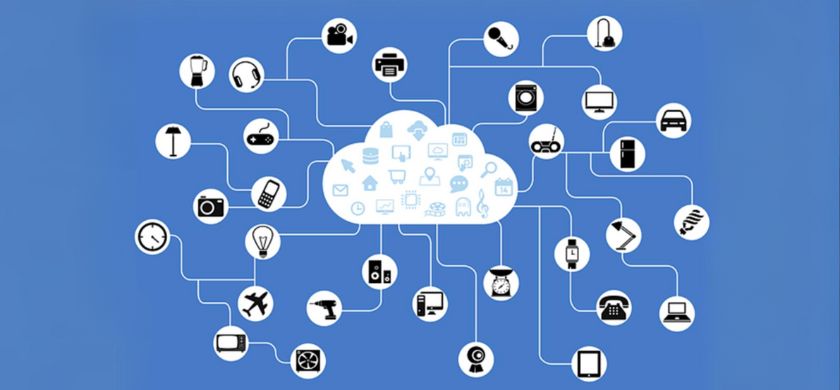
IoT stands for the “internet of things”. To put it plainly, IoT is a system of internet-connected sensors that work together inside of everyday objects to collect and transfer data over a wireless network. Examples of IoT could be the smart bulb in your house that changes colors via the vocal command you give to your Google Home (which would also be considered a byproduct of IoT).

IoT has been around since the 1970s, only then it was referred to as “embedded internet”. Kevin Ashton came up with its now widely accepted name in 1999. Over the years, IoT has infiltrated into the physical world, connecting people to the internet on almost every platform – our smartphones, watches, cars, alarms, refrigerators, thermostats, etc.

It’s easy to see all of the ways in which IoT controls household items, but what about when you set foot outside of your house and into a sports stadium, bowling alley, or other social entertainment venues?

Bowling Alleys

Here’s a real-world example: the Painted Duck defines itself as a “distinguished drinkery, duckpin bowling, and gaming parlour” located in the West Midtown Stockyards of Atlanta, Georgia. It is an immaculate entertainment venue that can hold over 500 individuals at a time.

Underneath all of the glitz and glam of this bowling alley-nightclub-hybrid is a system of IoT networks all interconnected and working together to provide its guests with the highest level of entertainment possible. The Painted Duck uses software called Conqueror Pro. Through this, staff can have instant and easy control over the bowling lanes.

Conqueror Pro also allows the staff the ability to create a check (including the cost for the lane, shoes, and socks) that is transferred over the venue WiFi to Micros. Micros is another software that is used by waitstaff to input food and beverage. The Conqueror Pro bowling check can be picked up in Micros and added to the food and beverage check, making it simple for guests to have all of their expenses in one place. Entertainment WiFi can control the lighting, temperature, and music in the venue.

Small sensors on the actual lanes themselves register the pin-setter control after a ball is rolled, telling the lane which pins to keep up once the lane resets itself. A small scanner camera inside of the mechanism captures a quick picture of the pins and sends that information over to the scoring system, which is then projected on the screen for the guests to see.

IoT in Golf Entertainment Venues

Driving Ranges

With 17 locations all over the US, the Dallas-born TopGolf empire has become a crowd favorite for birthday parties, date nights, and casual get-togethers. While offering an array of bar food and drink in a high-end entertainment venue, TopGolf also gives its customers a different take on the traditional game of golf by integrating IoT into its entertainment venue WiFi.

In normal golf, the player has to physically track where their ball lands, whether it be on the green, in a bunker, or in the dreaded sandpit. TopGolf utilizes giant sensor-packed targets on the field and RFID (Radio Frequency Identification) sensors inside of the golf balls. This allows the player immediate information on how they fared. This beats having to look for the ball- a time-consuming task in traditional golf.

Because of IoT, a game of golf (which could normally take upwards of 6 hours) is reduced to a mere 1 to 2 hours, allowing for a continuous flow of guests in and out of the entertainment venue. More than eight million people visit one of the locations at least once a year, and about 37% of the patrons at TopGolf are non-golfers. TopGolf has been able to successfully use IoT to give its customers a fun and unforgettable experience that they wouldn’t find on just any old golf course.

Interactive Entertainment Venues

While social entertainment venues are not a new concept, the rise in such venues has been fueled by heightened interactivity and integrated technologies. New forms of extended reality (XR) – which include augmented reality (AR) and virtual reality (VR) – have pushed the limits on what social entertainment venues can offer to guests.

Business models like Sandbox VR and Virtual Room are just a couple of examples among many VR-based entertainment venues cropping-up. As a level-up from traditional videogame arcades, these VR arcades are the next generation of indoor experiential entertainment. Patrons can choose from several games and environments, and enjoy a futuristic experience that allows participants to see and physically interact with everyone inside, just like the real world.

While VR technology has a long way to go before breaking its high-cost barrier to entry, it’s expected that VR arcades have tremendous potential to flourish in the years to come. As highlighted by Lisa Caruso in her piece about Social Impact Entertainment (SIE), “awareness of this emerging technology (XR) and how it can work seamlessly with social impact entertainment is a new frontier that is imperative to explore as we have more sophisticated and demanding audiences.”

The Future Outlook on Social Entertainment Venues

In addition to the interactive technologies that facilitate such experiences, advanced IoT like more robust server platforms, such as BlueprintRF’s Dominion Gateway 2, or DG2, will make the next generation of social entertainment venues possible.

By using IoT, we have made it possible to connect to our environment like never before. Utilizing entertainment IoT in venues around the world has helped guests get the most out of their experiences. Guests expect high-performance connectivity from entertainment venue technology. Whether you’re knocking down some pins, practicing your stroke, ordering a hotdog at a sports arena, or simply turning the heat down in your apartment, you are tapping into a system of networks all connected by IoT.

5 Ways Technology is Powering and Changing the Special Events Industry

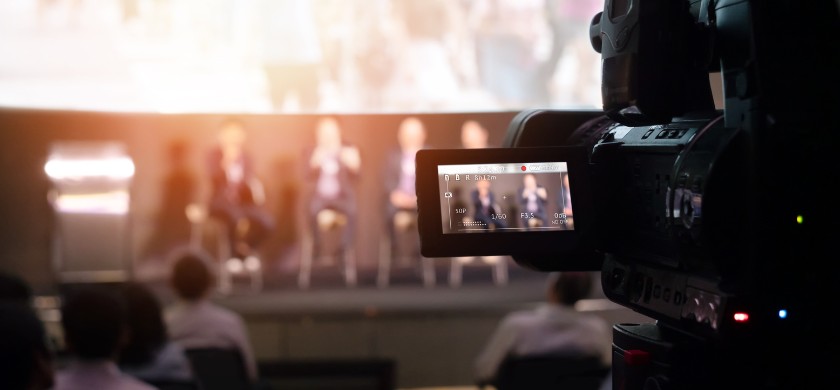
The events industry is constantly adapting and changing to keep up with the latest trends. Technology has revolutionized the events industry in recent years, making it easier to stream events live on social media, manage stage equipment, collect consumer data, and sell tickets. Read on to discover the five ways technology is working to change the events industry for the better.

More Opportunities for Live Streaming on Social Networks

In the past, one of the most significant issues with live streaming was that the technology wasn’t always reliable. Dropouts and poor video quality were common, which made live streaming more of a hassle than it was worth. However, that is no longer the case, thanks in part to the inception of 5G internet technology. With speeds that can reach 10 times faster than 4G, you can provide high quality live streams with fewer of the technical issues of the past.

Current Technology Allows for More Viewers

Another historical issue with live streaming was that only a limited number of people could view the stream simultaneously — meaning that if you had a large event, only a small portion of your audience could actually tune in and watch it live. Thankfully, this is not as big of an issue for event coordinators, as the number of people who can view a live stream has increased dramatically. Now, venues can reach far more people than before, thanks to the adoption of solutions like the High-Speed Internet Access (HSIA) technology to provide a seamless streaming experience to a large audience.

Technology Allows for Social Media Integration

Combining CBH’s internet speed and social media capabilities, it is possible to integrate live streaming into your social media platforms. Streaming viewers can watch events in real-time and actively participate in the discussion on social media, allowing you to create a more immersive experience for your audience and connect with them on a personal level.

live-streaming special events on social media

Technology Allows Improved Execution and Production of Special Events

A steady stream of recent technological advancements have allowed for drastic changes in the event production collaboration process. Thanks to leaps in communications technologies over the years — including instant messaging, video conferencing, and live drone interactive video — it’s easier than ever for event planners to stay in touch with one another and to cross-coordinate their efforts. What’s more, there are now many software applications specifically designed to help event planners collaborate on everything from budgeting to logistics.

More Sophisticated and Customizable Event Production

Although pyro-technology and laser shows are almost always fun and often impressive, designing and transporting the necessary equipment can be both cumbersome and costly. The advances in event production technologies make it possible to create more sophisticated and customizable events than ever. For example, teams can utilize tools like projection mapping and drones to create stunning visual displays that were previously only possible with physical props and materials. Moreover, new audio technologies make it possible to produce loud, crystal-clear sound without the need for bulky speakers or amplifiers.

Technology Increases Revenue Through Virtual Event Attendance

Many event venue owners and organizers used to be skeptical of investing in technology for their events, and often argued that the return on investment (ROI) was not worth the expense. However, this could not be further from the truth in recent years. Integrating technology into your event can increase revenue and attendance while providing a more memorable and inspiring experience for your guests — below are just a few ways how.

Improved Audience Insights

Technology can help you gain valuable insights into your audience to better tailor your events to their needs and wants. For example, you can use Google Analytics to track which marketing channels drive the most traffic to your event page. You can also use surveys and polls during the event (either online or in-person) to get feedback from attendees on what they liked and didn’t like about the event. All of this information may be incredibly helpful in planning future events that are more likely to appeal to your target audience and generate more revenue.

Increase Merchandise Sales

Technology can aid in increasing monetization opportunities for events by facilitating the sale of merchandise. If you’re hosting a virtual event, consider setting up an online shop where attendees can purchase items like t-shirts, hats, mugs, and even digital products like ebooks or audio recordings of the event. Offering souvenirs is a great way to generate additional revenue while also giving attendees something special to remember.

More Opportunities for Event Revenue Through Digital Signage

In the past, event venues relied on print materials like flyers and posters to promote upcoming events. However, this is no longer the most effective way to reach potential attendees. With digital signage, you can change your event information in real-time — giving potential last minute attendees up-to-date, transparent information and encouraging ticket purchases up to the start of an event. Digital signage is often more eye-catching and engaging than traditional print materials, so your attendees are more likely to remember your event.

Digital signage also has the potential to offer increased interactivity through the use of QR codes, which can easily direct customers to merchandising pages. With their ability to allow customers to learn about products, view and receive exclusive discounts and promotions, and make one-click purchases, QR codes are a simple way to increase profits.

Technology Increases Personalization and Revenue Opportunities Through Data Collection

For every business, data is an essential tool to better understand key elements like revenue sources and customers’ needs — and the events industry is no different. Data can be collected in several ways, including through social media, surveys, live streaming, and check-in apps. This data can then be used to improve the event experience, generate leads, and even close sales. By understanding who your attendees are and what they want, you can curate an event that is better targeted to their needs — and that is more likely to meet your revenue-based goals.

Increased Opportunities for Audience Engagement

When you know more about your attendees, you can engage with them on a more personal level by creating events that speak to their specific interests. For example, if you’re planning an event for millennials or Gen Zers, you might consider using smart technology integration to layer in features like social media participation opportunities, so that attendees can share their experiences with their followers in real-time.

Technology Increases Convenience for Attendees Through Mobile Ticketing

Mobile ticketing is one of the most convenient ways technology has transformed the events industry. Mobile ticketing allows attendees to purchase and access tickets on their smartphones, eliminating the need for paper tickets or will-call lines. Not only is this more convenient for attendees, but it also allows event planners to track ticket sales in real-time and adjust strategies accordingly. Additionally, mobile ticketing can help reduce costs associated with printing and mailing paper tickets, and has the added benefit of being more environmentally friendly by reducing paper waste.

Augmented and Virtual Reality

With the advent of augmented and virtual reality (AR/VR), event planners now have the opportunity to create truly immersive experiences for their attendees. AR/VR can be used for everything from product demonstrations to virtual tours of event venues. This cutting-edge technology has the capacity to take the events industry to new places in the coming years.

Blockchain Technology

Blockchain is one of the newest technologies making its way into the events industry. Blockchain is a distributed ledger system that allows for secure, transparent transactions between two parties. This could potentially be used to track attendee badge scanning, verify accreditations, or manage sponsorships and exhibitor contracts. As blockchain technology continues to evolve, it will likely significantly impact how events are planned and executed.

increase attendee expectations in special events venues

Increase Expectations in Venues

As technology advances, event planners expect their venues to have the infrastructure to support all their needs in addition to a reliable, high-speed internet connection to handle large volumes of data. At the same time, they will expect the venue to provide various technological equipment, such as wayfinding signage, self-service kiosks, and other digital tools such as digital advertising, contactless payments, and admission kiosks to enhance the attendee experience and maximize monetization opportunities for events.

To attract and retain customers, businesses in the events industry must keep up with the latest trends and technologies. Instead of fumbling in the dark and researching each new development separately, venue owners can partner with a technology solution company — such as Hospitality Network — to provide a comprehensive solution for their needs.

Let Cox Business Hospitality Help You

At Cox Business Hospitality, we pride ourselves in our ability to provide the infrastructure necessary to support the needs of various venues, in addition to supplying high speed internet capable of handling high volumes of data.

Our team of experts will work closely with you to understand your specific needs and create a custom solution that meets your budget and requirements. We know that not every venue is the same, which is why we offer flexible and scalable solutions that can be easily tailored to your unique needs.

If you’re ready to take your event venue to the next level, contact Cox Business Hospitality today and let us show you how we can help.

Interactive Trade Show Booth Designs Fueled by IoT Technology

How to Leverage IoT for More Engaging Attendee Experiences in Trade Show Booths

IoT technology is changing how companies do business, providing immense economic value and streamlining operations. Currently, 57% of North American and European businesses use IoT technology, a figure which will likely increase in the coming years. When it comes to booth designs for trade shows, IoT technology can be the key to driving engagement and profits.

Read on to learn four ways IoT technology can enhance booth designs for trade shows.

What is IoT Technology?

Internet of Things (IoT) technology refers to a network of devices that transfer and exchange data between each other using the Internet. IoT devices use software and sensors to gather and distribute information among the network.

Both businesses and private consumers see immense value in IoT technology. Recent data suggests that there are nearly 15 billion unique IoT devices worldwide, a number that is sure to increase in the coming years. IoT technology is in demand due to its ability to streamline operations, facilitate communication, and help improve profit margins. These benefits are especially apparent regarding booth designs for trade shows.

IoT technology is integral to any trade show booth design, as it has the capability to help exhibitors connect with event attendees. There are many potential applications for IoT technology when it comes to modern trade show booth design, but there are several that stand out as particularly effective.

four ways iot technology enables trade show booth design

4 Ways to Leverage IoT Technology in Trade Show Booth Design

When considering how the best trade show booth designs use IoT technology, some strategies stand out more than others. Here are four ways trade show exhibitors can use IoT technology to optimize engagement and impact.

1. Social Media Integration

Social media integration is one of the best trade show booth design ideas. Social media integration incorporates popular platforms — such as Facebook, Instagram, and X, among others — into the booth experience, giving exhibitors the power to interact with attendees in real-time. Exhibitors can display live social media feeds and interact with users worldwide, improving overall engagement with the target audience.

Social media integration provides companies with a direct channel to showcase their products or services to a broader audience, as popular social networks increase brand visibility and connect users who can’t attend the trade show in person. Based on instant feedback, brands can adjust their strategies at a moment’s notice. This connectivity enhances the exhibit’s impact and strengthens the company’s online presence and potential customer base.

2. Live-Streaming Display Screens

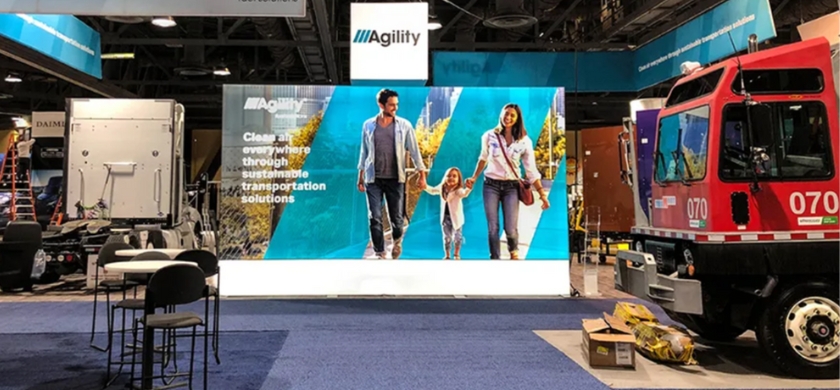
The best trade show booth designs, without fail, incorporate live-streaming display screens. Live-streaming display screens allow brands to showcase live demonstrations, presentations, promotional material, and even product launches in real time. These screens capture the attention of attendees and contribute to a more immersive booth experience. Best of all, trade show exhibitors can change the content on each screen at a moment’s notice, keeping their display’s messaging relevant and responsive to audience feedback.

Live-streaming display screens also allow companies to reach potential customers beyond the trade show itself. Brands can broadcast their activities to online audiences, maximizing exposure and engagement. In this sense, live-streaming display screens, as a part of a modern trade show booth design, can contribute to a larger marketing strategy.

Take Advantage of IoT Technology for Trade Show Booth Design with Hospitality Network

3. Integration of Virtual Technologies (AR & VR)

Integrating virtual technologies such as Augmented Reality (AR) and Virtual Reality (VR) in booth designs for trade shows is an often overlooked, yet truly effective, method that brands can use to drive engagement and results. AR displays overlay digital information onto a physical environment, enhancing product displays with interactive elements or providing additional information. VR, on the other hand, immerses attendees in a virtual experience using dedicated hardware, enabling them to explore products or environments like hotel rooms in a simulated but highly realistic setting.

These technologies provide a unique way for exhibitors to showcase products or services. Virtual demonstrations, walkthroughs, and simulations draw customers in and facilitate a greater degree of engagement than more conventional methods. However, digital audiences can also engage with virtual demonstrations, expanding the brand’s reach beyond the physical trade show.

4. Digital Touchpoints to Collect Trade Show Attendee Information

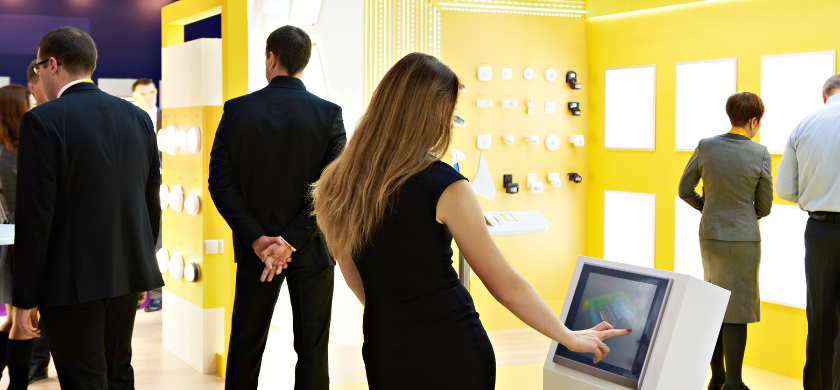
Touchpoints are interactive kiosks and mobile devices that allow trade show attendees to provide their contact information, personal preferences, and general interests. Brands can use this crowdsourced data to personalize interactions, recommending relevant content for specific types of customers to improve engagement and impact. It’s a seamless way to provide a more tailored experience for trade show guests.

Companies that use digital touchpoints to collect attendee information can profit as a result. By capturing attendee data through touchpoints, vendors gain more than just the ability to tailor marketing for specific customers. They can provide unique product demonstrations and other forms of personalized content, increasing the likelihood of generating successful leads. Vendors can also use data gathered from touchpoints to conduct post-event follow-ups and surveys, all part of a broader strategy to build lasting customer relationships.

High Speed Internet is Critical for Trade Show Booth Design IoT Integration

Implementing IoT technology for trade show booths can help gather valuable data, engage with your audience, and showcase your products through live streams, social media interaction, and so much more. But IoT technology also demands a lot of bandwidth and security, requiring reliable and high-quality convention center WiFi and smart technology solutions.

We have extensive experience in supporting IoT applications for trade show exhibitors, having installed and managed the WiFi network for the Las Vegas Convention Center, one of the largest and most advanced trade show venues in the world. We can help you design and implement a custom IoT solution that meets your venue’s needs and budget. Take the first step and request a consultation today.

Increase Trade Show Vendor Attendance Using Reliable Event WiFi

Creating a successful trade show takes time, effort, and planning. One of the most critical aspects of putting on a great show is having quality vendor turnout. However, getting vendors to attend your event can be difficult if you are not equipped with all the necessary amenities they have come to expect, like HSIA, access points, etc. One way to ensure that vendors will want to attend your event is by offering reliable event WiFi. This article discusses why reliable WiFi is essential for trade shows and how you can use it to increase vendor turnout, thereby resulting in greater revenue opportunities.

Common Trade Show Problems

Trade shows are filled with new people, products, and opportunities. However, they can also be chaotic environments with many moving parts. It is not uncommon for trade show organizers to run into problems with a lack of vendor turnout due to technical issues. The three most common technical problems that can occur during these events are:

Problem #1: Lack of Internet Connectivity

One of the most common—and potentially catastrophic—problems at a trade show is a lack of Internet connectivity. If your venue does not have reliable, high-speed internet, exhibitors cannot connect to their e-commerce platforms, process credit card transactions, or even send and receive emails. It can lead to lost sales, frustrated exhibitors, and angry customers.

Problem #2: Slow or Unstable WiFi Signal

Another common problem is a slow or unstable WiFi signal caused by too many people trying to connect to the same network, interference from other devices on the show floor, or simply an overloaded network. As a result, exhibitors and attendees alike may have difficulty connecting to the Internet, broadcasting presentation materials, live streaming, or accessing essential files stored in the cloud.

Problem #3: Difficulty Connecting to Conference Networks

If your venue hosts conferences or other events that require attendees to connect to an internal network, you may occasionally run into problems with people being unable to connect or losing their connection intermittently. This can be caused by outdated network hardware, incorrect network settings, or simply too many people trying to connect simultaneously.

the importance of reliable wifi networks for trade shows

Why Is Reliable WiFi Important for Trade Shows?

At its core, a trade show connects people with products and services. Here are some reasons why providing WiFi is vital for trade show vendors.

Vendors Need Internet Access to Exhibit Products and Services

To showcase their products and services properly, trade show vendors need to be able to connect to the Internet. The trade show WiFi system allows them to load website pages, showcase digital products, stream video content, post to social media, and connect with their company data. Without Internet access, many of the products and services that vendors want to exhibit can’t be shown properly.

Vendors Require WiFi Access to Sync with Their Smart Technology Systems

An increasing number of trade shows are incorporating smart technology features into their exhibits. For example, many exhibits now use tablets or large touchscreen displays to interact with visitors. For these devices to work properly, they need to be connected to the Internet via WiFi. Otherwise, they’ll be expensive paperweights.

WiFi Enables Vendors to Connect with Customers and Other Exhibitors

WiFi also allows vendors to connect with customers and exhibitors through email, social media, chat apps, and VR live experience platforms. This connection is required to enable vendors to build relationships with potential customers that can continue long after the trade show is over.

WiFi Allows Online Viewers to Participate Live

Finally, trade show Internet allows attendees to live stream and share their experience with viewers who can’t physically be at the venue. This live streaming capability gives trade shows an added layer of publicity and can help attract more attendees in future years.

How Can WiFi Help Make Your Convention Facility More Accommodating?

WiFi is the backbone of a more connected and smarter convention center. With the right system in place, WiFi can help improve the overall quality of your services.

Reduced Wait Times

One of the most frustrating things for guests is waiting in line to use a service. By offering WiFi-enabled kiosk systems, you can drastically reduce the time your guests have to wait in line by allowing them to check in.

Kiosks are quickly becoming commonplace in large venues as they provide a quick and easy way for guests to check in, get directions, or find information about an event. Not only will this reduce wait times for your guests, but it will also free up staff members to focus on other tasks to ensure the best trade show experience possible.

Improved Customer Service

Another benefit of offering WiFi is that it can help improve customer service. By allowing guests to use their own devices to access information or connect with staff members, they can receive help much easier and efficiently.

In addition, some WiFi systems come with features like location tracking that can be used to provide personalized recommendations or targeted ads. For example, if a guest is trying hard to find a specific product or service booth, you could use location tracking to send them a notification about where they can find it. This targeted content can benefit guests and improve their experience at your trade show.

WiFi Can Provide Convention Venues Monetization Opportunities

Although WiFi is an essential service your guests will expect, there are many ways in which leveraging your network effectively can help generate positive ROI.

Partnership with Local Businesses

Convention venues can reach out to local businesses to see if they are interested in sponsoring the venue’s WiFi. It is a wonderful opportunity for companies to get exposure and attract new customers. In addition, businesses may also be interested in advertising on the venue’s website or social media platforms. By partnering with local businesses, venues can generate additional revenue and provide a service that benefits both parties.

Tracking Attendees’ Performance for Future Marketing Strategies

Tracking attendees’ performance is an excellent way for venues to see what areas of the event space need improvement and what areas are doing well. This data can also be used to improve the venue layout and services offered. In addition, this data can provide customized marketing experiences for future visitors.

Develop Better Strategies to Attract Future Vendors

By understanding how attendees use the venue’s WiFi, venues can develop better marketing strategies for attracting future vendors. This data can analyze which venue areas are most popular and which times of day are busiest. This information is valuable for vendors who want to ensure that as many people see their products or services as possible.

increase trade show attendance with wifi coverage

How to Increase Attendance at Trade Shows by Using Better WiFi Coverage

Offering reliable and fast WiFi coverage is the best attraction any convention venue can offer. So how can you make sure your venue has optimal coverage? There are a few things you can do to make sure your trade show has the best WiFi coverage:

Perform a WiFi Site Survey

The first step in improving WiFi coverage is having a WiFi specialist review your property and perform a site survey. This will help you identify weak signal areas and pinpoint where to make changes. It will also help determine how many access points are needed to cover the entire space. Hiring a professional company to conduct a site survey will help ensure that you receive an accurate analysis of your venue space. They will also provide recommendations on how to better optimize the WiFi signal throughout the property.

Use Enterprise-Grade Equipment Designed for Large Facilities

When it comes to WiFi, not all equipment is created equal. You’ll want to ensure you’re using enterprise-grade equipment designed for large venues so that your signal is strong and stable. High-quality access points and routers are necessary to provide a reliable trade show WiFi system.

Work with a Professional WiFi Company

Another great way to improve your WiFi coverage is to work with a professional company specializing in setting up WiFi for venues like yours. They’ll be able to advise you on the best way to set up your network and make sure everything is working correctly. They will also provide on-site tech support during events to ensure your attendees have a great experience.

Hospitality Network As Your Trusted Trade Show WiFi Partner

If you’re looking for a professional company to help you with your WiFi needs, contact the experts at Hospitality Network. With over 40 years of experience providing network technology solutions to hospitality venues, we specialize in providing reliable and fast WiFi for convention centers, hotels, and other large venues. We offer a variety of services, including:

  • Increased Bandwidth & High-Speed Convention Center WiFi
  • Advanced Convention Services & Property-Specific Guest Services
  • WiFi network design, installation, and management
  • Professional sales staffing
  • On-site tech support
  • Marketing enablement and support

We understand that every trade show is different, which is why we offer customized solutions to fit your specific needs. We’ll work with you to determine the best way to set up your network and make sure everything is running smoothly.

Contact us today to learn more about how we can help you provide an exceptional WiFi experience for your next event. We’ll be happy to answer any questions you have and provide a free quote for our services.

Connectivity Solutions for Conference and Convention Centers: Managed WiFi, Private Wireless or Distributed Antenna Systems?

In today’s always-connected event environment, conference and convention centers are under more pressure than ever to deliver fast, reliable and secure connectivity. Attendees expect flawless WiFi for streaming, realtime collaboration, mobile event apps and digital engagement, while event organizers rely on stable networks for operations, IoT devices and onsite technologies.2 A connectivity failure isn’t just an inconvenience; it can undermine the entire event experience and the reputation of your venue.

This guide breaks down the three most important connectivity options available to modern venues: Managed WiFi, Private Wireless and Distributed Antenna Systems (DAS), and suggests which solution may be best for your facility based on size, event needs and long-term strategy.1  While each technology plays a distinct role, true performance in conference and convention centers is only achieved when they are engineered to work seamlessly together, delivering the high capacity, low latency and mission-critical reliability operators and attendees expect underscoring the essential value of coordinated expertise.

Understanding Your Connectivity Options

What Is Managed WiFi and Why Do Most Conference Centers Start Here?

Managed WiFi provides cost-effective, scalable wireless connectivity for most event needs, supporting laptops, smartphones, and tablets with secure, high-density access. It’s the foundational solution for small and medium venues. It represents the most common and accessible connectivity solution for conference and convention centers. This approach involves deploying enterprise-grade wireless access points throughout your facility, managed by either your internal IT team or an external service provider.

Key advantages include:

  • Cost-effectiveness for most venue sizes
  • Rapid deployment with minimal infrastructure changes
  • Scalable bandwidth that can adjust to event demands
  • Guest network management with customizable access controls
  • Analytics and usage reporting for operational insights

Why it matters: Managed WiFi provides the foundation for most event connectivity needs and supports conferences, trade shows and educational seminars where attendees primarily require reliable access for laptops, tablets and smartphones. A properly designed system can typically handle hundreds of concurrent users per access point.3

When Should Venues Choose Private Wireless Networks?

Private wireless is ideal for mission-critical events requiring guaranteed bandwidth, enhanced security and strong IoT support. It creates a dedicated, venue-controlled cellular network separate from public WiFi. Private wireless is ideal for mission-critical events requiring guaranteed bandwidth, enhanced security and strong IoT support. It creates a dedicated, venue controlled cellular network separate from public WiFi.

Key advantages include:

  • Guaranteed bandwidth unaffected by external network congestion
  • Enhanced security through private network architecture
  • IoT device support for smart building systems and event technology
  • Reduced latency critical for real-time applications
  • Carrier-grade reliability with built-in redundancy

Why it matters: Private wireless gives venues complete control over a dedicated cellular grade network, ensuring low latency, enhanced security and reliable performance even during peak demand. As IoT adoption accelerates, this becomes essential for future ready operations.

Why Do Venues Invest in Distributed Antenna Systems (DAS)?

DAS solves cellular coverage issues in large or complex buildings and supports massive attendee counts. DAS helps amplify and distribute cellular signals throughout large buildings using a network of antennas connected to a central hub. It helps improve phone and data service for all major carriers, especially during high-density events.

Key advantages include:

  • Comprehensive cellular coverage eliminating dead zones
  • Multi-carrier support for all major wireless providers
  • High-capacity handling for dense user environments
  • Improved emergency communications for safety compliance
  • Long-term infrastructure investment with 10+ year lifespans

Why it matters: DAS improves cellular connectivity for all major carriers, solving reception issues that WiFi cannot fix. Strong cellular connectivity enhances attendee satisfaction, exhibitor success and emergency communication. DAS is particularly valuable in mega venues or areas with structural challenges like underground spaces or steel reinforced sections.

Matching Solutions to Venue Size and Needs

Small Venues (Under 500,000 Square Feet)

Small conference centers typically benefit most from managed WiFi solutions as their primary connectivity infrastructure.1 These venues usually host events with 50-500 attendees, making enterprise-grade WiFi both sufficient and cost-effective.

Strategic considerations:

  • High-density WiFi access points in meeting rooms and common areas
  • Guest network management for simplified attendee access
  • Cloud-managed solutions for streamlined IT operations
  • Scalable bandwidth for peak events

Small venues should focus on reliability and ease of management rather than complex infrastructure investments. A well-designed managed WiFi system can handle typical conference connectivity needs while providing room for growth.

Medium Venues (500,000 to 1 Million Square Feet)

Medium-sized convention centers often require hybrid approaches combining managed WiFi with supplementary solutions.1 These facilities typically host diverse events ranging from intimate corporate meetings to regional trade shows with several thousand attendees.

Strategic considerations:

  • Robust managed WiFi as the foundation
  • Evaluate private wireless for high-security or IoT-heavy events
  • Review cellular coverage quality and access the need for DAS
  • Design network segmentation for different event types and security requirements
  • Plan for peak capacity events that may stress standard WiFi infrastructure

Medium venues benefit from flexible infrastructure that can adapt to varying event requirements while maintaining consistent performance standards across all facility areas.

Large Venues (Over 1 Million Square Feet)

Large convention centers typically require comprehensive connectivity portfolios incorporating managed WiFi, private wireless capabilities and often DAS.1 These mega-venues host major industry conventions, international conferences and events with tens of thousands of attendees.

Strategic considerations:

  • Enterprise-grade high-density WiFi
  • Private wireless networks for mission-critical applications and IoT systems
  • DAS for comprehensive cellular coverage
  • Network redundancy and failover capabilities
  • Advanced analytics and monitoring tools
  • Dedicated IT support teams or managed services

Large venues must treat connectivity as critical infrastructure requiring significant investment and ongoing management to meet diverse tenant and event requirements.

When to Choose Combination Solutions

Many modern conference and convention centers benefit from deploying multiple connectivity technologies to address different use cases and user requirements. Hybrid approaches become particularly valuable when:

  • Diverse Event Portfolio: Venues hosting everything from medical conferences requiring secure private networks to consumer trade shows needing high-capacity WiFi benefit from multiple solution types.
  • Building Challenges: Facilities with cellular dead zones, high-RF interference areas or mixed indoor/outdoor spaces often need combined DAS and WiFi infrastructure.4
  • Future-Proofing Requirements: Venues planning for emerging technologies like augmented reality demonstrations, autonomous vehicle displays or extensive IoT deployments should consider private wireless capabilities alongside traditional WiFi.3
  • Security Segmentation Needs: Events requiring different security levels, such as government conferences alongside public exhibitions, often benefit from separate private wireless and managed WiFi networks

Operational Efficiency and Effectiveness Benefits

Enhanced Attendee Experience

Reliable connectivity directly impacts attendee satisfaction and event success.2 Seamless WiFi access enables live social media engagement, real-time polling and interaction, cloud-based presentation tools and mobile event applications. These capabilities increase attendee engagement and provide valuable feedback for event organizers.

Revenue Generation Opportunities

Superior connectivity infrastructure becomes a competitive differentiator that can command premium pricing.2 Venues with robust connectivity solutions can attract higher-value corporate events, technology conferences and international conventions. Additionally, reliable internet enables value-added services like live streaming capabilities, virtual event hybrid models and enhanced exhibitor technology demonstrations.

Operational Intelligence

Modern connectivity solutions provide valuable analytics about space utilization, peak usage patterns and attendee behavior.1 This data enables more efficient facility management, optimized staffing levels and data-driven decision-making for future infrastructure investments.

Cost Management

A smart and effective connectivity design can drive cost savings by reducing manual network tasks, limiting IT intervention and optimizing energy use. Managed solutions also provide predictable monthly costs that simplify budgeting and financial planning.

Implementation Considerations

Bandwidth Planning

Calculate connectivity requirements based on expected attendee counts, device usage patterns and event types.3 Plan for peak usage scenarios while considering background traffic from building systems, exhibitor needs and staff operations.

Security Framework

Implement network segmentation by separating guest access from critical building systems. Consider compliance requirements for events in regulated industries and ensure guest network policies align with venue liability considerations.

Scalability and Future-Proofing

Invest in platforms built for scalability and adaptability, so they can keep pace with changing technology requirements and support future advancements. Consider emerging requirements like 5G integration, edge computing capabilities and increased IoT device connectivity.

Vendor Selection Criteria

Evaluate potential providers based on local support capabilities, network redundancy options, 24/7 monitoring and support, scalability options and integration capabilities with existing building systems.1

Maximizing Your Connectivity Investment

Modern conference and convention centers understand that connectivity isn’t just an expense, it’s a strategic advantage that can drive future growth. Managed WiFi, private wireless and DAS each play a crucial role in creating fast, reliable and secure event experiences. Smaller venues benefit most from strong WiFi foundations, while larger venues often require hybrid solutions that pair WiFi with private wireless or DAS to ensure complete coverage and capacity. By choosing the right mix and partnering with an experienced provider, venues can enhance attendee satisfaction, streamline operations, support advanced event technologies and future‑proof their facilities for the next wave of digital innovation.

Why Coordinated Expertise Matters

Whether you’re managing a small conference facility or a major convention center, choosing the right connectivity partner is essential. Cox Business provides tailored connectivity solutions for hospitality and event environments, helping you deliver high-performance WiFi, secure private wireless and robust cellular coverage.

With Cox, you gain from:

  • Expert Consultation: Our team partners with you to understand your venue’s unique needs and design a purpose-fit solution shaped around your space, event types and budget.
  • End-to-End Support: From planning and installation to ongoing monitoring and 24/7 support, we stay with you at every step to help keep your network performing before, during and after every event.
  • Future-Ready Infrastructure: We build scalable solutions that help you stay ahead of technology trends and support emerging applications like IoT, hybrid events and advanced analytics.
  • Industry Expertise: Through Cox Hospitality Network and Cox Private Networks, you gain expertise for hospitality environments and private LTE/5G deployments, equipping your venue for today’s demands and what comes next.

Let’s design a connectivity strategy that elevates attendee experience, streamlines operations and sets your venue apart.


Works Cited

  1. International Association of Venue Managers. “Technology Trends in Venue Management 2023.” IAVM Publications, 2023. https://www.iavm.org/
  2. Event Industry Council. “Global Event Industry Recovery Report.” EIC Research, 2023. https://www.eventsindustrycouncil.org/
  3. Cisco Systems. “Cisco Annual Internet Report (2018–2023) White Paper.” Cisco Networking, 2023. https://www.cisco.com/c/en/us/solutions/collateral/executive-perspectives/annual-internet-report/white-paper-c11-741490.html
  4. Wireless Infrastructure Association. “DAS and Small Cell Market Report.” WIA Research, 2023. https://wia.org/

Micro Events: Essentials for a Successful Event Venue

What is a Micro Event?

A micro event is a smaller scale event planned with a more focused, targeted group in mind. While any gathering under 150 people can qualify as a micro event, most host somewhere between 10 to 15 people. As opposed to the larger scale, broader events typically found in convention centers, micro events tend to market towards more niche groups, exploring a single, specific topic or theme with a saturated viewpoint.

A successful concept for a micro event would likely be the topic of a single speaker or panel at a larger-scale event. For example, while a larger event may explore hotel WiFi in general, a micro event would zoom in on upselling & cross-selling hotel guests using in-room entertainment systems. 

Creating Successful Micro Event Spaces Within Your Hospitality Business

For hospitality event planning, bigger isn’t always better. Event organizers are increasingly shifting their focus from large-scale gatherings to more intimate, highly curated experiences that prioritize connection, personalization and impact. Enter micro events — a fast-growing trend that’s reshaping how venues attract guests, drive revenue and differentiate their offerings.

For hotels, resorts and event spaces, this shift presents a major opportunity. Micro events require less space and fewer resources than traditional conferences, yet often deliver higher engagement and stronger returns per attendee. With the right strategy and infrastructure in place, hospitality venues can transform underutilized areas into premium event environments tailored for these smaller, high-value gatherings.

In this blog, we’ll explore what micro events are, why they’re gaining traction and how your venue can successfully design and profit from them. Read on to learn more.

Different Types of Micro Events

Pretty much any concept can be a micro event with the right execution, focus and format. Some key event ideas that are especially successful for micro events include:

  • Educational workshops taking a deep dive into a skill or topic for a more hands-on, focused discussion group.
  • Networking events for specific fields or demographics within those fields.
  • Online connected team-building games for smaller teams or organizations.
  • VIP activations for high-potential future clients and customers.
  • AR scavenger hunts & activities, from online-integrated escape rooms to photo & video challenges.
  • Brand events such as company anniversaries, new product launches or product demos.

Whether using these ideas for activities or any number of other concepts, micro events provide powerful, curated experiences for more niche audiences. Event organizers are taking notice; a Statista study from 2023 found that one out of five respondent marketers looked to increase spending on VIP activations, a notable pillar of micro event planning.

With more & more hosts looking to leverage the power of micro events, making your venue a viable location can lead to substantial revenue generation. What kind of venues, then, can actually host micro events?

micro event venues

What Kinds of Venues Can Host Micro Events?

One of the biggest advantages of micro events is their flexibility. Unlike large-scale events that require expansive ballrooms or convention halls, micro events can thrive in a variety of hospitality environments, including:

  • Boutique hotel meeting rooms and lounges
  • Rooftop bars and outdoor terraces
  • Private dining rooms within restaurants
  • Co-working spaces and business centers
  • Poolside or resort cabanas
  • Executive suites or penthouse spaces

This versatility allows hotels and hospitality venues to monetize underutilized spaces, transforming them into premium, revenue-generating environments. With the right setup, even smaller or unconventional spaces can deliver high-impact experiences.

Benefits of Hosting Micro Events in Hospitality Venues

For hospitality businesses, micro events offer a unique opportunity to enhance both revenue and guest experience without the logistical complexity of large-scale events. Key benefits include:

  • Higher Revenue Per Guest: micro events often command premium pricing due to their exclusivity and personalized nature, driving greater revenue on a per-attendee basis.
  • Increased Space Utilization: Underused areas (such as lounges, meeting rooms or outdoor spaces) can be repurposed into profitable event venues.
  • Enhanced Guest Engagement: Smaller group sizes allow for more personalized service, deeper interactions and stronger brand connections.
  • Repeat Business Opportunities: micro events foster stronger relationships with attendees, increasing the likelihood of repeat bookings, extended stays and future events.
  • Operational Efficiency: With fewer attendees, staffing, logistics and coordination become more manageable while still delivering high-impact results.

Turning unconventional spaces into key drivers of revenue, micro events can add substantial value to your hospitality venue. To run a successful micro event, however, your venue needs to be equipped with the right technological infrastructure.

micro event space technology

What Technology Does a Venue Need to Host a Micro Event?

While micro events are smaller in scale, their technology expectations are anything but. Attendees still demand seamless, high-quality digital experiences, making robust infrastructure essential. Key micro event technology considerations for your venue must include:

  • Durable WiFi Bandwidth: Even at microvents, venues need the right amount of bandwidth to support multiple event participants across several smart devices.
  • Accessible, Dynamic Splash Pages: Responsive log-in portals ensure guests have easy access to your network while keeping non-attendees out.
  • Low-Latency Connectivity:  Real-time applications such as video conferencing, interactive demos and live polling depend on low-latency networks to function without disruption.
  • Scalable Network Infrastructure: Venues should be able to quickly adapt bandwidth and access points based on event size, ensuring consistent performance across different use cases.
  • Integrated AV & Smart Technology Support: From wireless screen sharing to IoT-enabled experiences, modern micro events rely on seamless integration between network infrastructure and event technology.

Implementing these technologies requires a strategic approach and a reliable partner to ensure consistent, high-performance connectivity across every event.

Partner With a Trusted Provider of Wireless Technology to Become a Destination Micro Event Venue

Micro events may be smaller than full-size conferences, but they still demand enterprise-grade connectivity to deliver the high-quality, personalized experiences attendees expect. 

Without a reliable network foundation, even the most well-planned event can fall short.

As a trusted provider of high-speed connectivity solutions, Hospitality Network empowers venues to support everything from intimate VIP activations to tech-driven interactive experiences. With scalable infrastructure designed specifically for hospitality environments, your venue can confidently host micro events that drive engagement, revenue and long-term guest loyalty.

Whether you’re optimizing hotel, convention center or special events WiFi,  the right technology partner ensures every micro event runs flawlessly — no matter the size. Contact us today. 

Six Corporate Event Ideas Powered by Next-Generation Connectivity

Innovative Ideas for In-Person & Virtual Corporate Events — For Small Gatherings to Large Groups

Today’s successful corporate events rely on more than just great content. In truly modern events, seamless technology works to connect attendees, spark collaboration and create lasting impressions. Next-generation connectivity is transforming how organizations plan and execute corporate events, enabling interactive experiences that are immersive and inclusive for both in-person and remote participants. 

From AR scavenger hunts to hybrid webcasts, the possibilities for leveraging modern networks to elevate corporate gatherings are virtually limitless. Here are just six of the most exciting corporate event ideas powered by next-generation connectivity. 

1) Online-Connected Team Building Games

Team-building is an essential function for any organization, and corporate events are a perfect opportunity to lean in; according to Gallup, increased engagement and performance driven by team building can lead to notable increases in productivity and profitability while decreasing absenteeism and employee turnover

Next-generation connectivity makes it possible to run interactive, device-heavy team building activities without lag, dropped connections or frustrated participants. With a high-capacity, low-latency network in place, these experiences scale effortlessly across in-person and remote attendees — keeping everyone engaged at the same time. 

Potential online-connected team building games include:

  • Trivia Challenges: Platforms like Kahoot or the Jackbox Party Pack enable fast-paced, real-time trivia that depends on low-latency connectivity to keep scores and gameplay perfectly synchronized.
  • Ice-Breakers: Games such as Two Truths & a Lie or High, Low, Buffalo rely on reliable WiFi to support live polls, chat, and reactions for both in-person and remote attendees.
  • Online Escape Rooms: Cloud-based escape rooms leverage consistent bandwidth and low latency to keep shared puzzles, clues and timers in sync across teams.
  • Virtual Murder Mystery: Interactive whodunits use video, chat and real-time collaboration tools that perform best on a high-capacity, enterprise-grade network.
  • Team Playlist Building; Collaborative playlist activities depend on strong connectivity to allow instant song submissions, voting and seamless streaming during the event.

When supported by powerful wireless infrastructure, online-connected team building activities help corporate events foster meaningful connections no matter where participants are located.

2) AR Scavenger Hunts & Activities

Augmented reality (AR) scavenger hunts and activities add a powerful layer of immersion to corporate events by blending physical spaces with digital experiences. Whether participants navigate a conference venue or join from remote locations, AR experiences have become intuitive and engaging rather than technically demanding.

Exciting variations of activities leveraging augmented reality include:

  • Office or Venue-Based Scavenger Hunts: Attendees scan markers around an office, hotel or conference venue to unlock AR clues, trivia and challenges that blend physical exploration with digital interaction.
  • AR-Integrated Escape Rooms: Teams solve layered AR puzzles and visual clues that appear on mobile devices.
  • Remote AR Scavenger Hunts: Distributed participants scan everyday objects or locations to trigger AR prompts, enabling inclusive team building experiences for hybrid and fully remote events.
  • AR Photo & Video Challenges: AR filters, props and overlays encourage teams to capture creative photos or videos — with reliable network performance ensuring fast uploads, sharing and live voting.

When powered by enterprise-grade, next-generation connectivity, AR scavenger hunts transform from novelty experiences into impactful team-building tools.

fun online corporate event ideas

3) Next Generation Photobooths

Next-generation photobooths are redefining how attendees capture and share moments at corporate events. Using the same high-performance connectivity and real-time processing that power interactive Jumbotrons in sports stadiums, these modern photo experiences go far beyond static backdrops; instead, they deliver AI-driven effects, instant sharing and branded engagement at scale.

Here a few innovations for next generation photobooths exciting event attendees across the country:

  • Brand or Event Logo Overlays: Dynamic overlays apply logos, slogans or event graphics to photos in real time, requiring consistent bandwidth to render effects instantly and support rapid social sharing.
  • Stylistic or Artistic Transformations: AI-powered filters transform photos into illustrated, cinematic or stylized visuals, leveraging low-latency connectivity to process images quickly without disrupting the attendee experience.
  • Location-Based Tagging: Integrated tagging automatically associates photos with specific venues or event spaces, enabling organized galleries and real-time displays that depend on accurate, always-on connectivity.
  • Themed Background Filters: Virtual backgrounds place attendees in branded or event-themed environments, using robust network performance to support high-resolution visuals and smooth transitions.

With these exciting features and more, next-generation photobooths create shareable moments and reinforce event branding to create lasting memories of your event.

4) Corporate Comedians — Both Online & In-Person

Corporate comedians are a proven way to break the ice and leave attendees with a memorable experience — whether performing in-person or virtually. Reliable internet access ensures that virtual performances are seamless, interactive, and engaging, making comedy accessible to all attendees regardless of location:

  • In-Person Performances: Live comedians can read the room and tailor their material to the audience, while venue-grade AV systems powered by robust networks ensure flawless sound and visual support.
  • Virtual Comedians for Hire: Remote performers can deliver live-streamed comedy sets with minimal lag, interactive polling and real-time audience engagement, creating a shared experience even for distributed teams.

With strong connectivity, corporate comedy can become an interactive, laughter-filled highlight of any event. Both in-person and virtual audiences can participate fully, creating shared moments that reinforce team culture and camaraderie.

ideas for virtual corporate events

5) Corporate Event Webcasting

Corporate event webcasting allows organizations to broadcast their in-person corporate events to wide audiences. Next-generation networks are critical for delivering high-quality, uninterrupted streams that can handle key features of successful conference webcasts, highlighted below:

  • Live Streaming: Seamless real-time broadcasts keep both in-person and remote audiences engaged, with HD video, low-latency audio and synchronized slides or content.
  • Interactive Features: Polls, Q&A sessions and live chat during the webcast encourage active participation, driving engagement beyond passive viewing.
  • On-Demand Access: Recorded webcasts can be made available after the event, allowing attendees to catch up or revisit key sessions, all supported by secure and reliable network infrastructure.

When executed with enterprise-grade connectivity, corporate webcasting becomes a scalable way to extend event reach, amplify messaging and provide measurable engagement metrics for both live and on-demand audiences.

6) Hybrid Corporate Events 

Hybrid corporate events have quickly become a standard format for organizations looking to maximize reach without sacrificing engagement; a report from Zoom found that 43% of event marketers envision holding hybrid events a few times per week, while 25% imagine they will host daily hybrid events

By combining in-person experiences with seamless virtual participation, these events depend on next-generation connectivity to deliver consistent performance across venues and platforms.. Some benefits of these events include:

  • Greater Event Engagement: High-performance connectivity supports live polls and interactive content, keeping both in-person and virtual attendees actively involved throughout the event.
  • Reaching Global Audiences: Reliable, scalable networks make it possible to stream content worldwide with minimal latency, allowing organizations to include remote participants without compromising quality.
  • Bolstered Sign-Ups & Messaging: Integrated registration platforms, event apps and digital messaging tools rely on strong connectivity to streamline sign-ups and deliver timely updates before and during the event.
  • Turnkey Event Follow-Up: Post-event surveys, on-demand session access and analytics-driven insights are enabled by robust networks that support data collection and content distribution after the event concludes.

Powered by next-generation connectivity, hybrid corporate events evolve into a true strategic advantage. With the right network infrastructure in place, organizations can extend their reach, deepen engagement and deliver measurable value long after the event itself has ended.

Support Next Generation Corporate Events With Powerful Wireless Connectivity

When corporate events are powered by high-performance, reliable connectivity, the difference is tangible: attendees stay engaged, teams collaborate effortlessly and organizations can extend their reach beyond the walls of a venue. For everything from intimate team-building games to global hybrid events, next-generation connectivity ensures every moment is memorable and impactful. 

Enter Hospitality Network. With deep expertise in deploying enterprise-grade wireless networks for hotels, convention centers and stadiums, Hospitality Network ensures event technology works exactly as intended. By building infrastructure tailored to modern event demands, we support memorable experiences that keep attendees engaged. Request a consultation today. 

Baltimore Convention Center: Lessons for IT Decision Makers

Introduction

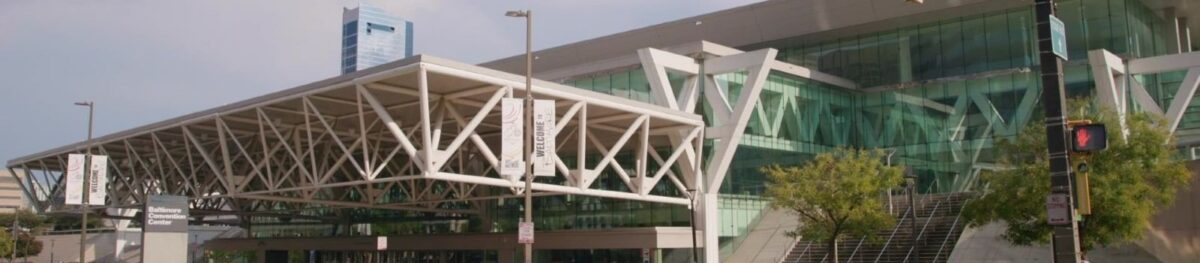
When Mac Campbell became Executive Director of the Baltimore Convention Center, he inherited a 1.2 million square foot facility running on infrastructure that hadn’t been significantly updated since the early 2000s. The building still relied on copper phone lines, and its network was so outdated that high-tech events wouldn’t even consider Baltimore as a venue option.

Today, less than a year after implementing a comprehensive technology overhaul, the convention center has transformed into an industry leader, attracting new business segments like e-gaming. The journey offers valuable lessons for IT decision makers facing similar infrastructure challenges.

When Legacy Systems Become Business Barriers

“We were in a pretty unique position coming out of COVID,” Campbell explains. “All of our revenue partners’ contracts had expired and were on extensions.” This created an unexpected opportunity to reimagine their technology infrastructure from the ground up.

Phil Costa, Deputy Director, describes the pre-transformation state: “We hadn’t had an upgrade to our network in a number of years.” The outdated infrastructure wasn’t just a technical problem—it was directly impacting business. Events were hesitant to book Baltimore, questioning whether the facility could meet their technological needs. The sales team found themselves avoiding technology questions rather than leading with them as a competitive advantage.

Strategic Approach: Partnership Over Vendor Relationships

Baltimore’s leadership sought a true partner who understood the convention industry’s unique demands. “There’s a reason why we don’t call Hospitality Network a vendor. They’re a partner,” Campbell emphasizes.

The RFP process prioritized operational impact and industry expertise. As Campbell notes, “We wanted somebody to be able to prove that they not only had the experience in this particular segment of hospitality, but really had a hunger to partner with us to drive unique experiences and not just an order form transaction.”

The Implementation: Massive Scale, Minimal Disruption

The infrastructure upgrade scope was staggering:

  • 220 new wireless access points
  • 15 miles of Cat 6 and fiber optic cable
  • 12 new network closets
  • Complete server equipment replacement
  • Transition from copper to VoIP phones building-wide

Working in a 1979 building, the team frequently discovered that paper maps didn’t match reality. Rather than letting obstacles derail the project, they collaborated to find solutions. The implementation team worked through holidays and weekends. Campbell recalls: “They were here first thing in the morning, even though it was probably their 10th hour on the job that day to meet me in my office to let me know the progress… even though I wasn’t even requiring that.”

Immediate Returns: From Pain Point to Selling Point

The transformation’s impact was immediate. Technology shifted from being avoided to becoming a primary selling point. Costa notes they now actively pursue e-gaming conferences: “We’ve already gone on sales missions with HN to go to other conferences and brought them along.”

The upgrade enabled new use cases. In one example, the convention center hosted 911 call centers from Washington D.C. “They were able to take 911 calls and do real time dispatching from the convention center and all of that went off flawlessly,” Costa reports.

Beyond Infrastructure: The Service Component

Baltimore’s transformation demonstrates that infrastructure alone isn’t enough. “You could have the best network in the world, but if you don’t have customer service or the onsite skillset to make things happen, then that network isn’t going to be fully utilized,” Costa observes.

The facility now has three full-time technicians plus a general manager on-site, backed by remote support teams. Campbell notes: “The ability to look at the network in real time and address maybe any hiccups that are happening during the event… has made a meaningful difference.”

Measuring Multi-Stakeholder Success

For Customers: Events experiencing previous connectivity issues found dramatic improvement. “There have been some that have come back here since the upgrade… and have indicated that it has been night and day,” Costa reports.

For Staff: Executive offices, break rooms, and kitchens received enhanced connectivity. The new VoIP system provided flexibility for work-life balance.

For Partners: Other service providers benefited from reliable connectivity for point-of-sale systems.

For the Business: New market segments opened up, strengthening competitive position.

Key Lessons for IT Decision Makers

1. Transform Crisis into Opportunity
The pandemic-driven contract expirations became an opportunity to reimagine technology strategy completely.

2. Prioritize Partnership Over Price
Baltimore prioritized finding a partner who understood their industry and would invest in their success.

3. Plan for Flexibility and Scalability
The infrastructure was designed for future requirements. Campbell notes, “I am very confident that during the term of Hospitality Network’s contract, we’re going to be looking at significant renovation and expansion of our building.”

4. Make Technology a Business Enabler
Rather than viewing IT as a cost center, leadership positioned technology as a revenue enabler and competitive differentiator.

5. Embrace Collaborative Problem-Solving
When challenges arose, teams worked together to find solutions. Campbell observes, “Hospitality Network acted with nothing but grace and really partnered well.”

Looking Forward: Continuous Innovation

Baltimore’s leadership recognizes transformation isn’t a one-time event. “Making sure that we’re continuing to have innovation and stay on top of the latest trends is something that we’re really excited for,” Costa acknowledges.

The convention center is exploring next-generation technologies, including enhanced digital signage and expanded outdoor connectivity. The infrastructure investment created a foundation supporting whatever emerging technologies the events industry demands.

Sustainability and Environmental Impact

Baltimore’s approach included careful attention to sustainable practices. When decommissioning old equipment, the team ensured proper recycling and disposal. “Sustainability has been a priority of our facility for a handful of years… it’s something that we pride ourselves on,” Costa notes.

Technology as Economic Catalyst

For a city-owned facility with a mission to drive economic impact, the transformation delivered on its promise. Campbell articulates: “The role of a convention center is really to be an economic catalyst, not only for local businesses, national businesses, but to create jobs for folks to really drive prosperity for not only the city but for the whole state.”

The technology upgrade directly supports this mission by attracting events bringing visitors who generate tax revenue. “When we’re doing good, then so are the restaurants and the local places around us,” Costa explains.

Final Thoughts

Campbell summarizes the transformation’s success: “I am very happy to say that I have an outlier, a positive one. Oftentimes we talk about the outlier usually being, oh, well, we don’t have a good story to share. Hospitality Network has been able to fulfill every promise… and has made a transition that hasn’t happened since the early 2000s a really smooth one.”

For IT decision makers, Baltimore’s experience demonstrates that with the right approach, even decades-old infrastructure can become a competitive advantage. The key is viewing technology as a strategic enabler of business objectives.

Costa reflects on the impact: “It really did change the entire landscape for the building and what we’re able to sell and talk to clients about. And it really gave our sales staff and the sales staff at Visit Baltimore something to be excited to brag about.”

The message is clear: legacy infrastructure doesn’t have to be a liability. With clear vision, strong partnerships, and commitment to excellence, even the most daunting infrastructure challenges can be overcome—and turned into competitive advantages. The Baltimore Convention Center’s transformation from tech laggard to industry leader shows the way forward.

Anatomy of a Smart Convention Center: Key Solutions Across Guest Touchpoints

Smart Convention Technology That Guides Attendees from Entrance Through Engagement

Elevate experiences at your convention center with a technology-driven opportunity at every guest touchpoint. From guest arrival to the final keynote or hybrid streaming session, each moment is a chance to streamline operations.

Smart convention centers integrate IoT devices, cloud-based systems, and sustainable practices to create venues that are safer, more engaging, and more efficient than ever before.

We’ll guide you through the anatomy of a smart convention center, uncovering how strategic innovations across touchpoints such as entrances, security, booth designs, and beyond can transform events into seamless, memorable experiences.

Guest Journeys Through Smart Convention Centers

Guest touchpoints define the journey through convention centers. In a smart convention center, technology minimizes friction and keeps visitors connected, engaged, and impressed.

By integrating IoT systems, mobile solutions, and sustainable practices, venues guide attendees seamlessly through entrances, security checkpoints, exhibit halls, and auditoriums. 

Intuitive, Smart Mobile Ticketing at Entrances

Naturally, your guests start their journey at the convention center’s entrance. Convention center entrances can often be neglected as a part of the guest experience. At best, neglected convention center entrances are hardly noticed; at worst, they set a negative first impression that’s hard to recover from, resulting in:

  • Long lines leading to obstructed walkways and anxious guests.
  • Confused attendees unsure about where, when, or how to enter your convention center.
  • Missed appointments and speakers, forcing guests to miss integral reasons they attended convention centers to begin with.
  • Potential loss of repeat attendees and vendors without engaging information that encourages them to return next year.

Avoid these potential consequences for poor execution and optimize your convention center’s entrance to delight your guests and drive revenue. 

Mobile ticketing is a key way to streamline these entrances and ensure positive experiences. Guests can access their tickets at a moment’s notice, lowering wait-times as they enter your convention center with efficiency. 

According to Ticketmaster, mobile ticketing adoption grew by 50% in 2024, and mobile-first strategies resulted in a 2.2x higher gross transaction value from in-app purchases at events. Implement quick, easy mobile access and purchasing options to improve guest satisfaction and grow your bottom line. 

Seamless, Easy Attendee Security

Security at your convention center’s entrance is essential. Violent attacks at convention centers have become a rising threat while Statista estimates that cybercrime will cost businesses up to $10.5 trillion by the end of 2025. Spaces dense with high net-worth individuals such as convention centers face particular risk. 

Convention center security should be a top priority across guest touchpoints in your venue. Key integrations made accessible via recent technology include:

  • Online-Connected Surveillance Cameras: Stream real-time footage to IoT-enabled devices, allowing security teams to monitor attendee locations and quickly respond to suspicious activity.
  • Checkpoints with Mobile Check-In: Track attendee movement using mobile ticket scanning at multiple checkpoints, enabling real-time location data and faster response during security incidents.
  • Securing WiFi Networks with Passwords & Verified Captive Portals: Protect networks from unauthorized users with rotating passwords and captive portals that verify user identity while tracking access activity.
  • Restricted Access to Dangerous Websites: Use DNS filtering to block malware-infected or phishing websites, reducing the risk of cyberattacks and safeguarding attendee and venue data.

Engaging IoT Booth Design

Booths are one of the main guest touchpoints for attendees. Booths foster connections, introduce guests to new business opportunities, and offer exciting tech experiences.

Interactive trade show booths wow event attendees and make an impactful statement. Modern IoT booth design can improve guest experiences in diverse ways, including through: 

  • Social Media Integration: Incorporating live social media feeds and real-time interactions boost engagement, showcase products to a wider audience, and strengthen online presence.
  • Live-Streaming Display Screens: Using dynamic screens to broadcast demos, presentations, and product launches both on-site and online keeps messaging responsive and engaging.
  • Virtual Technologies (AR & VR): Enhancing booths with immersive AR overlays and VR simulations offers interactive product experiences that attract attendees and extend reach to digital audiences.
  • Digital Touchpoints for Data Collection: Deploying kiosks and mobile devices to gather attendee data enables personalized experiences, targeted follow-ups, and stronger customer relationships.

These solutions and more keep guests engaged across your venue, flooding events with interactive, appealing touchpoints. 

Engaging IoT Booth Design

Sustainable Waste Management & Water Usage

Bathroom facilities are another often ignored guest touchpoint within convention centers. Like convention center entrances, poorly-maintained bathrooms can leave a bad impression and waste substantial resources, leading to loose trash and wet floors. 

Using sustainable IoT technology, convention centers can minimize waste while maintaining pristine restrooms. Modem sustainability trends in convention centers include:

  • Waste Management Programs: Reduced environmental impact of high attendee waste volumes through strategic disposal methods, recycling efforts, and the use of green materials.
  • Energy-Efficient Maintenance: Lowered waste and resource misuse during facility upkeep by adopting sustainable cleaning practices and proactive repair strategies.
  • Minimized Water Usage: Addressed water shortages with bottle refill stations, drought-resistant landscaping, and wastewater recycling to conserve resources and reduce costs.

These programs create better guest experiences by minimizing waste and resources in restrooms, making them easier to maintain and delivering more consistent, positive experiences.

Awe-Inspiring Auditoriums for Keynote Speakers

Convention centers serve as the backdrop for groundbreaking announcements, thought-provoking panels, and keynote speakers who draw massive audiences, making auditoriums yet another key guest touchpoint. 

An auditorium designed to inspire creates unforgettable experiences that amplify the speaker’s message. From acoustically engineered sound systems to dramatic lighting and expansive sightlines, modern auditoriums combine architectural brilliance with cutting-edge technology to captivate audiences.

These spaces often integrate high-definition LED walls, live-streaming capabilities, and immersive audio to ensure every attendee, whether in the back row or tuning in remotely, feels engaged. 

Flexible seating arrangements and modular stage designs allow for seamless transitions between presentations, performances, and interactive Q&A sessions. By blending design, comfort, and state-of-the-art tech, awe-inspiring auditoriums transform keynote speeches into powerful, memorable events that resonate far beyond the convention walls.

Awe-Inspiring Auditoriums for Keynote Speakers

Hybrid Streaming To Reach Worldwide Attendees

One final touchpoint reaches guests beyond your venue; hybrid streaming allows digital guests to interact with your convention center thanks to modern connected technology. Markletic found that 71% of organizations with 5000 or more employees had hybrid events in their portfolio. Many convention center attendees will expect some hybrid aspect to interact with industry professionals outside the confines of your venue.

Virtual guest touchpoints offer benefits to convention centers including: 

  • Enhanced Engagement: Enable remote attendees to communicate and network with peers as if they were on-site.
  • Global Connectivity: Effortlessly link professionals worldwide through live conference sessions and meetings.
  • Increased Event Excitement: Boost attendance and encourage easy, shareable online registrations with minimal barriers.
  • Streamlined Post-Event Follow-Up: Deliver instant survey prompts via hybrid platforms and provide in-person attendees with access to recorded content.

Strengthen Smart Convention Center Experiences With Hospitality Network

Every guest touchpoint within convention centers gives your venue a chance to leave lasting impressions. The smart technology we’ve shared ensures those impressions are largely positive. By embracing solutions that prioritize security, engagement, sustainability, and connectivity, convention centers meet the evolving expectations of modern attendees while future-proofing their operations. 

From mobile ticketing to immersive auditoriums and hybrid streaming, these innovations work together to create events that resonate both in-person and online. With the right technology partner, such as Hospitality Network, convention centers can confidently deliver smarter, more connected experiences that stand out in today’s competitive event landscape. Contact us today and learn how Hospitality Network can support innovative guest touchpoints in your venue.

Internet for Events: Build a Foundation for Seamless Experiences

Why Event Internet Services Matter More Than Ever

In today’s event landscape, internet connectivity is the backbone of the entire guest experience.

From livestreaming and interactive apps to IoT-powered security and immersive AR activations, nearly every aspect of modern events depends on a reliable, high-capacity network.

To keep pace with rising expectations and cutting-edge industry technology, organizers need event networks designed to handle evolving demands.

Read on to learn about the specific pieces of technology making event internet services more essential than ever and common network pitfalls to avoid.

Why Does Wireless Internet for Events Matter Now More Than Ever?

Event guests expect instant, always-available connectivity. Whether they’re streaming, engaging through apps, or exploring immersive AR and VR activations, reliable wireless internet is essential for guests. 

Event organizers, meanwhile, rely on connected tools for analytics, operations, and security. With this dual demand from both guests and staff, a dependable event internet network is critical to delivering seamless experiences.

Exciting New Pieces of Event Technology Reliant on Event Networks

Powerful wireless internet supports innovations built for event guests and venue personnel alike. Pieces of technology must-haves that depend on event networks include, but are not limited to:

  • Extended Reality Event Experiences: Virtual Reality (VR) and Augmented Reality (AR) experiences leverage internet connections to access immersive guest experiences.
  • IoT Connected Event Security: Both physical and cybersecurity innovations rely on wireless network access.
  • Audience Engagement Tools: Online-connected engagement tools gather information via hybrid Q&A sessions, audience engagement polls, and more.
  • Integrated AI Experiences: Guests can engage with online support chatbots, while event organizers can access online databases built for comprehensive analytics.

Wireless internet access is and will continue to be crucial. It’s up to your event team to find a network provider that can support your future.

Why Does Event Internet Fail? Common Factors & Essential Solutions

Event internet fails for a variety of reasons, from installation issues to overuse or even bad actors. Proactive solutions may include:

  • High-density WiFi design
  • Infrastructure upgrades
  • Advanced cybersecurity measures
  • 24/7 support 

Transform vulnerable event networks into reliable, future-ready systems with these solutions. Below, learn more about some of the common causes for event inherent failure and how to solve them.

Not Enough Event Bandwidth

Due to high volume network needs, it can be tricky to implement the necessary bandwidth to support all devices at large events. Here’s a quick breakdown of how bandwidth works:

  • Bandwidth is measured in Mbps, or megabits per second
  • Mbps is a measurement that analyzes the amount of data that can travel between two points within a network at any given second
  • When the devices in your network transmit more Mbps than your network can handle, data information transfer in your network slows down.

Think of data like water in a pipe. As long as the volume of water flowing through your pipe remains below a certain level, your pipe should run smoothly. Once the water exceeds that level, however, your pipes will slow down or burst. The same logic applies to data and bandwidth.Once data on your network exceeds your network’s Mbps, your network’s “pipe” will struggle to transmit data at an effective rate.

With big crowds, innovative devices, and multi-device livestreams, events are at particular risk of not having enough bandwidth. Unsuitable bandwidth at your event can frustrate attendees, staff, and performers, ruining event experiences across the board.

How to Solve Low Bandwidth Event Networks

High-capacity (also known as high-density) event WiFi networks solve issues with low-bandwidth within your event venue. 

These networks are built specifically to sustain the needs of densely-populated event networks, using a curated mix of routers, access points, and cabling installed specifically for your venue’s layout. 

Skilled event network providers will identify your venue’s exact needs, building specific solutions tailored for your events.

How to Solve Low Bandwidth Event Networks

Poor Event Network Infrastructure

Low bandwidth is often a side effect of a poor overall event network infrastructure. Many event networks are built using technology that was once modern but has grown outdated through years of neglect and unadapted innovation. Poor pieces of event network infrastructure commonly found in venues include:

  • Misplaced routers located in spots prone to spotty network access, whether due to poor initial placement or new construction.
  • Old cabling systems, non-compliant with current industry standards and incompatible with latest network technologies.
  • Outdated software that’s missing essential software updates or lacking continuous, current support.
  • Limited scalability due to poor network foundations and a lack of response plans in case of full network crashes.

How to Solve Poor Event Network Infrastructure

Hiring an event WiFi provider specialized in building durable, adaptable networks is the key to fixing event network infrastructure. Experienced providers can build networks both from scratch or using existing network infrastructure, salvaging parts to create networks that work as good as new. 

Event network standards are continuously growing in scope and speed. Good providers also know how to build infrastructure scalable for the future. 

Event Network Cyberattacks

Even networks with powerful bandwidth and rock-solid infrastructure can face massive slowdown and complete failure due to cyberattacks.The cost of cybercrime is expected to rise to nearly $24 trillion by 2027, and events are full of devices primed for targeting. Cybercrime takes all kinds of forms, including: 

  • Ransomware software that prevents event attendees from accessing essential technology solutions until users pay a ransom to bad actors.
  • Dangerous websites disguised as trustworthy, leading to fraudulent pop-up ads and forced, dangerous downloads.
  • DoS and DDoS attacks designed to overwhelm system resources and disrupt provider abilities to respond to real service queries.
  • Phishing emails, messages, and network log-ins built to socially engineer fake scenarios where attendees may give up valuable information.

How to Counter Event Network Cyberattacks

Protecting your event network users from cyberattacks requires a diligent, constantly evolving commitment to your event network cybersecurity. Just as bad actors are always searching for new ways to attack your users, event network providers must continuously search for innovative methods to counter these attacks. Recent solutions that are absolute necessities for network cybersecurity include:

  • Verified captive portals that present terms & conditions pages and email address sign-on to networks, tracking network use and keeping out bad actors.
  • Restricted access to dangerous websites using DNS (Domain Name System) filtering.
  • Thorough risk assessment of incidents at similar events, high-risk individuals, and potential security compromises to avoid.
  • Dedicated live resources that monitor network performance and abnormalities, ready to proactively stop potential sources of danger.

Unreliable Event Internet Support

Network support services are important for solving network issues, from malicious cyberattacks to less sinister slowdowns. Some event WiFi providers fail to offer access to human help or phone support lines, instead relying on online frequently asked questions (FAQ) pages. If a network question isn’t answered on that page, event organizers using these providers are out of luck.

How to Solve Unreliable Event Internet Support

Across event-planning and the events themselves, event network support is often required at all times of day. 24/7 technical support ensures your event staff can access troubleshooting whenever it’s needed. Hiring an event network provider that offers this type of support is crucial if you want holistic, constantly reliable network access.

How to Solve Unreliable Event Internet Support

Work With Hospitality Network to Build Event Networks You Can Trust

Every successful event rests on a foundation of strong, dependable connectivity. At Hospitality Network, we specialize in designing, installing, and supporting custom WiFi solutions tailored to the unique demands of event venues. From high-capacity bandwidth and IoT-ready infrastructure to advanced cybersecurity and round-the-clock technical support, our solutions ensure your event network performs when it matters most. Partner with us to deliver the seamless, reliable internet experiences your guests and staff expect. Contact us today to get started. 

Ready to Transform Your Hospitality Venue?

Get a Consultation with one of our Hospitality Technology Experts!

This field is for validation purposes and should be left unchanged.
Full Name(Required)
Choose Your Venue / Interest Type: