6 Hotel Accessibility Features Leveraging Technology

Hotel accessibility has long been framed as a compliance obligation, yet many hotels still lag behind in fully accommodating people with disabilities (PWD).

The Americans with Disabilities Act (ADA) was officially enacted in 1990. Thirty-five years later, a 2025 NPR survey found that the gap between what compliance requires and what PWD guests actually experience remains wide. As a common example, wheelchair users routinely arrive at hotels to discover unavailable “accessible rooms,” beds too high to transfer in and out of and front desks they can’t see over.

Technology is continuing to bridge the gap for PWD guests. NFC-enabled door locks, voice-controlled room environments and accessible booking platforms give hotels the tools to build genuine accessibility into every stage of the guest journey. What each of these solutions needs to perform reliably is a network infrastructure strong enough to carry them all.

Common Challenges in Hotel Accessibility

The opportunity cost of failing to accommodate the PWD market is high. Travelers with disabilities spent nearly $50 billion on U.S. travel in 2024, and the global accessible travel market is projected to reach $126 billion by 2030.

Despite decades of regulation and growing demand, most hotels still fall short of true accessibility. These are the gaps guests encounter most often.

  • Inaccessible physical environments: Guests in wheelchairs or with mobility aids have trouble getting around because of narrow doorways, high countertops, and the absence of ramps or lifts. Hotel accessibility should be a design standard, not an afterthought, even for properties that have recently been remodeled.
  • Inadequate accessible room inventory: Many properties don’t have enough accessible rooms, and when the inventory runs low, those rooms are often the first to be reassigned. Guests with disabilities often arrive to find that their reserved accessible room isn’t available and that there are no other rooms that are similar.
  • Digital and booking barriers: A 2025 AudioEye report found that travel websites have some of the worst digital accessibility problems of any industry. If a guest has a visual or cognitive impairment, an inaccessible booking experience can make it impossible for them to get a room before they even arrive.
  • Beds and furnishings at inaccessible heights: Bed height is one of the most common problems for guests who need to move from a wheelchair. Standard furniture arrangements don’t account for the different physical needs of guests.
  • Poor emergency and safety communication: Standard fire alarms and emergency alerts mostly use sound cues, which don’t work for guests who can’t hear well. Properties that haven’t specifically invested in inclusive safety infrastructure still don’t have many visual and tactile alert systems.
  • Undertrained staff: Simply having the right physical infrastructure doesn’t make a hotel experience accessible. Even well-equipped properties fall short when front-line staff don’t know how to help guests with different needs in a respectful way.

Tech-Enabled Hotel Accessibility Features to Consider

The technology to build a genuinely accessible hotel experience already exists. These six features represent some of the most impactful and practical solutions available today.

1. NFC-Enabled Door Locks

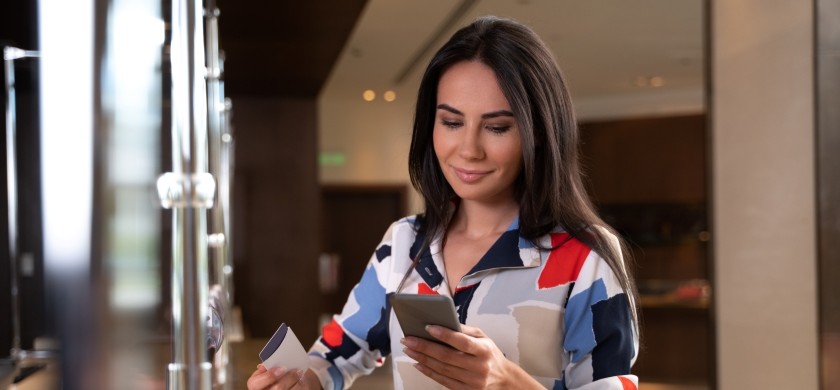
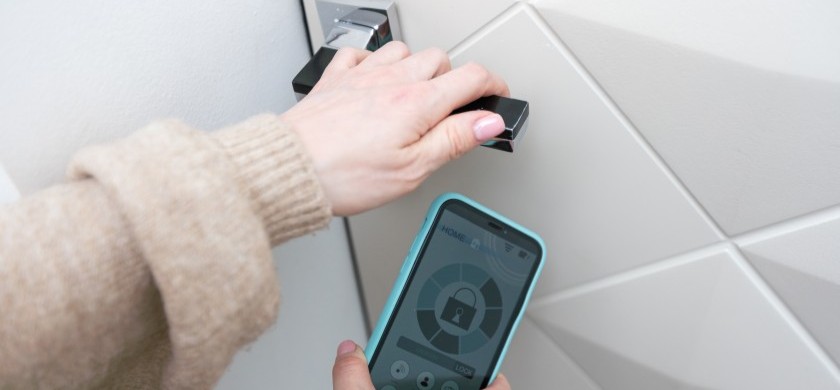
Guests can open their doors with Near Field Communication (NFC) door locks by tapping their smartphones or a wearable device. The tap-and-go feature makes it easier for guests with limited dexterity, arthritis, or motor impairments versus using a keycard or gripping a handle.

Hotels can also send you digital keys before you get there. Guests can skip the front desk check-in process and go straight to their room. This is good for people in wheelchairs who might have trouble accessing regular check-in counters. The system relies on real-time credential authentication, which means a stable network infrastructure is essential.

2. Adjustable Beds

One of the most common problems for guests with mobility issues is bed height and the lack of adjustability. A study by MMGY Global found that 52% of travelers with mobility issues say that hotel beds are too high for them to safely get out of a wheelchair.

Height-adjustable beds fix this problem right away. Motorized controls let guests lower the bed to the level of a wheelchair for transfers and then raise it back up to a comfortable sleeping height on their own. A guest who can take care of their own comfort is a guest who feels respected, not just taken care of.

3. Voice-Assisted Lighting and Heating

For guests with visual impairments, limited mobility or conditions affecting fine motor control, adjusting a thermostat or locating a light switch can be a genuine challenge. Voice-assisted room controls remove that friction entirely.

With a voice command, guests can adjust lighting intensity, set room temperature and close curtains without touching a surface. They can also request housekeeping or room service hands-free. These systems run on cloud-managed platforms and require stable, low-latency network connections to respond accurately and consistently.

4. Room Control Smartphone Applications

In-room control apps give guests a single interface to manage nearly every aspect of their stay, from lighting and temperature to TV channels and do-not-disturb status. For guests with hearing impairments, cognitive disabilities or limited mobility, an app replaces dependency on physical controls scattered throughout the room.

The best implementations integrate with a hotel’s property management system. Staff gain full visibility of guest needs and preferences, and response times improve as a result. Every connected function in the room depends on a reliable WiFi network that reaches every corner of the property without interruption.

5. Fire Alarms for Guests with Hearing and Visual Impairments

Standard fire alarms rely almost entirely on sound. For the roughly 15% of American adults who experience some degree of hearing loss, an audio-only alert is not adequate protection.

ADA-compliant visual and tactile alert systems close this gap. Strobe lights and bed-shaker devices connect wirelessly to a hotel’s existing fire alarm system without requiring full building rewiring. When an alarm is triggered anywhere in the property, a wireless signal activates the visual and tactile alerts inside accessible rooms. Every guest receives the same opportunity to evacuate safely.

6. Online-Integrated Booking Software

For travelers with disabilities, the guest experience starts during the early stages of research and planning. According to a survey by Open Doors Organization, 81% of travelers with disabilities used the web for travel planning, and almost half (48%) relied on it to identify and book accessible accommodations.
unlocking a hotel door via an app

Digitally accessible booking platforms equip guests with the ability to filter accommodations by specific accessibility features. Additionally, such platforms provide detailed room descriptions and complete reservation booking capabilities using assistive technologies like screen readers. 

The ADA requires hotel reservation systems to be fully accessible and user-friendly to guests with disabilities at all times. More than just checking a compliance box, properties that meet that standard resonate with this significant and loyal segment of travelers that many hotels are still neglecting.

Accessibility Runs on Connectivity

Every feature on this list shares a common requirement. NFC locks need to authenticate credentials in real time. Voice controls need a low-latency connection to respond accurately. Room apps need seamless WiFi to function the way guests depend on them to. Visual and tactile alert systems need a reliable signal to activate at the moment it matters most.

Accessibility technology is only as dependable as the network beneath it. A dropped connection does not just disrupt a guest’s comfort. For guests who rely on these features to navigate their stay safely and independently, it can mean something far more serious.

Blueprint RF designs and manages WiFi solutions built for the demands of the hospitality industry. When the technology your guests depend on needs to work without fail, the network powering it needs to be built that way from the start.

Contact Blueprint RF for more information.

How Software & Technology Can Improve Hotel Profit Margins

Hotel profit margins have historically been tight. The average hotel nets around 10 cents of profit for every dollar earned, or about 10% profit margin. But that figure can vary widely depending on the nature of the business and its target guests.

According to the latest 2025 Hotel Profitability Performance Report from HotelData.com, Gross Operating Profit (GOP) margins dropped to 36% in Q4 as demand softened and operating costs held firm. The total average for 2025 was 38.3% GOP.  Keep in mind that’s “gross” operating profit margin, a metric before ownership fees and taxes are taken into account.

What’s insightful about this data are the trends. Q4 was not simply a seasonal slowdown. It reveals lighter demand, tighter budgets, and an increased focus on operational precision heading into 2026. And investments in hotel technology and software integrations are at the forefront of cost-reducing initiatives.

What Does “Hotel Profit Margin” Mean?

The hotel profit margin is the percentage of revenue that remains after all costs have been paid. It’s one of the best indicators to tell how efficiently a property is run.

Hotels keep track of two main types. The Gross Operating Profit (GOP) margin shows how much money is left over after paying for direct operating costs like labor and utilities. When you add in ownership costs, debt service, and taxes, the net profit margin shows the whole picture.

In most cases, the net profit margins for hotel businesses are between 10% and 30%. Budget and economy properties usually work at the lower end of that range. Luxury and high-end hotels typically earn more by charging a premium for rooms and driving ancillary revenue from additional streams.

What Factors Erode Hotel Profit Margin the Most?

Margins rarely collapse in one dramatic moment. They compress steadily under the weight of rising costs, unpredictable demand and structural inefficiencies that build over time. Knowing where the pressure comes from is the first step toward addressing it.

  • Labor costs and staffing structure: Labor is the largest expense on any hotel’s profit and loss. According to Bureau of Labor Statistics data, total compensation in the Accommodation and Food Service sector rose 26.5% between 2020 and 2024, outpacing the Consumer Price Index for the same period. Staffing models at many properties have not been restructured to reflect that new cost reality.
  • Softening demand and occupancy volatility: When occupancy drops, fixed costs do not. The Hotel Profitability Performance Report mentioned above shows RevPAR fell 9.6% from Q3 to Q4 as demand softened entering the off-season. Rate held relatively steady, but occupancy pulled GOP margin down 3.3 points in a single quarter.
  • Inflation and rising input costs: Inflation slowed down as we got closer to 2026. The effects on hotel operations are still not fully unwound. Across the board, costs have gone up because of supply chain problems and higher tariffs on food, goods, and property improvements.
  • K-shaped demand patterns: Demand is splitting into two groups today, which is called a K-shaped pattern. Wealthy travelers keep spending, but guests who are sensitive to price are either trading down or postponing their trips. That change makes it hard to predict how much money properties in the middle will make and limits their ability to set prices.
  • OTA commissions and distribution costs: Online travel agencies contribute to stronger bookings, but that visibility comes at a cost. The usual commission rate is between 15% and 25% of each booking. When you do a lot of business through OTAs, distribution costs become a steady drain on net revenue.
  • Elevated borrowing costs: Interest rates are still high as we head into 2026. Elevated borrowing costs hit property owners at the ownership level, where net margin is calculated, for properties that have debt. That drag isn’t very clear in GOP numbers, but it’s very clear at the bottom line.
what are healthy profit margins for hotels

What’s a Healthy Profit Margin for Hotels?

“Healthy” depends entirely on the type of property you’re running. A budget hotel with a strong margin would be seen as underperforming at a luxury resort. The number itself isn’t as important as the context.

A net profit margin of 5% to 15% is realistic for properties that are affordable and budget-friendly. Margins are naturally smaller because room rates are lower and guests are generally more cost-conscious. Achieving the top of that range requires keeping costs under control and attracting a steady stream of guests.

Most midscale and upper-midscale hotels aim for net margins of 10% to 25%. In the Q3 of 2025, upper-midscale properties had the highest GOP% of all chain scales. These operators have a real edge in efficiency because they use lean staffing models and simple service structures.

Luxury and high-end hotels can realistically aim for net margins of 25% to 35%. They benefit from high room rates and extra revenue from food and drink, spa services, and group events. Affluent guests are also less sensitive to price changes, which helps keep Average Daily Rate (ADR) high, even when demand is low.

In general, a net margin of 15% to 20% is considered solid across the industry, and margins above 20% indicate the business is doing well. Very few properties get to that level without intentionally investing money into improving their operational efficiency and revenue strategy.

How to Improve Hotel Profit Margin with Tech & Software

The right hotel technology does not automatically add profit. It creates the conditions where smarter pricing, lower overhead and stronger ancillary revenue become achievable at scale. Here are key investments that deliver measurable impact at the margin level. It’s likely you already use some of these platforms, but they may warrant auditing or upgrading if they’re not performing up to par.

Revenue Management Systems

Manual pricing relies on intuition. A Revenue Management System (RMS) uses real-time data, competitor rate tracking and AI-driven demand forecasting to set the right price at the right time. Research shows hotels using automated RMS tools see RevPAR increase by 10+% on average. For properties operating on thin margins, that kind of lift can define the outcome of an entire quarter.

Property Management Systems

A Property Management System (PMS) is the operational command center of a hotel. It connects reservations, front desk, housekeeping and billing into a single platform, reducing manual errors and giving staff real-time visibility across the property. When integrated with an RMS, the two systems work together to protect both revenue and margin simultaneously.

Upselling and Guest Experience Tools

Over 85% of hoteliers expect ancillary revenue to make up a larger share of total revenue in the years ahead. Automated upselling tools allow hotels to offer room upgrades, early check-in, late check-out and curated add-ons at every stage of the guest journey. Hotel Spero in San Francisco generated an average of $3,500 in incremental monthly revenue after deploying automated upsell tools.

Energy Management Systems

Energy is one of the most controllable costs on a hotel’s profit and loss statement. An Energy Management System (EMS) with smart room technology automates HVAC, lighting and temperature controls based on real-time room occupancy data. The EPA estimates EMS can reduce energy costs by 35–45% with an ROI of 50–75%. The U.S. Department of Energy puts typical payback periods under 18 months for properties that implement a comprehensive strategy.

Managed WiFi and Network Infrastructure

Every technology on this list depends on one thing: a reliable, high-performance network. Cloud-based PMS and RMS platforms, digital guest tools and EMS sensors all require stable, secure connectivity to function as designed. Blueprint RF provides managed WiFi and network infrastructure built specifically for hospitality, keeping every system online, every integration intact and every guest experience running without interruption.

the foundation beneath every hotel margin gain

The Foundation Beneath Every Margin Gain

Tighter margins reward precision. The hotels that protect and grow profitability in today’s environment share a common trait: they have invested in the operational infrastructure that makes smart technology work reliably.

Revenue management tools, energy systems, upselling platforms and integrated PMS solutions can all move the margin needle. But each one depends on a network that can carry the load without interruption, latency or security gaps.

That is where Blueprint RF comes in. As a managed WiFi solutions provider built exclusively for the hospitality industry, Blueprint RF ensures the connectivity layer your technology stack depends on is always performing. Because a system that goes offline does not just inconvenience a guest. It costs you.

Ready to learn more? Get in touch with BlueprintRF today.

Conversational AI for Hotels: 6 Key Integrations for Your Property

How Conversational AI Can Transform Operations & Guest Experiences In Your Hotel

Conversational AI has become a dominant force across types of businesses. According to Grand View Research, the conversational AI market size was at 11.58 billion USD in 2024, expect to grow to 41.39 billion USD in 2030. In turn, every industry can expect an increased role for conversational AI in the coming years; the hotel industry is no exception.

Conversational AI is revolutionizing the hotel industry with AI assistants, chatbots and voice-activated tools. Using this technology, hotels can provide consistent, high-quality experiences for guests while improving operational efficiency behind the scenes. Read on to discover six of the most impactful ways conversational AI can transform your property.

1) Faster Guest Support

AI-driven guest support enables hotels to provide rapid responses to questions and requests, keeping guests satisfied and staff focused on more complex tasks. AI-powered systems can handle large volumes of inquiries simultaneously, ensuring that no guest waits for assistance during busy periods. By automating routine tasks, hotels can free human staff to deliver high-touch service where it matters most. 

Some essential AI integrations that could benefit your property include:

  • Chatbots for Common Questions: Guests can use AI-powered chat interfaces to ask about amenities, hotel policies and local attractions. The system delivers immediate, accurate responses without requiring human intervention.
  • Voice-Activated Front Desk Assistance: In-room AI voice assistants allow guests to request services verbally, such as wake-up calls or restaurant reservations. These tools provide instant support even during busy periods.
  • Automated Escalations: AI can identify requests that need human attention and forward them to staff with all relevant context. This ensures urgent issues are addressed quickly and efficiently.

With enterprise-grade connectivity, these systems operate without lag or delay, delivering real-time support across devices and locations. Guests experience fast, responsive service, and hotels can maintain operational efficiency even at peak occupancy.

2) Multilingual Support

Multilingualism is on the rise in the United States; according to the United States Census Bureau, almost one in five Americans speak a language other than English at home (over 67 million people),

Communicating with guests in languages unfamiliar to your staff can be a challenge, but AI can remove language barriers and deliver consistent service. With the following systems activated, global travelers can feel better understood, respected, and cared for throughout their stay:

  • Text and Voice in Multiple Languages: Guests can interact via chat or in-room voice assistants in their preferred language. AI provides accurate, culturally sensitive responses to questions about the hotel or surrounding area.
  • Multilingual Concierge Services: AI can offer directions, dining recommendations and event details in multiple languages, supporting international travelers seamlessly.
  • Automated Translation for Staff: Front desk staff can receive AI-translated summaries of guest requests, improving response times and minimizing miscommunication.

Reliable network performance ensures that multilingual AI tools operate seamlessly across devices and locations. In turn, conversational AI helps both global and domestic audiences while maintaining high standards of service and communication.

conversational AI messagings solutions in hotels

3) Hotel Maintenance & Housekeeping Support

AI can significantly improve internal operations by automating task management, prioritizing requests and tracking completion. Guests can report maintenance or housekeeping issues directly to AI databases, with well-designed conversational systems ensuring that the right team receives the task in real time. By streamlining workflows using any number of the following, hotels can maintain higher property standards and reduce operational inefficiencies:

  • Automated Service Requests: Guests can report issues such as broken appliances or request extra towels through AI-powered chat or voice commands. The system automatically assigns tasks to the correct staff member.
  • Task Prioritization: AI evaluates the urgency and location of requests to ensure critical issues are addressed first. This improves response times and resource allocation.
  • Completion Tracking & Analytics: AI logs completed tasks and provides performance insights, allowing management to monitor efficiency and identify bottlenecks.

With strong connectivity, these AI tools operate in real time, allowing housekeeping and maintenance teams to respond quickly and efficiently. The result? Improved guest satisfaction and smoother hotel operations across your property.

4) Contactless Room Experiences

In a post-pandemic world, guests increasingly expect contactless in-room controls. One of several technology trends transforming guest room experiences, AI-powered systems allow guest control of room functions and services without touching physical interfaces. From voice commands to mobile apps, these tools create a seamless, contactless experience that enhances comfort and satisfaction:

  • Voice-Controlled Room Features: Guests can adjust room features including lighting, climate and entertainment using in-room AI voice assistants. Commands are processed instantly for a seamless experience.
  • Mobile App Integration: AI interfaces in hotel apps allow guests to make requests, control room settings or schedule housekeeping from their smartphones.
  • Automated Amenity Requests: Guests can ask for towels, pillows, minibar items and more via AI, with requests instantly routed to staff for fulfillment.

These automations and more help guests customize their experiences without interfacing with unnecessary surfaces, all with the help of artificial intelligence.

5) Personalized Guest Experiences

Conversational AI enables hotels to move beyond one-size-fits-all service by delivering personalization at every stage of the guest journey. Leveraging real-time data such as past stays, on-property behavior and stated preferences, AI helps hotels anticipate needs and tailor interactions in meaningful ways, including through:

  • Customized Recommendations: AI surfaces relevant dining options, amenities and experiences based on guest preferences and previous interactions. Guests receive timely, personalized suggestions that feel helpful rather than promotional.
  • Tailored Upselling Opportunities: AI identifies ideal moments to upsell, aligning with individual guest interests. These targeted offers feel natural and value-driven, increasing conversion without disrupting the guest experience.
  • Anticipatory Service: By recognizing patterns in guest behavior, AI can proactively adjust room settings or suggest services before a request is made. This creates a sense of intuitive service that elevates comfort and convenience.
  • Personalized Communication Touchpoints: AI can tailor messaging across text, app notifications and voice interactions based on guest preferences and journey stage. 

Better personalisation leads to deeper engagement with hotel guests, in turn creating improved satisfaction scores and new revenue opportunities — delivering the kind of personalized experiences modern travelers increasingly expect.

conversational AI innovations for hotels

6) Booking and Reservation Management

Using online-integrated booking platforms, AI streamlines reservations by automating bookings and cancellations while reducing errors and wait times. Notable AI-integrations to booking platforms include:

  • Automated Booking Assistance: Guests can make new reservations or modify existing ones through AI chat or voice systems. Instant confirmations reduce errors and frustration.
  • Integration with Loyalty Programs: AI can manage rewards, apply discounts and provide personalized offers during booking.
  • Peak-Time Load Management: AI balances reservation requests and prevents system overloads during high-demand periods, keeping operations smooth.
  • Real-Time Availability & Rate Updates: AI syncs inventory and pricing across channels instantly, ensuring guests always see accurate availability and rates while reducing the risk of overbooking.

With AI at the helm, guests benefit from faster, more reliable service, while staff can focus on other operational priorities.

Wireless Infrastructure Built to Support Conversational AI For Hotels

While all of these AI integrations are effective in a vacuum, conversational AI capabilities rely on one critical foundation to ensure proper service: a reliable, high-performance wireless network. From voice-activated in-room controls and cloud-based chatbots to real-time housekeeping coordination, AI requires low-latency, high-capacity connectivity to function seamlessly at scale. 

Hospitality Network can build the network your property needs. Designing and managing enterprise-grade wireless infrastructure purpose-built for hotels, Hospitality Network ensures conversational AI solutions deliver instant responses, synchronized operations, and data-driven personalization. Ready to build the infrastructure to support conversational artificial intelligence today and in the future? Request a consultation with our expert team today.

7 Benefits of Technology Integration Within Hospitality Procurement

Hospitality procurement keeps the guest experience running smoothly. Every clean towel, fresh ingredient and piece of equipment comes from decisions made in procurement. But a lot of hotels still use spreadsheets, email chains and manual processes that take up considerable time and money.

James Hansen, VP of business development at Reeco (a hotel-centered procurement management system), says that “It’s not uncommon to find discrepancies of up to 10% between reported inventory value and what’s actually on hand, leading to financial inaccuracies that could add up to hundreds of thousands of dollars.”

The stakes have never been higher. Supply chain disruptions can halt operations in just a few hours. Expectations from guests keep going up. Profit margins are always under pressure. Traditional ways of procurement for the hospitality industry just can’t keep up with today’s demands.

Strategically integrated technology has become a mainstay solution for hospitality procurement. Modern procurement software gives hospitality businesses AI-driven insights, real-time visibility and automated workflows. What happened? Better spending, better relationships with suppliers and the ability to handle whatever comes next. Let’s look at seven specific ways technology changes hospitality procurement, turning it from a necessary task into a strategic advantage.

1. AI-Optimized Spend & Demand

AI turns guesswork into precision. Modern procurement platforms use past buying data, occupancy patterns and seasonal trends to figure out precisely what your property needs and when it needs it. This change from ordering in response to demand to planning stops both expensive stockouts and wasteful overbuying.

The efficiency improvements are significant. AI can reduce the time required to pinpoint and vet suppliers by up to 90%. That means that procurement teams don’t have to spend as much time chasing quotes and deliberating over vendors. They get more time to work on strategic vendor relationships while solidifying better terms.

In addition to overall speed, AI identifies patterns that humans miss. Algorithms monitor real-time changes in commodity prices across suppliers. They find opportunities to buy before prices go up. Intelligent demand forecasting also means having the right amount of inventory that matches what guests really need, rather than making educated guesses.

2. Streamlined Item Purchasing

Manual procurement means juggling multiple vendor portals, price lists, and approval workflows. Technology consolidates this chaos into a single platform where buyers can search inventory, compare prices and place orders without switching systems. The result is faster purchasing cycles and fewer administrative headaches.

Automated requisition systems can save 40-70% on the costs associated with manual processes. Digital catalogs eliminate the back-and-forth of email requests and phone calls. Buyers can instantly access real-time product availability and pricing from approved suppliers. Automated approval routing ensures purchase requests move through the proper channels without getting stuck in someone’s inbox. What once took days now happens in minutes.

Centralized platforms also keep tabs on useful purchase histories. With just a few clicks, your team can quickly reorder things they use often. They can see chances to combine orders and lower shipping costs. Standardized processes can help new employees learn their jobs faster and ensure nothing is missed during busy times.

3. Increased Supply Chain Resilience

Supply chain problems happen all the time now, not just sometimes. A late delivery of linens or a sudden lack of cleaning supplies can directly affect guest satisfaction. Tech-enabled procurement builds resilience by diversifying supplier networks and creating real-time visibility into potential bottlenecks. According to the 2025 Amazon Business procurement study, building resilient and agile supply chains is a top priority for nearly two-thirds of decision-makers.

Modern platforms maintain relationships with several approved vendors for essential items. The system can automatically flag other suppliers when one has stock problems or delivery delays. This backup system ensures operational continuity in the wake of mistakes or supply chain failures. Procurement teams have time to fix issues before guests notice anything is wrong.

Early warning systems give you even more protection. Software tracks supplier performance metrics and flags reliability concerns before they become crises. Your team can see disruptions and change orders coming ahead of time because the system integrates with other supply chain data. There are fewer times when you have to rush at the last minute.

4. Analyze Supplier Performance

You can’t just go with your gut when it comes to vendor relationships anymore. Hospitality procurement software records objective performance data for every interaction with a supplier. Hotels can see in real time how often orders are delivered on time, how accurate they are, how consistent the prices are and how high the quality of the products is. These numbers show which partnerships are worth it and which are a waste of money.

“Digital dashboards provide a transparent view of supplier performance relative to contracts,” says Johannes Vocke, CFO at FutureLog, a fully-integrated hotel procurement software platform. When a vendor keeps missing delivery windows or sending the wrong orders, the data uncovers the problem right away. Instead of vague complaints, procurement teams can deal with problems with real proof. This clarity makes negotiations stronger and makes both sides more responsible.

Tracking performance also helps you find your best suppliers. Those great vendors deserve better relationships and maybe even better terms. Using data to make feedback loops lets past performance shape future decisions and strategies for buying. The end result is a supplier network that keeps getting better instead of staying the same.

5. Reduced Risk of Shortages

Running out of important things at the wrong time causes immediate problems with operations. Guests can tell when there aren’t enough towels or when the breakfast buffet is missing crucial items. These shortages make the experience you work hard to give worse. Technology fixes this problem by automatically setting reorder points and keeping stock levels at their best.

Data shows that predictive analytics can reduce stockouts by up to 30% while minimizing excess inventory by 25%. Smart systems monitor usage and place orders for new items before they run out. Par levels change based on predictions of how many people will be there and seasonal trends. The system knows you need more coffee before your team does, and it knows the stockroom is running low.

Automated alerts prevent costly emergency purchases. Hospitality properties can lose $500 to $1,500 in revenue for each ingredient shortage. Rush orders at high prices cut into profits. Procurement software stops this waste by making sure that critical inventory keeps moving. Your property stays fully stocked without tying up too much money in extra stock.

6. Integrated Budget Tracking

Most of the time, budget overruns don’t give you any warning signs. Small overspending in different departments and on different purchase orders adds up without anyone noticing until the end of the month reports come out. Hospitality procurement software makes it easy to keep track of budgets while you buy things. This lets finance teams see what’s going on before the money leaves the door.

With real-time spend tracking, you can see exactly how each department is doing compared to its budget. The system immediately flags a purchase request if it would put spending over the limit. Managers can make smart choices about whether to approve, put off, or look for other options. This stops the last-minute rush to explain unplanned costs at the end of the quarter.

It’s also easier to plan and predict when all of your financial data is in one place. You can see how much money has been spent in the past on different items, by different suppliers, and over different periods of time. Finance teams can see when sales go up during certain times of the year, get better deals on popular items, and make more accurate plans for their budgets for the next year. The procurement function changes from being a cost center to being a partner in financial planning.

7. Enabled Privacy Requirements Within Contracts

Every day, hotels handle private information about their guests. Credit card information, personal preferences and booking histories all go through your systems. When vendors use these networks or offer services that involve guest data, they are responsible for following your privacy rules. A single mistake can lead to fines from the government and damage to your reputation.

Modern procurement platforms include privacy rules right in vendor contracts and the process of bringing on new vendors. The software makes sure that suppliers agree to GDPR, PCI-DSS, and other important data protection standards before they start working with you. Automated contract management keeps track of when privacy agreements are due for renewal and which vendors have signed them.

This methodical approach takes the guesswork out of compliance. Legal teams can quickly check the privacy promises of all the vendors in the supplier network. When rules change or new ones come up, procurement systems help find contracts that need to be updated. Privacy protection is now a standard part of the procurement process instead of something that comes up later and makes you liable.

The Basis for Optimized Hospitality Procurement

The Basis for Optimized Hospitality Procurement

Every procurement benefit outlined above relies on the critical foundation of reliable network connectivity. Cloud-based procurement platforms demand reliable WiFi and network infrastructure to deliver real-time data, automated workflows and seamless supplier integration. Without strong connectivity, even the most sophisticated software becomes unreliable.

Blueprint RF specializes in managed networks and WiFi solutions designed specifically for hospitality operations. The right technology partner ensures your procurement systems stay connected, responsive, and secure across every property touchpoint. Interested in learning more. Contact us today.

A Guide to Hotel Influencer Marketing: Creative Techniques for Your Property

Social media has changed the way people discover their next trip. One compelling Instagram reel from the right influencer can bring in hundreds of new bookings. Hotel influencer marketing capitalizes on this strong dynamic by partnering with content creators who showcase your property to people already excited about their next trip.

Travelers trust real experiences and recommendations from other travelers more than ads. Influencers fill this gap by giving real opinions that potential guests can relate to. For hotels that are ready to use this strategy, the chance to reach very specific groups of people has never been better.

What is Hotel Influencer Marketing?

Hotel influencer marketing involves working with social media content creators to leverage their followers to bring awareness to your hotel brand and drive immediate bookings. These influencers can be recognized celebrities with millions of followers or special interest influencers with niche audiences. For hotels, the main goal is to provide influencers with experiences that they will remember and share on their platforms.

This method is very different from how traditional hotel advertising is approached. Influencers create content that feels real, not scripted. People value their opinions because they have built up trust over time. When an influencer talks about your rooftop pool at sunset or raves about your farm-to-table breakfast, their followers listen.

The content that influencers produce lasts longer than any billboard ad. Hotel properties can also tap into user-generated content to use on their own social media engagement. Videos, photos and stories can be used for marketing for a long time. The best campaigns get people talking, sharing and eventually booking their own stays based on what they saw.

Building Your Hotel Influencer Campaign

Building Your Hotel Influencer Campaign

To establish good partnerships with influencers, you need more than just giving them free rooms. Hotels need structured ways to ensure their business goals align with creating real content. The framework below turns influencer marketing from a trial-and-error strategy into a way you can make money.

Define Your Campaign Objectives

Set clear goals that guide all of your future decisions. Are you spreading the word about a new property opening? Increasing occupancy during the shoulder season? Are you showcasing a specific feature, such as your rooftop bar or spa? For each goal, you need to work with different influencers and create content in various ways.

From the start, set clear KPIs. Keep an eye on the reach, engagement rates, hashtag performance and website traffic that influencer content brings in. Most importantly, set up ways to track bookings so you know what really works. According to Influencer Marketing Hub, “influencer marketing isn’t just trendy; it’s wildly profitable.” For every $1 spent on influencer marketing, hotels earn an average of $6.50 in return.

Clear goals keep things from getting out of hand and making people unhappy. They guide influencers while still letting them be creative. When both sides know what success looks like from the start, campaigns can get results instead of just pretty pictures that don’t help the business.

Identify Your Target Demographics

Partnerships with influencers only work if their followers are the same type of people you want to host. A high-end resort that wants to attract wealthy couples needs different influencers than a small hotel that wants to attract digital nomads. To understand psychographics and what drives people to travel, don’t just look at basic information like age and income.

Review your current guest data to identify patterns. What makes people book during your slowest times? Which types of travelers spend the most on property? Use this information to find influencers whose followers are similar to your best customers. The alignment is essential: 61% of travelers have booked a hotel after seeing it on Instagram.

Think about geographic targeting as well. Micro-influencers in your area can help you plan weekend getaways and staycations. International travel influencers are better for destination properties that want to reach more people in more places. Make sure the location of the influencer’s audience matches your marketing goals.

Select the Right Influencers

The number of followers is only part of the leverage equation with hotel influencer marketing. The engagement rate is much more important than the vanity metrics. A celebrity with a million passive followers may not be as effective as an influencer with 10,000 highly engaged followers who trust their recommendations. Micro-influencers usually get more people to interact with their posts and seem more real to their followers.

Vet potential influencer partners very carefully. Assess the quality of their content and how well it fits with your brand’s look. Use tools to identify fake followers and verify the authenticity of your audience. To judge the quality of their writing and storytelling, read their captions. See how they tag and give credit to partners in previous projects.

Long-term partnerships are often better than short-term stays. Credibility grows when the same influencer keeps visiting and posting new content. Their audience sees a real connection rather than a promotion that feels like a transaction. Consider a trial collaboration before committing to a long-term partnership.

Structure Influencer Partnerships

The way influencers are paid depends on their level and the size of the campaign. Free stays are ideal for micro-influencers building their portfolios. Established creators often need to be paid, in addition to being given a place to stay. Affiliate deals that pay influencers a commission on bookings align incentives with results.

Make creative briefs that list what needs to be done without stifling creativity. Set minimum content requirements, such as the number of posts, stories, and reels you need. Make sure to mention the amenities or experiences you want to be highlighted. Then step back and let influencers make content in their own voice that connects with their fans.

Talk about content rights up front. Get permission to use influencer content on your own channels. This user-generated content is a valuable long-term marketing and branding strategy. Clear contracts prevent confusion about how to use something, whether it’s exclusive, and when it will be ready.

Track and Measure Campaign Performance

Data tells the difference between campaigns that work and those that waste money. Keep an eye on how many likes, comments, shares and saves influencer posts get. Keep an eye on reach and impressions to see how many people your content has reached. Use UTM parameters on links to see how many people visit your website and how many bookings come from certain influencers.

Platform analytics gives you a general idea of what’s going on. Get more out of your marketing by giving each influencer their own unique promo code or landing page. This detailed tracking shows which partnerships lead to real conversions instead of just awareness. 72% of travelers say that posts from influencers affect their travel plans, so proper attribution shows this effect.

To determine the ROI, compare the costs of the campaign to the money made from attributed bookings. Think about how much your content assets are worth that you can use again. Check how well the campaign met its original goals to see what worked and what needs to be changed for future campaigns. This constant improvement makes influencer marketing a reliable way to get new customers.

How do hotels reach out to prospective influencers

How do hotels reach out to prospective influencers?

The most common way to reach out directly is still through Instagram DMs or email. Hotels look for influencers whose content aligns with their brand and send them personalized pitches explaining why the partnership would be good for both parties. The message should mention specific posts that struck a chord and explain what makes your property stand out to their audience.

Influencer marketing agencies and platforms make it easier to find what you’re looking for. These services connect hotels with pre-screened creators based on the demographics of their target audience and the goals of their campaign. Some hotels also have application forms on their websites where influencers can apply. This inbound method draws in creators who are already interested in your property.

What are good influencer marketing campaign ideas for hotels?

Seasonal campaigns get people to book at certain times of the year. Work with influencers to show off fall foliage getaways, winter wellness retreats, or summer poolside fun. Campaigns based on events like property renovations, restaurant openings, or local festivals make timely content hooks that seem more like news than ads.

Campaigns that focus on experiences show off what makes your property unique. Plan influencer weekends that include wine tasting, adventure activities or cooking classes. Showing staff, sustainability efforts, or design details behind the scenes makes your brand more relatable. Challenge-based campaigns that ask followers to recreate the experiences of influencers get people involved and create user-generated content that goes beyond the original partnership.

How do boutique hotels use influencer marketing in local campaigns?

Local and regional micro-influencers are great at getting people to come to their area. Boutique hotels work with lifestyle, food and wellness creators in nearby cities to promote weekend getaways and staycations. These influencers usually have a lot of people who follow them in their area and can easily book short trips. The closeness makes it possible and cheap to work together on more than one project.

Neighborhood storytelling makes boutique hotels seem like places to live. Influencers show off not only the property but also the nearby shops, restaurants and attractions. This method attracts locals looking for unique events and travelers looking for real neighborhood experiences. Local influencers also go to property events, which leads to ongoing content relationships instead of just one-time stays.

How much do hotels pay influencers?

The amount of money influencers get paid depends a lot on their level and what they have to do. Nano-influencers with fewer than 10,000 followers will often stay for free and eat for free. Micro-influencers usually charge between $500 and $2,500 for each campaign, plus the cost of staying somewhere. Macro-influencers with hundreds of thousands of followers charge $5,000 to $25,000 or more for full campaigns.

Different partnerships have different compensation preferences. Some hotels only offer stays, not money. Some offer lower prices and cash payments. Performance-based models that pay influencers a commission on bookings align incentives with results. High-end properties that want to attract wealthy customers usually spend more on well-known creators with a history of securing bookings.

The Hotel Tech Foundation for Influencer Marketing Success

Influencer marketing depends on being connected. People who produce influential content need fast WiFi to upload high-resolution photos, post Instagram Stories in real time and stream live videos of your property. Slow or unreliable networks frustrate influencers and hinder them from sharing content right away, which is what gets people involved.

Connected technology is becoming increasingly vital for guest experiences that impress influencers. Smart room controls, streaming entertainment that works without problems, and app-based services make it easy to share moments that are worth posting about. Blueprint RF is an expert in managed networks and WiFi solutions made just for hotels and other hospitality businesses. Reliable infrastructure keeps influencers connected and lets your property offer tech-enabled experiences that make great content. Reach out to learn more.

WiFi 7 in Hospitality: What It Means for Guest Experience

How WiFi 7 Is Impacting the Hospitality Industry—From Hotels to Stadiums

According to the Pew Research Center, 96% of American adults now say they use the internet; this widespread adoption extends throughout nearly every industry, including hospitality.

From mobile check-in and smart TVs to hybrid conferences and real-time fan engagement, today’s hospitality venues depend on fast, reliable wireless connectivity more than ever before. As guest expectations rise and the number of connected devices continues to grow, the underlying network has become just as important as the experience it supports. Enter WiFi 7—the latest generation of wireless technology, designed to deliver higher speeds, lower latency and greater capacity than any standard before it.

But while WiFi 7 introduces impressive new capabilities, it also raises an important question for hotels, convention centers and stadiums: is upgrading worth it right now? Understanding how WiFi 7 compares to previous generations, what devices support it and where it provides meaningful advantages, can help hospitality leaders make informed decisions about their next network investment.

What is WiFi 7?

As the name implies, WiFi 7 is the seventh generation of WiFi technology—and as of 2026, the most recent generation. Built on the foundation of WiFi 6, WiFi 7 leverages advanced technologies to improve on already impressive wireless technology. Key new integrations include:

  • Multi-Link Operation, allowing devices to send and receive data across multiple different frequency bands and channels at once.
  • 320 MHz channel bandwidths, doubling the data transfer rate of 160MHz bandwidths and allowing for large swatches of data to be transferred without slowdown.
  • Multi-RU Preamble Puncturing, allowing for bypassed interference from neighboring networks via “punctured” channel segments affected by local disruption.

These innovations and more make WiFi 7 latest and greatest in wireless technology.

How Fast is WiFi 7?

WiFi 7 can push up to a theoretical 23Gbps (or gigabit per second) speeds, boasting the greatest maximum speed of any WiFi generation by a significant margin. For reference, the previous WiFi 6 standard maxed out at around 9.6 Gbps, meaning WiFi 7 nearly doubled the prior generation’s limit. 

These maximum speeds, however, are almost never put into practice within real-world situations. Most users only need 100 Mbps (or megabit per second) speeds to download content, whereas uploading to the internet typically requires only 10Mbps; that’s 0.1 Gbps and .01 Gbps, respectively. 

What Devices Support WiFi 7?

Some specific examples of devices that support WiFi 7 include the iPhone 16 series, select models of PCs with Intel Core Ultra (Meteor Lake) processors and advanced WiFi 7 routers. Many types of modern smart devices are beginning to integrate, including:

  • Smartphones such as the Samsung Galaxy S25 Edge, the Google Pixel 9 and the iPhone 16.
  • Laptops and PCs including the Lenovo ThinkPad X9 Aura Edition, the Razer Blade 16 and the Asus Zenbook A14.
  • Smart Home Devices including certain security cameras, smart televisions and streaming devices.
  • WiFi 7 Routers including the NETGEAR Nighthawk RS700S, the TP-Link Archer BE800 and the ASUS ROG Rapture GT-BE98.

While many older devices won’t leverage the full extent of benefits offered by WiFi 7, WiFi 7 is fully backwards compatible with older devices; those devices will connect to the network via WiFi 6, WiFi 5, or even WiFi 4, rather than WiFi 7.

WiFi 5 vs WiFi 6 vs WiFi 7

WiFi 5 Vs. 6 Vs. 7: What is the Difference?

As iterative versions of the same technology, there are several key differences between WiFi 5, WiFi 6 and WiFi 7; each version of the WiFi technology stacks new features and expanded capabilities to give users even more options and faster times. Here are a few key differences between notable categories for WiFi 5, WiFi 6 and WiFi 7:

VersionWiFi 5WiFi 6WiFi 7
Year Released201320192024
Frequency Bands5 GHz only2.4 / 5 GHz2.4 / 5 / 6 GHz
BandwidthUp to 80 MHzUp to 160 MHzUp to 320 Mhz
Maximum Data Rate6.9 Gbps9.6 Gbps23 Gbps
WPA SecurityWPA, WPA 2WPA, WPA 2, WPA 3WPA, WPA 2, WPA 3

Is WiFi 7 Worth It For Hospitality Venues?

With its impressive features and notable innovations over previous iterations of WiFi technology, WiFi 7 is easily the most advanced form of wireless technology available. For hospitality venues, however, are all of these advancements worth the cost to upgrade existing wireless infrastructure? 

WiFi 7 For Hotels

For hotels, WiFi has morphed from an amenity to a key part of infrastructure that directly impacts guest satisfaction, online reviews and brand loyalty. WiFi 7’s ability to handle significantly more simultaneous connections with lower latency makes it especially valuable for modern properties, where better WiFi bandwidth ensures each guest may connect multiple devices, stream 4K content, join video calls, and use smart-room features at the same time. 

Multi-Link Operation and wider channel bandwidths can also reduce congestion during peak hours, such as evenings and conference check-ins, while delivering more consistent speeds across guest rooms, lobbies and shared spaces.

While WiFi 7 represents the newest generation of wireless technology, it’s important to note that WiFi 6 remains highly effective for the vast majority of hotel environments today. Many properties already achieve excellent performance with properly designed WiFi 6 networks, supporting dozens of connected devices per room without issue. For most small to mid-sized hotels, upgrading to WiFi 7 is not yet a necessity, but rather a strategic option for future expansion or major renovations.

WiFi 7 For Convention Centers

Convention centers face some of the most extreme wireless demands of any hospitality environment, often supporting tens of thousands of devices in a confined area during major events. Take the Las Vegas Convention Center, for example, a 4.6 million-square foot facility hosting thousands of guests in any given event. 

WiFi 7’s higher maximum throughput and ability to transmit data across multiple frequency bands simultaneously make it well-suited for large exhibitions, keynote streams, hybrid conferences and interactive event applications. WiFi 7 also provides the capacity to support e business-critical workloads without degrading performance for other users. For convention centers aiming to attract large-scale, tech-forward events, upgrading to WiFi 7 can become a competitive differentiator rather than just a technical upgrade.

WiFi 6 does, however, already provide strong performance for many convention centers, especially when paired with enterprise-grade access points and proper network design. It can reliably support thousands of concurrent connections, exhibitor booths, and live presentations for most events. Facilities that upgraded within the last few years may not see immediate operational pressure to move beyond WiFi 6 unless they host extremely large or bandwidth-intensive conferences.

WiFi 7 For Stadiums & Arenas

Due to extremely high device density, constant movement, and massive bursts of data usage during peak moments, stadiums and arenas also deliver challenging wireless environments. WiFi 7’s wider channels and improved interference management allow thousands of fans to stream video, upload content to social media, access mobile ticketing, and use team apps simultaneously without overwhelming the network. Lower latency also enhances emerging experiences such as in-seat ordering, real-time statistics, and interactive fan engagement platforms.

As with other venues, WiFi 6 is still capable of delivering strong performance in many stadiums and arenas when the network is properly engineered for high-density environments. Modern WiFi 6 deployments can handle mobile ticketing, concessions ordering and social media usage for tens of thousands of fans, making it a practical and proven solution for venues that have recently upgraded their infrastructure.

Does Your Venue Need WiFi 7? Hospitality Network Can Help

WiFi 7 represents a major leap forward in wireless technology, offering unprecedented speeds, improved reliability and the ability to support dense, high-demand environments with ease. For large venues and new developments planning for the next decade of digital experiences, it can provide valuable performance headroom and long-term flexibility as guest expectations and connected technologies continue to evolve.

At the same time, WiFi 6 remains a powerful and cost-effective solution for many hospitality properties. With the right network design and infrastructure, WiFi 6 can continue to deliver excellent performance for years to come. Ultimately, the right choice depends on each venue’s size, usage patterns and long-term technology roadmap; a reliable hospitality WiFi provider can help your venue make a decision.

Enter Hospitality Network. With decades of experience across hotels, convention centers and stadiums, you can trust Hospitality Network to consider holistic factors within your venue to advise on what type of wireless technology will best support your hospitality business. Contact us today to start making sure your property is ready for the next wave of technology.  

Discover the Future of WiFi Technology & Standards in Hospitality

Harness the Next-Generation WiFi to Power Innovative Hotel Technology

The digital landscape is accelerating at an unprecedented pace, and hospitality finds itself at the forefront of this transformation. As we look ahead, future WiFi technology promises to advance guest experiences and operational efficiencies in ways we’ve never imagined. Buckle up, because the journey towards lightning-fast, immersive, and intelligent WiFi is just beginning.

The Need for Speed: WiFi 7 and Beyond

Remember the days when a stable 5 Mbps connection was all you needed to keep guests happy? Today, guests expect seamless, high-speed internet that can handle everything from streaming 4K videos to participating in virtual meetings without a hitch. Enter WiFi 7, the next-generation WiFi standard that promises to revolutionize connectivity in the hospitality sector.

WiFi 7, also known as IEEE 802.11be Extremely High Throughput (EHT), is designed to deliver speeds up to 46 Gbps—4.8 times faster than WiFi 6 and 13 times faster than WiFi 5. This leap in speed is not just about faster downloads; it’s about enabling a new era of digital experiences. Imagine your guests enjoying lag-free virtual reality tours of local attractions or participating in ultra-smooth, real-time gaming sessions right from their hotel rooms. With WiFi 7, these experiences are not just possible—they’re expected.

Full Campus Solutions: Seamless Connectivity Everywhere

In the modern hospitality landscape, connectivity isn’t confined to guest rooms. Guests expect robust WiFi coverage across the entire property, from the lobby to the poolside cabanas. Full campus solutions are becoming the norm, helping to ensure every corner of your hotel offers the same high-quality internet experience.

This trend is driven by the rapid adoption of WiFi 6E and WiFi 7, which leverage the additional spectrum in the 6GHz band to provide more bandwidth and reduce congestion. These technologies are particularly effective in high-density environments, making them ideal for large hotels and resorts. By deploying complete WiFi solutions for multi-dwelling units, hosts can provide guests with connectivity no matter where they are on the property, enhancing their overall experience and satisfaction.

full campus hotel wifi technology needs

Mesh Networks: The Backbone of Modern Hospitality WiFi

Mesh networks are another game-changer in the hospitality industry. Unlike traditional WiFi setups that rely on a single router, mesh networks use multiple nodes to create a seamless web of connectivity. This approach eliminates dead zones and helps ensure consistent, high-speed internet access throughout the property.

For hotels, this means fewer complaints about spotty WiFi and more opportunities to impress guests with flawless connectivity. Mesh networks are particularly beneficial in sprawling properties where a single router simply can’t cover the entire area. By strategically placing nodes around the property, hotels can create a robust and reliable network that meets the high expectations of today’s tech-savvy travelers.

Better Expectations for Speed and Bandwidth

As the demand for high-speed internet continues to grow, so do the expectations for speed and bandwidth. According to recent predictions, 10 Gbps speeds will soon become commonplace, driven by the expansion of fiber broadband deployments in both developed and developing markets. This shift will necessitate upgrades to home and hotel WiFi networks to pass on the increased bandwidth to devices, further driving the adoption of WiFi 6E and WiFi 7.

For the hospitality industry, this means staying ahead of the curve by investing in the latest WiFi technologies. Hotels that can offer ultra-fast, reliable internet will not only be capable of meeting guest expectations but exceeding them, setting a new standard for connectivity in the industry.

The Rise of WiFi-Powered IoT and Smart Spaces

The Internet of Things (IoT) is rapidly transforming the hospitality industry, and WiFi is at the heart of this revolution. As more devices become connected, hotels are leveraging WiFi-powered IoT solutions to enhance guest experiences, streamline operations, and optimize energy efficiency.

From smart room controls that adjust lighting and temperature based on occupancy to automated check-in and keyless entry systems, the possibilities are endless. Additionally, the integration of WiFi with building automation systems enables hotels to monitor and control various aspects of their properties, such as HVAC, lighting, and security, resulting in significant cost savings and improved sustainability.

Convergence with 5G and Private Networks

While WiFi continues to dominate indoor connectivity, the future will see a convergence with 5G and private networks. Network executives are deploying WiFi and cellular technologies in tandem, with WiFi 6E/7 for indoor, on-campus, and fixed network situations, and 5G/cellular for outdoor, off-campus, and mobile environments.

This convergence will enable seamless access to private and public 5G services over WiFi, opening up new possibilities for enhanced mobility, low-latency applications, and improved network management. As the lines between WiFi and cellular networks blur, hotels will be able to offer guests a truly unified connectivity experience.

get ahead of future wifi standards

How to Get Ahead of Future WiFi Standards

As the hospitality industry braces for the next wave of WiFi advancements, staying ahead of the curve is crucial for maintaining a competitive edge and helping ensure guest satisfaction. Here are actionable insights and best practices to help hospitality providers prepare for the future of WiFi:

  • Invest in future-proof infrastructure: Upgrade to WiFi 6E or WiFi 7 to take advantage of the additional spectrum in the 6GHz band, which offers more bandwidth and reduces congestion. This will help ensure your network can handle the increasing demand for high-speed internet and data-intensive applications.
  • Adopt mesh networks: Use mesh networks to help eliminate dead zones and provide consistent, high-speed internet access throughout the property. This approach is particularly beneficial for large or sprawling properties where a single router cannot cover the entire area effectively.
  • Leverage IoT for enhanced guest experiences: Integrate IoT devices to offer personalized and automated services. Smart room controls, connected thermostats, and IoT-enabled security systems can significantly enhance guest satisfaction and operational efficiency.
  • Prepare for 5G integration: Invest in infrastructure that supports the convergence of WiFi and 5G technologies. This will help enable seamless connectivity for guests, whether they are indoors or outdoors, and allow for innovative applications like augmented reality and virtual reality experiences.
  • Focus on cybersecurity: With the proliferation of IoT devices, the risk of cyberattacks increases. Deploy robust security measures to effectively protect your network and data. This includes secure onboarding processes for IoT devices, regular security audits, and the use of advanced encryption protocols.
  • Optimize bandwidth management: Use advanced bandwidth management tools to prioritize critical applications and help ensure a smooth experience for all users. This is especially important during peak times when network demand is highest.
  • Stay informed about regulatory changes: Keep up-to-date with evolving regulatory standards and requirements for in-building wireless connectivity. Compliance with local authorities and emergency communication requirements is essential for maintaining operational integrity and guest safety.
  • Utilize data analytics: Leverage data collected from connected devices to gain insights into guest preferences and behavior. Supported by guest WiFi analytics, this information can be used to tailor services, improve operational efficiency, and boost overall guest satisfaction.

The future of WiFi technology in the hospitality industry is dynamic and full of potential. By investing in the latest technologies and adopting best practices, hotels can not only meet but exceed guest expectations, providing unparalleled connectivity experiences.

How We Support Future WiFi Technology

As you prepare for this exciting future of possibilities, consider partnering with experts who can guide you and your hospitality property through the complexities of future WiFi standards. We are here to help you navigate the turbulent future of WiFi technology, helping to ensure your property is ready for the next generation of wireless connectivity with the support of our comprehensive, property-wide managed network solutions. Get a consultation with one of our Hospitality Technology Experts to learn more about how we support hospitality providers through the evolution of future WiFi technology.

How to Create a High-Converting Guest WiFi Splash Page for Hotels

Create Hotel WiFi Splash Pages That Drive Conversions & Upsell

In today’s digital-first hospitality landscape, your hotel’s WiFi splash page is a golden opportunity to make a branded impression and drive revenue.

What is a WiFi splash page? When a guest connects to your WiFi, they are automatically redirected to a login screen known as a WiFi splash page.

Hotels can create high-converting guest WiFi splash pages by spotlighting key amenities, promoting upsells, and focusing on clear, consistent design choices. In this guide, we’ll show you how to create a high-converting guest WiFi splash page that aligns with your brand and supports your hotel’s business goals. Read on to discover more.

Key Branding Opportunities on Hotel Guest Splash Pages

Functionally, hotel WiFi splash pages exist to get guests signed in to your WiFi network. However, like any other aspect of your hotel, WiFi splash pages are also an integral touchpoint to connect with guests through their experience at your property. Accordingly, making sure your splash page aligns with your brand identity is essential to crafting a cohesive guest experience. Here are some key ways to tie-in hotel branding to your hotel guest splash pages.

Match Brand Colors & Imagery

When designing your splash page, make sure colors, fonts, and imagery align with what your property is using across other avenues for marketing — such as websites, social media posts, or direct mail. Consistency in branding can pay dividends for your property; leveraging your existing branding will propel increased recognition from guests, building trust in your network and encouraging increased engagement with your page.

Building brand consistency on your WiFi splash page goes beyond colors and fonts; linking to other key pages and hotel amenities solidifies your WiFi network as an essential piece of a IC suite of hotel amenities. Once guests log-in to your network, your page can feature quick links to whatever amenities you want to highlight to guests, including:

  • In-Room Entertainment Options
  • Access to Restaurant or Spa Reservations
  • Requests for Late Check-Out
  • Front-Desk Support

Highlight Upsells & Special Offers

Alongside links to different hotel amenities, WiFi splash pages can also highlight key upsells and special offers for hotel guests. Potential upsells to feature include:

  • Premium WiFi Packages: Offer tiered internet options, from basic access to high-speed streaming, allowing guests to upgrade for faster, more reliable connectivity.
  • Flexible Check-In/Out Options: Give guests the freedom to arrive early or leave late for an additional fee.
  • Room Expansion Add-Ons: Let guests customize their space with extra beds, kitchenettes, or enhanced amenities to create a more comfortable, home-like stay.
  • All-Inclusive Wellness Experiences: Create bundled offers that combine spa treatments, dining, and exclusive amenities for a seamless, relaxing stay.
  • In-Room Family Movie Night Kits: Delight families with snack-filled bundles and movie rentals — perfect for a fun, low-key evening without leaving the room.
Guest WiFi splash page message example

Hotel WiFi Splash Page Messaging & Design Best Practices

Establishing your WiFi splash page as part of your brand is important, but brand cohesiveness can only take your page so far; effective page design is what carries users to the conversions you want them to make. Here are some best practices that support efficient user experiences on splash pages.

Keep Content Simple & Clear

Your WiFi splash page should act as a hub for guests to access your network and discover other aspects of your hotel; in other words, your splash page should entice users to learn more about amenities they may find interesting, without overwhelming your guest with information located on the page itself. Write quick, to-the-point copy and headers for amenity call-outs and upsells, linking directly to more in-depth pages for more interested guests.

Add Clickable Buttons

Another great way to consolidate copy on guest WiFi splash pages is by implementing clickable buttons throughout the page. These buttons can serve as quick, enticing links to pages including:

  • Hotel social media accounts such as Instagram, Facebook, and Twitter.
  • Booking services for restaurants, spas, and other reservation-based amenities.
  • Hotel support chat-bots designed to talk guests through common issues.
  • Rewards pages where guests can redeem points for amenities, room upwards, and more.

Offer Multiple Language Options

No matter where your property is, hotels are bound to welcome guests from diverse situations and locations; a single language option on your WiFi splash page will likely fail to be accessible to all guests. Offering multiple language options on a hotel WiFi page streamlines log-in for a wider swath of guests, and can lead to guest appreciation that translates to higher guest loyalty — no translation pun intended.

Hotel WiFi splash page multiple languages

How to Implement a WiFi Splash Page for Your Network

With branding, writing, and design considerations noted, your hotel has all of the tools needed to build an effective splash page. The next challenge is page implementation. How can your hotel actually get a splash page for its WiFi portal?

Implementing WiFi splash pages often involve setting up a captive portal — the technical term for login pages that pop up when users connect to your guest WiFi. Setting up a captive portal typically involves:

  • Tweaking your router settings to allow access to captive portals
  • Picking a captive portal software to manage your portal, check activity, and troubleshoot problems
  • Configuring your captive portal to actually function within your network, enabling features such as bandwidth limits, login messages, and user logs

These technical details can seem daunting to untrained hotel staff. In turn, we recommend working with a trusted provider of hotel WiFi knowledgeable in network planning best practices to install your captive portal and splash page.

Improving Guest WiFi Experiences (Including Splash Pages)

Your hotel’s WiFi splash page should do more than get guests online — it should serve as a branded gateway to everything your property offers. From promoting upsells and amenities to streamlining support and enhancing the guest experience, a well-built splash page can be a major asset. But creating and implementing one requires more than just good design — it takes a network built for performance, security, and scale.

As a trusted provider of comprehensive hotel WiFi solutions, we offer end-to-end support, including network planning, hardware installation, captive portal setup, and ongoing maintenance. Whether you’re managing a boutique hotel or a large resort, our team ensures your entire guest internet experience is fast, seamless, and aligned with your brand. Ready to turn your splash page into a true revenue driver? Partner with Hospitality Network and elevate every online touchpoint.

7 Hotel Revenue Generating Ideas Using Wireless Connectivity

Generate More Revenue in Your Hotel With These Key Strategies

The hospitality industry produces a massive amount of revenue; Statista projects that the global hotels market will reach $426.50 billion (USD) in revenue by the end of 2024 worldwide. Obviously, there’s a lot of earnings to go around. How, then, do some hotels struggle to increase their revenue? And how can these hotels improve?

Expanding revenue generation in hotels requires fine-tuned strategies and forward-thinking technology. Leveraging responsive wireless connectivity with carefully constructed approaches can lead to considerable raises in revenue — read on to discover a few pertinent strategies to implement within your property.

How Do Hotels Generate Revenue?

As with any business, there is no one way hotels generate revenue; hotel revenue generation comes from diverse drivers, including:

  • Room Reservations
  • Special Events
  • Meeting & Conference Bookings
  • Parking Amenities
  • Spa Services
  • On-Site Food & Beverage

Rooms are, of course, the most consistent form of revenue for hotels. At any given time, the vast majority of people within a hotel are staying there; in turn, most other forms of revenue stem directly from customers already contributing revenue from rooms. Hotels can encourage guests to drive revenue to other amenities using specific strategies — several of which we’ll highlight in the next section.

Ways to Generate More Hotel Revenue with Internet Connectivity

Here are just a few of the most relevant ways hotels generate additional revenue — each of which requires internet connectivity to achieve maximum efficiency. Any one of these solutions can pay substantial dividends for your property’s bottom line; combined, they provide a truly powerful means to increase revenue.

1. Personalized Guest Messaging

Within hospitality marketing, personalization should be considered essential. According to Marq’s 2021 Content Effectiveness Report, 87% of marketing industry professionals said that customers expected at least some personalized content. To generate more revenue, hospitality professionals may need to tap into this personalization — often achievable through the use of existing guest information and means of communication.

Hotel guest messaging encompasses all communication between hotels and guests across all digital touchpoints, including:

  • Hotel Website
  • Booking Apps
  • In-Room Entertainment
  • Email & SMS
  • Digital Kiosks

By referencing guest information collected from their previous stays — such as birthdays, reasons for travel, and prior amenities use — with each providing unique opportunities to reach guests with personalized offers, deals and information. Hotels typically schedule these messages in advance using internet-connected software.

2. Hotel Upselling

Upselling is an effective way to increase revenue across many industries; according to Forbes, the probability of upselling to an existing customer is 60 to 70%, while selling to new prospects is just 5 to 20%.

Hotels are in a unique position to even further amplify the impact of upselling; existing customers often take prolonged stays within properties, leading to multiple opportunities for additional marketing.

Via upselling, hotels can offer diverse amenities, including early or late check-out, room upgrades, and wellness packages. Plus, using personalized guest messaging, hoteliers can market specific upsells to targeted groups, increasing the chance of converting on a sale and generating additional revenue.

how to generate more revenue in a hotel

3. Monetized Tiered WiFi Plans

Whether or not hotel WiFi should be free is debated by many across the hospitality industry. While implementing a fee for WiFi use can support revenue and justify higher-end networks, mandatory additional charges may upset guests who only need WiFi to send a quick email. Free WiFi, meanwhile, runs the risk of easier access from bad actors and network freeloaders. The solution? Offer both.

Offering monetized WiFi tiers allows hotel guests to only pay for the WiFi access they need while generating hassle-free revenue for hoteliers. By implementing a log-in portal, guests must still verify themselves before accessing your free network; once logged in, hotels can offer select tiers, only charging users looking for a premium experience. Working with an experienced team of WiFi experts, hotels can custom-build these tiers with their specific clientele in mind.

4. In-Room Entertainment Platforms

Next-generation in-room entertainment platforms offer extensive ways to generate revenue — both by selling services via the platform itself and promoting other amenities within your hotels.

Today’s hotel guests often appreciate a diverse array of accessible content via their hotel television. While traditional video-on-demand must now compete with streaming services and content casting for guest attention, premium VOD of hit Hollywood releases will always have a place within in-room entertainment infrastructure. By keeping entertainment options updated and relevant, hotels can sell blockbusters to guests as a key source of revenue generation.

Modern hoteliers also recognize the importance of branding within in-room entertainment systems. IRE systems can serve as a customizable marketing hub for all hotel amenities — informing guests of restaurants, spas, resort entertainment options, and far more. In turn, in-room entertainment platforms become viable channels to educate, interact with, and delight guests.

5. Encourage Group Experiences

Rooms are the most consistent form of hotel revenue, directly leading to other revenue streams across a property. In turn, promoting ways to sell more rooms can be key in increasing hotel revenue. What better way to increase hotel revenue, then, than booking blocks of multiple rooms to large groups at one time?

Catering to larger group-based events and outings can potentially increase a hotel’s revenue generation, particularly for gatherings like:

  • Business Meetings
  • Weddings & Celebrations
  • Conferences
  • Trade Shows

To attract these types of events, hotels can offer targeted deals to groups with large bookings — especially valuable during slower periods of the year or times of the week. Accordingly, large groups can help populate other amenities within your hotel — including spas and restaurants — to further increase revenue.

Focusing on specific demographics for group travel can lead to even greater increases in revenue. Take, for example, business travelers. From bleisure travelers to conference attendees, business travelers often travel to hotels en masse. Offering the right deals to the right business groups — several of which, such as IRE packages and discounts on deluxe WiFi tiers, leverage wireless connectivity — can lead to distinct, highly lucrative revenue generation.

6. Dynamic Room Pricing

Not every booking is equal in value, even for the same room; the demand for a stay on your property can widely fluctuate between seasons, holidays, and time of the week. Selling the same room for the same price throughout the year is essentially burning a vital revenue stream. By changing the price of your room depending on the demand — a strategy known as dynamic room pricing — hotels can ensure they maximize the revenue on each room.

Hotels can implement dynamic pricing on rooms in different ways — two of the most popular being charging the fees upfront or charging after a guest already clicks on a room to book it. Generally, charging upfront is the preferable option; NerdWallet found that 64% of Americans prefer to see one total combined price that includes all charges rolled into one, instead of an upfront room rate later inundated with separate fees. To determine the right price, hotels often use dynamic pricing software equipped with complex algorithms — supported by powerful WiFi networks that can handle high-level computing.

7. Versatile Loyalty Programs

Loyalty programs can contribute to almost every form of revenue generation we’ve already mentioned — sending personalized discounts on premium upsells, IRE exclusives, and premier tiered WiFi options that both make guests feel valued and contribute to additional revenue generation. Implementation of loyalty programs also encourages guests to keep using your hotel as opposed to competitors; the greater value a guest gets from returning, the higher chance they will.

revenue generation in hotel industry

Empowering Increased Revenue Generation With Hotel WiFi

From carefully honed upselling to dynamic room pricing, there are diverse ways to increase revenue generation within a hotel. One thing all of these strategies have in common, however, is that each is empowered and maximized by wireless technology. Consistent, responsive internet access is integral to supporting hotel revenue generation; without it, means to increase revenue may instead result in lost money.

We provide fast, scalable, and reliable hotel WiFi services, building networks from the ground up to support your property’s unique needs. Our networks enable high-speed internet access (HSIA) from guest rooms to poolside, with custom splash pages and malleable monetization options designed to cater to your hotel’s particular clientele. Request a consultation today and explore potential revenue generation strategies to blow away your guests and raise your bottom line.

Hotel Social Media Campaigns: Key Strategies for Guest Engagement

Social media has become one of the most important avenues for brands to promote themselves. 55% of consumers learn about new brands on social media, often becoming a brand’s first impression on a consumer and having an immediate impact on whether or not they chose to buy in.

Hospitality businesses are no exception — social media accounts can entice guests to learn more about your property, potentially converting social users into direct bookings. Dive into why social media marketing is so important for hotels, before discovering five key strategies for creating a successful marketing campaign.

Why is Hotel Social Media Marketing Important?

In today’s digital world, social media marketing is an essential part of brand strategy for any hospitality business — both increasing online brand visibility & offering touchpoints that can lead directly to guest bookings.

Modern hotel guests will often check a property’s social media account prior to even looking at a website, seeking bite-sized nuggets of information to test the waters before diving into more specific information. In turn, making your social media presence representative of your property should be a priority.

Social media marketing for hotels also offers more specific avenues for branding success — whether through viral marketing or by targeting specific demographics.

The Power of Viral Marketing

Viral marketing rapidly spreads awareness of your brand through organic, online social channels. Campaigns that go viral are rarely the most work-intensive; rather, they leverage a creative, strong, on-brand message that translates across social channels and gets people talking.

Take, for example, IHOP’s “International House of Burgers” campaign from 2018. IHOP temporarily changed its name to “IHOb” to boost its sales outside of breakfast — spurring national coverage and rampant conversation across Instagram, Twitter, & other social media outlets. The result? Massive brand exposure and domination of public conversation.

From a witty tweet to a strong image on Instagram, brands can spur viral marketing through a variety of means. Whatever the method, continuous posting on social media expands the chances your brand goes viral — gaining valuable free publicity in the process.

Reaching Rising Traveler Demographics

Social media marketing is also a key tool for attracting important new demographics emerging within the hospitality industry. Two of the most important demographics to target with social media marketing are bleisure travelers and travelers in Generation Z.

Social Media Marketing for Bleisure Travelers

Bleisure travelers are just what their name implies — hotel guests who combine business & leisure for an adaptable, versatile travel experience. These guests prioritize both high-speed internet connectivity for reliable working conditions & luxury resort amenities to relax after taking care of business.

Because bleisure travelers are inherently connected online due to their mobile work, social media marketing is a particularly effective means to market to this demographic. Keeping an active social media presence featuring high-speed internet connections and deluxe amenities can make your property an appealing destination for the bleisure demographic.

Social Media Marketing for Travelers in Generation Z

As Generation Z comes of age, hotels need to adapt to cater marketing & services to this increasingly important demographic.

Gen Z travelers have unique needs compared to older groups of travelers, including a willingness to try new experiences. Because of this, it is vital that your property leverages social media to showcase the unique experiences offered at your venue. Perhaps most importantly, Gen Z tourists have grown up with smart-phones, integrating them into their lives from an early age. As such, they’re far more likely to respond to social media marketing as opposed to more traditional means such as print and email.

why is hotel social media marketing important

5 Key Strategies to Promote Your Hotel On Social Media

For both general and targeted advertising, social media marketing is essential for your hotel branding. Here are five key strategies to use when promoting your hotel on social media.

1. Appealing Social Media Accounts

In social media marketing, first impressions mean everything — your brand needs to pop as soon as a user visits your page or they’ll quickly divert their attention elsewhere.

Instagram accounts should be full of vibrant, appealing pictures showcasing the unique amenities and guest demographics of your property, while LinkedIn pages can market directly to bleisure travelers with sleek graphics and call-outs for network connectivity. Whatever your brand, your social presence should immediately speak to it — giving users an instant encapsulation of what makes your property unique.

2. Hashtag Driven Social Media Campaigns

Hashtag campaigns enable your guests to promote your property on social media without needing an additional post from your property’s account. Creating a unique hashtag for your property gives guests an easy way to share their positive experiences online, tie these experiences to your property, & connect with other guests in the process.

Hashtags can include the name of your property, specific amenities that make your hotel unique, or limited time promotions & giveaways awarded to lucky guests who share their experiences online.

3. Account Giveaways, Including Hotel Amenities

Speaking of giveaways, social media is a great place to market giveaways to lucky guests. Hotels can tempt guests with free WiFi, spa treatments, or other amenities if social media users share posts, tag a hotel, or give your account a follow. By offering services, hotels can gain valuable followers and engagement to build on in the future and continue marketing for further conversions.

4. Social Media-Catered Photo Opportunities

Photo opportunities offer another key way for hotels to encourage guest posts on social media. Does your property have a unique location or amenity that separates it from competitors? Showcasing these features on social media can be a seamless, intuitive way to showcase these experiences to future guests.

Encourage guests to take pictures and tag your account or leave a coinciding hashtag so other future guests will easily find that your current guests love your property and the unique offerings it brings to the table.

5. Seasonal Hotel Social Media Deals

Marketing offers a natural way to tap into guest excitement regarding seasonal events, from the winter holidays to hot summer vacation. Any brand can tap into this excitement to upsell their services, and hotels are no exception — social media can showcase compelling seasonal offerings both on-site and in the areas surrounding your property.

This strategy can tie together hashtag campaigns, giveaways, and photo opportunities — offering seasonal giveaways & encouraging guests to get festive on your property before sharing online.

key strategies to promote your hotel social media

Hospitality Network Supports Hotel Social Media Marketing

Social media marketing offers exciting new avenues for hotels to connect with guests and spread their brand — tapping into key rising demographics and converting social media users directly into bookings.

For guests to access social media on-site, hotels need to offer responsive, reliable internet connectivity across your property. Hospitality Network offers cutting-edge WiFi solutions, custom-tailored & built from the ground up for your hotel. Request a consultation with us today to leverage world-class WiFi for your property — supporting social media and other next-generation hotel strategies

Ready to Transform Your Hospitality Venue?

Get a Consultation with one of our Hospitality Technology Experts!

This field is for validation purposes and should be left unchanged.
Full Name(Required)
Choose Your Venue / Interest Type: