Key Integrations & Innovations for Hotel Smart TVs
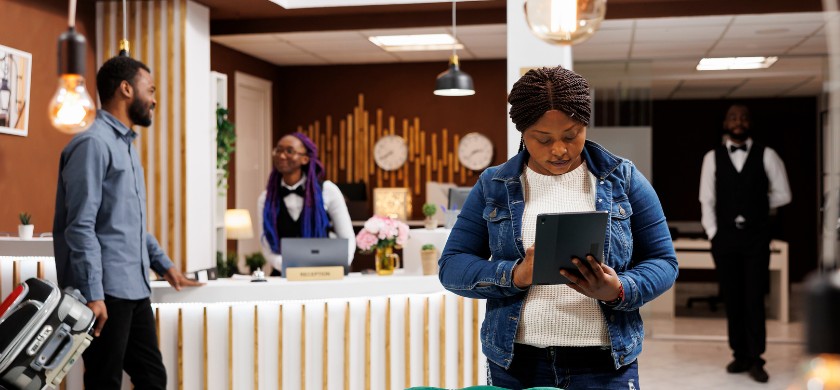
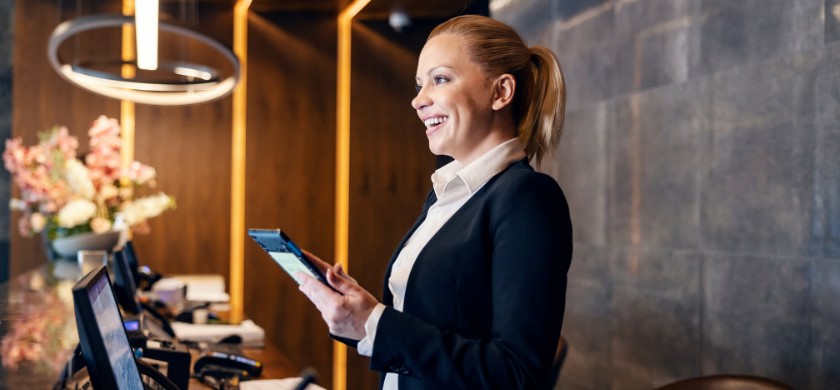
Smart TVs have become a foundational piece of the modern hotel guest room. Travelers now expect intuitive navigation, instant access to entertainment and the ability to watch their own content with minimal effort from anywhere they stay.
For hotels, delivering this experience requires more than purchasing a smart TV and plugging it into an outlet. Hotel smart TVs demand commercial-grade hardware, secure network design and integrations that support the entire guest journey.
Read on to learn what makes a hotel TV truly “smart,” how modern integrations enhance the experience and what hotels must have in place to power an exceptional in-room entertainment environment.
Why Smart TVs are Essential in Modern Hotels
Smart TVs have evolved into a must-have amenity for several reasons, all rooted in changing consumer expectations. Smart televisions have become a staple in homes and businesses alike. According to research firm Parks Associates, 68% of internet-connected American households now have a smart TV. In turn, guests also expect these smart televisions in their rooms.
The vitality of smart TVs goes beyond guest expectations; smart televisions can elevate multiple aspects of hotel experiences, offering features such as:
Familiar, App-Based Experiences: Smart TVs provide easy access to popular apps like Netflix, YouTube, Disney+ and Prime Video without complicated logins.
Bring-Your-Own-Content Streaming: Guests want to cast or stream their own shows and playlists quickly, safely and intuitively.
Operational Efficiency: Centralized smart TV control reduces room-by-room troubleshooting, maintenance visits, device resets and manual configuration.
Branding Opportunities: Hotels can deliver personalized welcome screens, in-room promotions, property information and F&B or spa offers, turning TVs into a gateway for guest engagement.
What Makes a Hotel TV a Smart TV?
Smart TVs built for hospitality are very different from consumer smart TVs. While the core idea of providing connectivity, apps, casting, and content is the same, hotel execution of smart TVs should be tailored to multi-guest environments and year-round operation.
Next generation hotel smart televisions include features such as:
Commercial-Grade Hardware: Hospitality TVs are built for higher durability, continuous 24/7 operation, anti-theft mounting and enhanced warranty support.
Hospitality OS and Remote Management: Custom-designed in-room entertainment platforms provide centralized control, branded home screens, remote updates, volume/input limits and hotel mode to prevent tampering.
Streaming App Compatibility: Hotel smart TVs support popular apps while ensuring guest data protection, auto-logout safeguards and proper commercial licensing.
Casting Capabilities: Guests can securely cast content from their phones without logging in on the TV.
PMS & IRE Integrations: Smart TVs connect with property systems to enable personalized greetings, automatic resets, in-room messaging and upsell or service requests.
All of these features combine to provide a truly comprehensive smart guest room experience, all rooted within hotel television access.
How Modern IRE Platforms Supercharge Hotel Smart TVs
Many hotels opt to install generic smart TVs on their property. While powerful on their own, a smart TV’s full potential is unlocked with enterprise-grade In-Room Entertainment (IRE) platforms. These dynamic, comprehensive platforms elevate existing smart TVs with features including:
Centralized App & Content Management: IRE platforms keep apps consistent, updated and properly licensed across every room.
Enhanced Security & Auto-Logout: Guest data stays protected through temporary authentication, instant checkout-based logout and network isolation.
Seamless Casting & Device Pairing: Guests can securely cast content with simple QR-code pairing and no extra app downloads.
Customized User Interfaces: Hotels can fully brand TV home screens, menus, video tiles and property information pages.
PMS Integrations: IRE systems sync with PMS data to enable personalized greetings, guest-specific settings, automated resets- and upsell opportunities.
Consolidated Control for IT Teams: Staff gain a unified dashboard to monitor connections, push updates, diagnose issues and reset devices.
All of these innovations help hoteliers gain new ways to impress visitors, helping to increase guest satisfaction scores and drive future reservations.
Hotel Network Requirements to Support Smart TVs
Even when integrated with In-Room Entertainment software, hotel smart televisions fall short without a network that’s designed to support them. Hotels must meet several critical technical requirements to support smart televisions, including:
High-Quality WiFi Connectivity: Smart TVs require strong, room-level WiFi to support 4K streaming, casting, and seamless PMS/IRE syncing.
Optimized Bandwidth Allocation: Hotels must allocate sufficient bandwidth to handle peak usage, multiple devices and simultaneous high-resolution streams.
Network Security & Segmentation: VLAN isolation, secure casting- and encrypted traffic protect guest data and prevent cross-device exposure.
Scalability for Future Upgrades: Networks should be designed to handle added apps, higher resolutions, increased device counts and property expansion.
To ensure each of these requirements are met, hotels need to prioritize working with an experienced, reliable provider of hospitality internet connectivity.
Cox Business Hospitality: Your Ideal Partner for Powering Hotel Smart TVs
Whether your goal is to upgrade a single property or standardize across an entire brand portfolio, we provide the expertise and connectivity needed to deliver exceptional in-room entertainment. Our team specializes both in in-room entertainment and guest WiFi, building comprehensive solutions for hotel smart TVs.
Your guests deserve seamless, modern, personalized entertainment. We can help you deliver it. Contact us today to ensure you blow away guest expectations across your property.
The key is bandwidth. Read on to learn what bandwidth is, how it affects WiFi network speed, and the factors your hotel must consider when deciding on a suitable bandwidth.
What is Bandwidth in WiFi?
WiFi bandwidth measures the maximum volume of data that can be transmitted across a network connection over a specific measurement of time — usually measured by megabits per second (Mbps).
One way to think of bandwidth is as a water pipe, with internet data as water going through that pipe. While the size of the pipe does not inherently affect the speed in which water flows through the pipe, the pipe can only allow for so much water to flow through without stopping. The same can be said for network bandwidth; functioning networks should be able to handle data flow up to the amount specified via bandwidth, but will slow down once data flow exceeds that bandwidth.
Is WiFi Bandwidth the Same as WiFi Speed?
No — internet speed refers to the speed in which data travels from the internet to a device connected to a network, while bandwidth refers to the maximum amount of data that can be transferred over a network. Although it can affect network speed when a network exceeds its bandwidth limitations, bandwidth is not a direct measurement of the speed of a network.
For example, a high-bandwidth network can have low speed if the WiFi provider only allows data to be transmitted at a level far lower than network bandwidth. Alternatively, networks with low bandwidth and high data demands may operate at a lower speed due to excessive amounts of data being transferred via a smaller “pipe.” In turn, matching network bandwidth to any given network’s unique needs is essential to maintain satisfactory speed.
How Can I Check The Bandwidth of My WiFi Network?
Even as network speed ebbs and flows, the bandwidth of your WiFi network does not change; instead, what changes is how that bandwidth is being used. You can typically check the bandwidth of your WiFi network by either contacting your provider or checking the plan outline via a service portal.
How network bandwidth is being used is a more dynamic, complicated question, especially for hotel networks. Managing bandwidth across staff, guests, and event attendees can be difficult to balance — often making the difference between soaring network success or catastrophic failure.
Essential WiFi Bandwidth Considerations in Hotels
Before implementing a WiFi network, hotels need to consider several factors to paint a clear picture of their specific bandwidth needs. Here are a few of the most important questions to ask before building a network.
How Large is the Hotel?
Perhaps the most important factor when deciding network bandwidth for a hotel is the property’s size. The larger the hotel, the more hotel guests; the more hotel guests, the more users on your hotel’s network, and the higher bandwidth necessary to support the needs of those users. Larger properties may also encompass amenities that put additional strain on WiFi networks, such as holistic in-room entertainment platforms, guest messaging platforms, or attached convention centers.
Are There Any Barriers to Hotel WiFi Design?
Beyond size, many hotels have physical barriers to implementing successful WiFi networks. WiFi signals are transmitted via radio waves. In turn, WiFi signals can be blocked by high-density areas, plus materials including copper, aluminum, and steel. Areas of hotels facing these issues may require lower bandwidth and more WiFi access points; others without such barriers may require a lower amount of access points, but higher bandwidth on each.
How Will Your Hotel Manage Bandwidth Use?
One notable variable when deciding hotel bandwidth is determining how hotel guests will leverage your network. While some guests may choose to disconnect on their vacations, demographics such as business travelers may remain on hotel networks 24/7. There’s no “one-size-fits-all” network that will work for each guest. Some hotels counter this issue by implementing tiered WiFi plans — putting the power to choose bandwidth in guest hands while increasing supplemental revenue.
Another key way to manage bandwidth is by ensuring only qualified users are on your hotel’s network. Due to their public-facing nature, hotel WiFi networks are subject to an increased risk of cyber- attacks. By implementing holistic hotel cybersecurity measures — including advanced encryption, 24/7 network monitoring, and reliable antivirus programs — hotels can better protect their bandwidth from bad actors.
How to Increase Bandwidth of Hotel WiFi Networks
The only way to increase bandwidth on a WiFi network is through changing the network infrastructure. While implementing tiered plans and limiting outside activity can open up additional bandwidth for users that need it, many hotel WiFi networks are ill-equipped for the actual bandwidth needs of their property — whether due to outdated network infrastructure, increased technological needs, or a bevy of other actors.
If your hotel needs increased bandwidth to support its userbase, consider working with an adaptable, experienced provider of hotel WiFi. When paired with a dynamic team of WiFi experts, hotels trust that their networks will always be prepared for new bandwidth needs. Many installers also provide 24/7 network monitoring — detecting and alerting hotels to potential sources of excessive bandwidth use.
Cox Business Hospitality Builds Network for Your Specific Hotel Bandwidth Use Cases
We are a dedicated, experienced provider of hotel WiFi. Our team builds networks per the unique requirements of your property — conducting on-site surveys to detect dead zones and determine exactly what bandwidth is needed to support guests and employees. With 24/7 network monitoring and seamless installation, we’re the top choice for efficient, long-term hotel WiFi success. Contact us today to ensure your hotel’s bandwidth needs exceed expectations.
How Big Data Analytics Can Transform Your Hotel’s Operations
“Big data” has become a big phrase across industries with growing adoption and reported improvements in operational efficiency across industries. According to Statista, 46% of organizations reported using big data analytics in their market research worldwide as of 2021, with this percentage increasing steadily since 2014.
Hotels are part of this growing trend; in today’s dynamic industry landscape, hospitality professionals are increasingly leveraging big data to remain competitive. We’re here with a full primer — read on to learn about the basics of big data in hotels, alongside 7 uses of the technology that can help optimize your operations.
What is Big Data?
Big data refers to massive, multi-faceted data sets that continue to grow exponentially over time — making them too large and complex to be analyzed using traditional data processing tools such as spreadsheets. By complex, we don’t mean the data-points themselves are complex; many sets of big data are composed of data as simple as “what credit card was used on a purchase.” Instead, it’s the volume, variety, and velocity of data that define big data sets.
In fact, almost anything can become a set of big data with the appropriate volume, variety, and velocity of data-points, including:
Customer data, such as what people buy, where they buy it from, and how they receive products.
Transportation data, such as fuel use, traffic history, and crash analysis.
Inventory data, such as use of disposables, stock variability, and predictive maintenance.
Reputation data, such as online review scores, number of reviews, and social media like to dislike ratios.
Marketing data, such as engagement rates, response rates, and conversion rates.
As industries continue to incorporate IoT technology and integrated systems within their operations, businesses are gaining access to more and more sets of big data — and hotels are no exception.
What is Big Data for Hotels?
In hotels, big data refers to the immense, complex data sets generated by varied pieces of hospitality technology. There are countless sources of big data within hotels, some of the most common being:
Reservation systems, tracking booking times, popular seasons, and consumer habits.
Social media platforms, tracking who likes what types of content, on which channels, when.
Websites, tracking what pages, blogs, and content spur the most engagement and conversions into bookings.
Loyalty programs, tracking who signs up, how often guests use key features, and what features guests most often leverage.
WiFi portals, tracking which tiers get the most use and what users use WiFi for once logged in.
Guest feedback surveys, tracking which hotel amenities most often get highlighted as positive or negative assets.
While opportunities for tracking big data in hotels are increasing, hotels will find the most success when they harness big data for specific purposes.
7 Essential Ways to Use Big Data in Hotels
These are seven ways big data analysis can help transform hotel operations — from enhancing customer satisfaction to optimizing internal processes.
1) Improved Customer Experiences
Big data analysis can contribute to improvements in customer experiences across a hotel’s operations. Historical guest data — including previous requests to the front desk, feedback from guest surveys, and most used amenities — shine a direct spotlight on what a hotel does well for niche demographics of guests. In turn, hotels can use big data to help predict what each customer wants, addressing potential pain points before they reach guests.
2) Personalized Loyalty Messaging
Personalized guest messaging is an important aspect of hospitality, and big data can play a key role in optimizing loyalty messaging. Big data can encompass diverse aspects of previous customer experiences, including:
WiFi network preferences.
Use of on-site amenities.
Length and timing of stay.
Accommodations for kids or pets.
Dietary restrictions.
Leveraging these preferences and more, hotels can deliver personalized, catered loyalty promotions to their customers. In turn, guests feel more valuable and hotels can increase their revenue via more effective promotions.
3) Online Reputation Management
Just as customer reviews can bolster customer experiences and loyalty messaging, so too can they help manage reputations online. Big data analysis can help identify common areas of guest concern from reviews and social media comments. Hotels can then address these issues and communicate improvements to guests.
4) Targeted Marketing
Custom-tailored messaging also supports targeted marketing for new customers, offering hotels the potential for improved return on investment. Hotels can analyze which demographics engage most with each avenue for marketing.
Then, hotels can match the messaging of each avenue with the services most aligned with each platform’s most relevant demographics. Combining effective marketing with targeted promotions can make new guests feel like a hotel is just for them — contributing to smarter strategies that drive bookings.
5) Social Media Marketing
As social media networks continue to grow as major marketing platforms for hotels, big data can help streamline how, when, and where hotels are posting. Data-sets have potential to reveal which types of posts and promotions garner the most engagement across platforms including Instagram, Facebook, LinkedIn, and more. By analyzing data from their own and their competitors’ accounts, hotels can refine content strategies and optimize posting times to increase engagement.
6) Revenue Management
Online booking platforms have become the overwhelming means for guests to schedule their stays in hotels; in a 2023 study from h2c surveying 84 unique hotel chains, 76% of respondents claimed use of an online CRM system. With this prevalence of online booking systems and increasingly monetized connected guest experiences, hotel revenue management has become inundated with big data. Dynamic pricing models can utilize big data, incorporating historical changes in demand based on:
Seasons
Holidays
Local events
Hotels can also use data to detect future inventory needs, alongside predictive maintenance for hotel technology.
7) Competition Scouting
Using big data, hotels can compare diverse attributes of their venue with other competitors, adaptable per location parameters. Points of comparison can include:
Pricing of rooms, amenities, restaurants, and more.
Amenities available, such as spas, pools, and golf courses.
Marketing avenues, including social media, websites, and email campaigns.
Target demographics, analyzed through marketing, promotions, and typical events.
By analyzing these data-points, hotels can better understand their own and their competitors’ niches, informing strategies to enhance their competitive position.
Install Dynamic Hotel Internet Connectivity for Reliable Big Data Integration
Whether using these seven strategies or countless others, big data can support significant improvements in the hospitality industry. Collecting big data, however, is entirely reliant on implementing responsive internet connectivity; without consistent tracking and integration, big data simply floats into the void.
We offer hotel WiFi solutions for guests and staff that can support big data collection and, in so doing, can help enhance guest experiences. Our expert team designs networks tailored to the needs of each unique facility.
Request a consultation and learn how our solutions can support your big data initiatives alongside other smart hotel solutions.
IoT solutions are the future of the hospitality industry. Skillful implementation of this rising technology can both increase guest satisfaction and improve the workflows of your staff. How, then, can hotels implement IoT technology? What, exactly, is IoT technology within the hospitality industry?
Read on to learn about what falls under the umbrella of hotel IoT solutions, why this rising technology is so important, and six key solutions hotels are already implementing within their property.
What are Hotel IoT Solutions?
Hotel IoT solutions refer to the wide range of hospitality innovations using IoT — or internet of things — technology. Internet of Things encapsulates the entire network of physical objects (“things”) designed to connect other devices and systems to the internet. In turn, hotel IoT solutions include any number of solutions enabled by IoT devices.
The Importance of Hotel IoT Solutions
Hotel IoT solutions are already dominating the hospitality industry, and will only continue to grow in importance. According to Research and Markets, the global smart hospitality market is expected to grow from $14.3 billion in 2022 to $18.31 billion in 2023. As the market expands, hoteliers need to ensure their properties remain on the cutting-edge.
Beyond keeping up with other industry-leaders, hotel IoT solutions also offer immense benefits for hotel guests. Technology can both drive guest retention and promote future bookings, while stronger internet connection at large can enhance the guest experience in numerous ways. For both meeting industry standards and enhancing guest experiences, hotel IoT solutions are essential.
6 Key IoT Solutions for Hotel Guest Rooms and Beyond
There are endless opportunities for hotels to implement IoT technology, from front desk services to larger facilities. Here are a few specific IoT use cases found across hotels.
Smart Locks & Keyless Entry
Amidst the bustle of travel, guests can easily lose their metal or card-based keys for traditional room locks. In turn, front-desk staff need to scramble for extras — wasting staff time and hotel resources, while increasing hotel waste and costs. Worse yet, guests may lose their keys after hours, causing additional hassle for guests and staff alike.
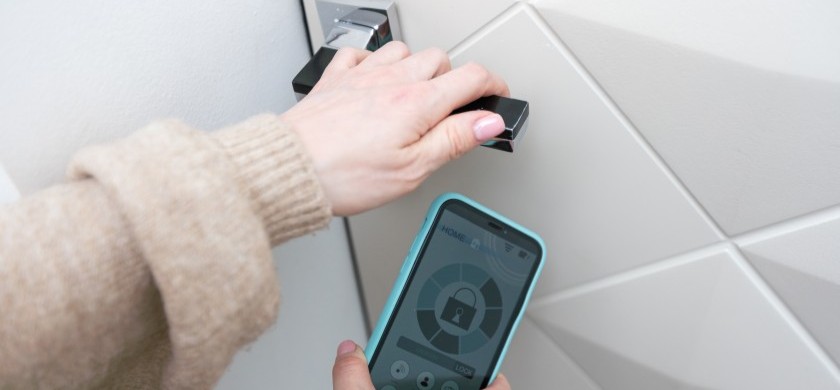
Installing smart locks with keyless entry ensures that guests are never without room entry. Lock systems integrated with mobile entry allow guests to enter rooms with their phones, far harder to lose than a smaller keycard. Some smart locks increase accessibility even further by offering a passcode-triggered keypad, leveraging IoT technology to reset the code for each guest and requiring no physical device whatsoever to enter.
Contactless Check-In
Like smart locks, contactless check-in offers a technology-driven way to streamline guest experiences and reduce manual processes for front-desk staff. Rather than waiting in long lines, guests can check-in to their room via an email or text link. For rooms with mobile or keyless entry, check-in becomes as simple as click.
Increased Smart Room Sustainability
Guest room utilities impose a massive cost for hotels. According to Energy Star, the average American hotel room spends $2,196 per available room each year on energy — with a large chunk of that spend coming from wasted temperature and lighting costs when guests leave the room and forget to switch utilities off. Beyond expenses, unnecessary utilities also lower sustainability within properties, wasting resources and potentially dissuading guests looking for more environmentally-friendly options.
IoT-driven smart rooms cut down on energy costs and increase sustainability by shutting down utilities when guests aren’t using them. Hotels can install movement and temperature sensors that automatically turn off when detecting a lack of use. Additionally, via IoT integration, hotels can track exactly how much energy they save.
Streamlined Maintenance Processes
Maintenance in hotels tends to be archaic, manual, and inefficient. Traditional maintenance requests are often reported over the phone or in-person, rather than through a more structured system. Additionally, most hotel maintenance is reactive not proactive; issues are solved after they have impacted guests.
Automated maintenance helps hotels fix maintenance needs before they diminish guest experiences. Online systems can track when toilets, showers, temperature units, and more were last treated, and send updates to staff when it’s time for a refresh. Additionally, staff can use sensor devices to check various maintenance needs and send alerts as needed.
Guest Engagement Via Personal Devices
From smartphones to laptops, nearly every hotel guest carries some sort of IoT-enabled personal device throughout their stay. Skillful use of these connected personal devices can encourage use of hotel amenities & services by both passive and active means.
Carefully constructed hotel social media campaigns can entice guests to explore your property and take full advantage of your offerings. Marketing coordinators can implement amenity giveaways, hashtag campaigns, and photo opportunities to encourage guest interaction with both your account and your property.
Hotels can also directly interact with guests via push notifications sent across touchpoints in their experience. Booking reminders, check-in options, special offers, surveys — all can be sent straight to guest devices, keeping them connected throughout their stay on your property.
Overall Stronger WiFi Network Access
Although IoT devices require reliable internet access to function, they can also greatly help hotels improve the strength of their WiFi. Devices can help hotels track signal strength throughout their venue, detecting dead-spots and areas for improvement. IoT technology can also support hotel network security, protecting the information of hotel guests and staff.
Harness Reliable Hospitality Internet
Implementing IoT solutions within your property streamlines operations for hotel staff and encourages guests to take advantage of your amenities to the fullest. For these solutions to consistently function, however, hotels need to ensure they have reliable internet access, supported by powerful network infrastructure.
We are a trusted provider of WiFi solutions to hospitality businesses across the spectrum — including hotels of all sizes. Request a consultation today and prepare your property for the next wave of hospitality IoT technology.
The hospitality industry is changing; in an increasingly connected world, the vast majority of hospitality guests expect reliable, efficient access to the Internet throughout your property. With sprawling venues jam packed with customers, networks that can handle such volume are essential. Enter high capacity WiFi; learn the ins and outs of this technology and how it can benefit your specific hospitality business.
High Capacity WiFi 101: What is High Capacity WiFi?
High capacity WiFi, also known as “high-density WiFi,” refers to a WiFi network built to supply accessible, reliable internet to a large number of devices in a given space. These networks can support anywhere from hundreds to thousands of wireless clients at once — all while maintaining a responsive, consistent network.
The installation of high capacity WiFi consists of careful planning, thoughtful placement of access points, and leveraging the appropriate hardware. This starts with determining how many users will be using your network, and what they will be using the network for.
For example, 600 users streaming live video will require a very different output compared to 300 users who are only browsing the Internet. WiFi throughput required is measured in bits per second, whether kilobits (kbps), megabits (mbps), or even gigabits (gbps). Additional considerations should be taken for what devices will be used; smartphones, tablets, and laptops all have different needs.
How are High Capacity WiFi Routers Different From Normal WiFi Routers?
Much like how high capacity WiFi networks are built to supply WiFi to a large number of devices, high capacity WiFi routers are routers specifically built to support higher capacity WiFi networks. Oftentimes, however, one router alone is not enough to carry an entire high capacity WiFi network.
Instead, high capacity WiFi networks leverage several routers and access points across a venue — carefully planning network access to sustain reliable internet. Different routers with alternate needs may be used for guests, employees, and potential exhibitors. Access points, meanwhile, are wireless network devices that extend coverage of existing networks‚ servicing as connected between and to routers. Both routers and access points require intentional placement to maximize efficiency, noting potential dead-spots in walls and higher volume areas of a venue.
Why High Capacity WiFi Access Points are Essential for Hospitality Businesses
High capacity internet access is absolutely essential for hospitality businesses. From stadiums to hotels, nearly every business requires a high capacity network to satisfy guests and sustain internet access. Here are a few specific examples, plus the unique internet concerns of each.
High Capacity WiFi for Hotels
Depending on the size of your hotel, internet networks may be servicing anywhere from dozens to thousands of guests, and that’s before hosting potential events with guests that may or may not be staying on property. In turn, high capacity WiFi is an essential consideration for hotels.
Specific concerns hotels need to address when installing high capacity WiFi include property size, wall thickness & composition, higher-density areas (including lobbies and offices), and also seasonal concerns about higher volume months of the year. Whatever the size and needs of your venue, leveraging a trusted vendor of managed WiFi is essential to ensuring your network works.
High Capacity WiFi for Sports Stadiums
Amidst the sweeping highs and lows of a game, fans still want to stay connected during a game. During time-outs and game breaks, hundreds to thousands of fans often check their devices at the same time; in a study from 2022, researchers found the majority of stadium visitors stay connected during their experience. In these moments, high capacity WiFi is key to supporting internet access for all fans.
For sports stadiums, high capacity WiFi installation has to consider stadium size & security needs, alongside what other stadium features leverage internet access (including POS systems and interactive stadium jumbotrons).
High Capacity WiFi for Convention Centers
Convention centers host professionals conducting important business and industry-leading speakers. With high-stakes conversations, thousands of devices, and a bevy of presentations, convention centers need to leverage powerful, consistently reliable high capacity networks.
For installation within convention centers, high capacity networks must consider typical amounts of attendees, typical numbers of vendors, and capabilities featured within the convention center (including potential for conference webcasting and other convention center industry trends).
High Capacity WiFi for Event Venues
From rocking live concerts to raucous stand-up performance, special event venues cater towards diverse event needs. In turn, these venues need a powerful network capable of withstanding high capacity crowds with differing demographics, wants, and needs.
Hospitality Network installs capable high capacity networks for special event venues, capable of providing internet to all events without re-installation. For network installation, special events venues generally need to consider overall venue size and technological needs of typical events hosted there (including projection needs, alongside potential interactive events).
Leverage High Capacity Hospitality WiFi Solutions With Cox Business Hospitality
Whatever the hospitality business, high capacity WiFi installation is essential to internet access for venue guests. With the need to balance access point installation with network power, high capacity WiFi installation should be trusted to the experts.
CBH has diverse network installation experience from across the hospitality industry, including stadiums, hotels, convention centers, and events venues. Request a consultation today and discover how we can support high capacity WiFi custom-tailored to your venue.
Many hotels around the country are quietly losing millions of guests, and it’s not because of a lack of staff or decreased demand. The truth? This loss is due in large part to end-of-life hardware.
What is end-of-life hardware? End-of-life hardware refers to old computer equipment sitting in back-office areas. It poses more risk and financial drain than anything else.
A recent report on the hospitality industry found that hotels are spending up to 75% of their IT budgets just to keep legacy systems running. This is not a small percentage; it is a structural drain that grows by the quarter.
End-of-life hardware doesn’t fail loudly. Instead, it fails gradually. Over time, the costs associated with this faulty equipment grow incrementally due to unpatchable security risks, increasing repair costs, slow internet speeds and more. Each guest will be able to see every single flaw.
In this article, we break down what these failures cost you in dollars and cents. The good news? You can benefit and even grow your business with a planned, intentional approach to managing your hardware through its entire lifecycle.
What “End-of-Life” Actually Means
All hardware products have an expiration lifespan. Once that time frame ends, manufacturers will no longer produce or provide security patches, firmware updates and technical support for those products. This is called the “end-of-life” (EOL) and is typically overlooked by most hotel staff until it causes problems.
Hotel-related hardware includes wireless access points, routers, switches, servers, PMS terminals and room-based hardware. Each of these categories is critical to providing connectivity, security and functionality for your guests at all hours of the day.
There is a key difference between a device that’s simply turned on and one that is being maintained. As long as a device remains powered on, its ability to function does not necessarily mean that it will be supported. When the manufacturer’s warranty or technical support ends (or has already expired), the manufacturer’s protection ends as well.
This transition is referred to as the EOL cliff. Typically, a hotel team finds out their property has gone over this cliff after a failure occurs. This failure is often detected late, the result of several months of slow buildup.
The Security Exposure You Cannot Price
End-of-life hardware risks are not just hypothetical. The Ponemon Institute’s research found that almost 60% of cyberattack victims reported that a readily available patch would have prevented their breach. That sounds just like the access point or switch in your network closet that stopped getting updates last year.
Cybersecurity has become very important in the hospitality industry. The Cost of a Data Breach Report from IBM highlights that the average cost of a breach was $4.44 million globally. Between 2023 and 2024, the cost of breaches in the hospitality industry rose 13.7%, one of the largest increases among the 17 industries IBM examined.
PCI DSS compliance depends on hardware that can receive security updates. When payment processing devices go unsupported, maintaining the standards required for card processing becomes difficult to guarantee. If a property fails an audit, it may have to pay fines, fix problems and possibly have its card processing privileges suspended.
The cost of a breach is devastating enough on its own. But in the hospitality business, the damage to your reputation can last even longer than other industries. Guests publicly share negative experiences with a hotel brand and it can take years to win back their trust.
The Maintenance Money Pit
The first sign that your hardware is beginning to show its age usually occurs after about three years. It will begin to fail more frequently, causing your performance to vary from day to day. Your repair calls will also begin to pile up. Even though the hardware may still be working, the cost of maintaining it this way increases each quarter.
It will eventually reach the point where you cannot find replacement parts for the old hardware. The special vendors who offer support will request contract renewals or undergo business changes, both leading to increased costs. Eventually, the replacement parts will disappear from any reliable supply chain.
This is how the “break-fix” trap operates. Most people see each individual repair as being justifiable. However, if you continue to operate using a pattern of only repairing your property when something breaks (reactive), most likely you will pay your property much more money than you could have paid by operating within a scheduled cycle of replacing the hardware (proactive).
A Deloitte study on proactive asset management reported that poor maintenance strategies can reduce an asset’s productive capability by as much as 20%. When a hotel has a network system that supports virtually all guest and back-of-house functions, that type of loss adds up quickly.
Capital expenditures are worsening the problem. Prices for hardware increased significantly in 2025 and 2026 as a result of supply chain disruptions and tariff-induced price volatility. Hotels that delayed upgrading their networks are currently facing a higher-priced hardware market with older hardware and little ability to adjust budgets.
The Performance Tax on Guest Experience
Aging equipment in your network typically doesn’t suddenly fall apart. Rather, its performance gradually throttles bandwidth, drops connections under heavy usage, and creates “dead zones” during high-traffic periods. Since this decline happens so slowly, most property owners will become accustomed to the decline in service levels before realizing how much ground has been lost.
2025 research conducted by Siemlus found that 92% travelers expect Wi-Fi to be fast and reliable at every hotel they stay at. Additionally, negative hotel reviews about connectivity issues made up almost one-third of all negative reviews.
Weak networks also cause problems outside of the guest room. Many mobile apps will freeze or stall because of poor connections. In-room streaming may buffer due to poor connections. Guest engagement with social media and loyalty apps is reduced due to poor connections. All of these failures reduce what guests came to a property for.
Aging hardware will get through low occupancy times, but peak season is too much for old equipment. When a property sells out for a weekend, many devices are connected to the network at once. This is when complaints from the public arise and when review ratings start to drop.
The Operational Drag of EOL Hardware on Staff
End-of-life hardware doesn’t typically work well with modern hotel software. Current network infrastructure is what hotel PMS platforms, POS systems, mobile key solutions and digital concierge tools are made for. When the hardware can’t keep up, integrations fail, data syncs fail and front-line staff have to deal with the problems.
The workarounds come quickly. Before a check-in loads, a front desk agent refreshes the screen three times. Two systems stopped talking to each other, so the hotel manager has to enter data by hand again. These patches may not seem like much on their own, but they add up to hours of lost work time over the course of a shift.
IT teams have to pay a different kind of cost. Every hour spent trying to fix a hardware problem is an hour not spent making the property better in ways that really matter. It’s hard to break the reactive cycle when the equipment keeps needing your attention.
It’s harder to put a number on the human side of this than a repair bill. But it shows up in staff frustration, slower service, and, over time, in turnover.
The Compliance and Liability Cliff
PCI DSS 4.0 includes an additional requirement that organizations annually identify hardware and software technologies and document a remediation plan for any hardware nearing end-of-life. This is no longer just a recommended best practice for hotels accepting credit cards; it is a requirement.
If your hotel is running equipment past its end-of-life, you may have serious issues when assessors visit. There is no way to update older hardware or software, creating vulnerabilities that the auditors will immediately flag. As a result, you may face fines, forced remediation in a timely manner, or lose the right to process credit cards.
Additionally, cyber-insurance companies are applying similar pressure. Cyber insurance providers are now denying claims and non-renewing policies after discovering unsupported devices during underwriter reviews. In fact, many cyber insurance policies specifically exclude breaches caused by hardware or software that is out of vendor support.
Hotels within large enterprise groups with multiple properties face the most risk. If one un-managed EOL device exists across several dozen properties in a group, it can easily surface in a portfolio-wide audit. “We did not know it was end-of-life” will not protect you from being held accountable if the requirement to monitor such devices is written into the standard.
End-of-Life Hardware Best Practices
Hardware lifecycle management is not a one-off IT project. It is a business strategy that defines how much money a property spends, how reliable the equipment is and how quickly the equipment can adopt technology that guests will expect next year.
Build a Refresh Plan Before You Need One
The first step is identifying what technology you have. An asset inventory across your entire property, mapped against each device manufacturer’s EOL, identifies where exposure lies. When conducting this exercise for the first time, hotel teams typically discover they are operating multiple devices past their support window.
Once you know what you have, a structured refresh schedule replaces guesswork with capital planning. Organizations implementing proactive lifecycle management strategies can experience up to a 25% reduction in operating expenses and a 20% reduction in overall infrastructure costs compared to those running reactive break-fix models. A planned replacement plan converts unpredictable emergency spending into a forecastable budget line that ownership and finance teams can plan around.
In addition to lower operating expenses, modern hardware offers energy efficiency benefits. Newer network equipment and servers run at lower operating temperatures, consume less power and require less maintenance over time. The savings on energy and cooling costs offset a portion of the refresh investment costs.
Work With a Partner Who Knows the Timeline
A managed network partner builds refresh schedules based on manufacturer support timelines, your budget cycles and your occupancy calendar. By scheduling upgrades when the hotel has minimal guests (during low-occupancy periods), you can limit the guest impact. Phasing in rollouts allows for spreading capital investment over multiple fiscal years, so that there isn’t an all-at-once disruption to the hotel’s operations.
In order for hotels to be positioned to effectively incorporate the next wave of guest-facing technologies (such as AI-driven personalization, smart room controls and seamless mobile integration), they need to recognize their infrastructure as a living investment. Otherwise, they’ll spend the next few years playing “catch-up” with hotels that are investing in their infrastructure today.
How Blueprint RF Can Help
Blueprint RF was built specifically for hospitality, and hardware lifecycle management sits at the center of what a managed network partnership delivers. Rather than waiting for aging equipment to cause a problem, Blueprint RF monitors network health in real time, tracks equipment performance and works with properties to plan hardware refresh schedules that align with budget cycles and occupancy windows.
The DG2 platform, Blueprint RF’s next-generation server solution, brings modern architecture, end-to-end integration and 40 gigabits per interface that extends the reliability and longevity of modern hotel networks. For hotel teams who would rather focus on guests than on network closets, Blueprint RF provides the proactive oversight, 24/7/365 support and strategic planning that turns infrastructure from a liability into a competitive advantage. Get in touch to learn more.
Guest expectations are fundamentally shifting in ways that hoteliers must strategically embrace. Today’s traveler arrives with a smartphone in hand, looking forward to a tech-savvy stay. Some travelers are even willing to pay a higher price than they normally would just so they can receive the integrated experience they want.
TrustYou’s research has shown that 61% of travelers today are willing to spend more to personalize their travel experience. Hotels are responding. The hotel and hospitality technology market reached $7.57 billion by 2025 and is expected to grow at approximately 7% per year through the end of the decade.
Hotel guest experience software is the means by which innovative hotels meet this new reality. This type of software meets each phase of the guests’ journey, including when they make a reservation or book online, all the way up to their departure and afterwards.
What Is Hotel Guest Experience Software and Why Does It Matter?
Hotel guest experience software is any digital platform that makes it easier for guests to interact with your property.
This software includes platforms for pre-arrival communication, digital check-in, in-stay messaging, service requests, loyalty management and post-stay feedback. If it has anything to do with the guest journey, it fits into this group.
This is not the same as back-of-house systems like HR, accounting or inventory management. The business runs on those tools. Guest experience software affects how guests feel about their stay. More and more, the best platforms unify multiple functions. They help operations teams understand what guests need in real time, which directly leads to better business and a better experience for guests.
The guest journey can be simplified into four parts:
Before they arrive
When they arrive
While they are there
After they leave
Guest engagement software can now add tangible value to each stage. When properties don’t keep up with digital tools, the effects usually show up first in online reviews, then in loyalty metrics and finally in repeat booking rates. The digital guest journey used to be a way to stand out from the competition, but now it’s just a basic requirement. When there is a gap, guests notice it.
8 Ways Hotel Guest Experience Software Drives Better Stays
While the right hotel technology will certainly help your property, it won’t turn your hotel into a totally different place overnight. However, if you implement thoughtful applications of hotel technology throughout every phase of the guest journey, those applications can compound to create a seamless operational environment that delivers services rapidly and increases levels of personalized service.
1. Personalized Pre-Arrival Communication
A large part of what we consider the guest experience starts long before a guest arrives at their destination. With automated messaging capabilities, hotels can begin sending guests targeted email and/or SMS communications prior to check-in to promote room upgrades, dinner reservations and local area attractions, based on historical data in the guest’s profile. A timely communication sent to the guest before they arrive will set the stage for quality expectations, drive ancillary revenue and clearly demonstrate to the guest that the hotel staff is attentive.
2. Seamless Digital Check-In and Mobile Key
A 2025 Mews survey found that 70% of American travelers use apps, chatbots and other digital tools to interact with hotels rather than speak directly with people at a physical property. Hotel guest chatbots help personalize each guest’s experience based on their interests. These same digital platforms also allow hotels to provide proactive support and services, which results in improved customer retention rates.
3. In-Stay Messaging and Request Management
The two-way communication platform allows your guests to send messages to your employees in real time via their smartphone or your hotel’s app. As guests enter their request information into this portal, their requests are documented, routed and completed faster than by phone. Additionally, all requests are tracked and recorded, allowing you to provide your guests with a more seamless experience during their stay.
4. Smart Room Control Systems and IoT Integration
Guests can now manage their smart room technology controls (lighting, TV, thermostat, etc.) via a connected system in their rooms, using an interface on their smartphone or an in-room panel. When these systems integrate with the guest’s profile data, your guest’s preferred settings can be loaded before they open the door. This type of personalization strategy creates loyalty with your guests.
5. Real-Time Service Recovery
There’s no avoiding the fact that guests will encounter issues during their stay. It’s the speed at which you resolve these problems that differentiates top hotels from others. By using in-stay guest feedback tools to identify guest concerns, your staff has an opportunity to address a problem before the guest posts a negative comment about you online. All hotels that address service failures as soon as possible typically outperform other hotels in terms of guest satisfaction ratings and repeat bookings.
6. Food and Beverage Integration
By connecting mobile ordering tools directly to POS systems, guests can easily order room service, make reservations or request food and beverage delivery to their location without having to relocate to the bar or dining area. If done correctly, apps that allow guests to order food and beverages on-site increase each guest’s average spend per transaction, minimize ordering friction and create additional revenue streams for the property. ]
7. Loyalty Program Integration and Recognition
By connecting CRM systems to all aspects of a guest’s stay, every interaction with the guest creates a connection back to the CRM system. This allows front-line staff to recognize when a guest is a returning guest or a loyalty member and therefore provide personalized recognition without relying on memory or manually noting who is loyal to the brand. Almost 80% of guests cite personalized amenities as a key reason for returning to a hotel, a number that rises to 89% among Gen Z travelers.
8. Post-Stay Feedback and Reputation Management
A hotel’s relationship with a guest does not stop once they leave your property. Using automated post-check-out survey and review request tools allows hotels to collect reviews at scale, manage responses to negative comments more quickly and identify underlying operational issues that could negatively affect future guests. Cornell research estimates that a 1-point increase in a hotel’s review score on a 5-point scale (e.g., from 3.7 to 4.7) can enable the hotel to increase its price by 11.2% without any decrease in occupancy. These results are typical of what happens when a hotel takes post-stay guest feedback seriously.
The Network Is the Foundation
All of these capabilities depend upon your network. Pre-arrival messaging, mobile check-in, in-stay request systems, smart room controls and real-time guest feedback rely on fast, consistent connectivity. Where a network underperforms, the software running on that network will also falter. Guests do not distinguish between a bad app and a bad Wi-Fi signal. They just remember a bad experience. The technology investment a hotel makes in guest experience software is only as strong as the infrastructure it runs on.
How Blueprint RF Fits In
Blueprint RF specializes in managed network solutions built specifically for the hospitality industry. From designing and deploying high-performance wireless infrastructure to proactively monitoring network health and planning hardware refresh cycles, Blueprint RF makes sure the foundation stays solid so the software on top of it can do its job.
Properties that partner with Blueprint RF get a team that understands the full technology picture, not just the equipment in the closet. When the guest experience software your property depends on needs a network that never lets it down, that is exactly what Blueprint RF is built to deliver. To learn more, contact Blueprint RF.
In this blog, we’ll explore practical, high-impact ways hotels can use technology to elevate guest experiences and drive long-term loyalty. Here’s a quick snapshot of ways to improve guest experience:
Deliver seamless, tech-enabled experiences across every guest touchpoint, from booking to post-stay.
Use data and personalization to create more meaningful, memorable interactions.
Elevate in-room experiences with integrated entertainment and streaming access.
Leverage AI and automation to improve service speed, consistency and efficiency.
Drive revenue and satisfaction with targeted upsells and tailored communications.
Ensure reliable, high-performance connectivity to support every digital experience.
Learn How To Improve Guest Experiences in Hotels and Increase Satisfaction After Stays
In today’s experience-driven hospitality landscape, a comfortable room is nowhere near enough to wow guests. Modern guests expect seamless, tech-enabled stays that exceed the convenience of their everyday digital lives. From the moment they begin to research a property to long after checkout, every touchpoint plays a role in shaping overall guest satisfaction.
To meet these rising expectations, hotels are increasingly turning to technology to enhance both service delivery and operational efficiency. Whether it’s leveraging data to personalize interactions, enabling streaming and in-room entertainment or deploying AI-driven support tools, the right innovations can transform ordinary stays into memorable experiences.
How To Measure Hotel Guest Satisfaction
Hotels measure satisfaction with guest experiences through a variety of online-integrated methods, including reputation management software, guest experience surveys and social media monitoring. Some of the most effective, widely used methods include:
Reputation Management: Online reviews on platforms including Yelp, Tripadvisor, Google aggregate overall guest satisfaction scores and provide specific examples of feedback.
Guest Experience Surveys: Featuring curated questions based on your current business objectives, polls sent to guests after their stay can provide more curated feedback for your hotel.
Social Media Monitoring: Comment sections in popular platforms such as Instagram, Facebook, and Twitter offer fresh, unfiltered takes on guest experiences.
Guest Analytics: Integrated PMS platforms track key indicators of guest satisfaction including retention rates and average lifetime value.
From written reviews to more explicit scores, each of these solutions offer unique, valuable metrics for hotels measuring the effectiveness of guest experiences.
Six Ideas To Enhance the Hotel Guest Experience
While there are dozens of ways to enhance guest experiences at your hotel, we’ve curated six of the ones we find most effective. These recommendations offer powerful ways to enhance guest experiences at your venue, whether through analysis of guest satisfaction or through a direct improvement of the experiences themselves. Read on to dive deeper into each.
1. Integrated In-Room Entertainment Platforms
Integrated in-room entertainment (IRE) platforms serve as a centralized hub for guest engagement within the hotel room. These systems go far beyond traditional cable TV, offering interactive interfaces that allow guests to browse channels, access hotel services, order room service and explore local attractions — all from a single screen.
Modern IRE platforms also integrate with property management systems (PMS), enabling personalized greetings, tailored recommendations and seamless service requests. By transforming the in-room TV into an interactive experience center, hotels can significantly enhance convenience while reinforcing their brand identity.
2. Access to Streaming Services
Most integrated in-room entertainment platforms now offer both cable & streaming services, aligning the in-room experience with what guests expect at home. Providing access to popular streaming apps allows guests to log into their personal accounts and enjoy their preferred content without interruption.
This not only improves comfort and familiarity but also increases perceived room value. Hotels that enable secure, one-touch streaming connections (without requiring guests to repeatedly log in) create a frictionless experience that directly contributes to higher satisfaction scores.
Even the most advanced in-room entertainment platforms, however, fail to include every existing streaming service. That’s where integrations such as smart device casting work as another key means to enable streaming access, allowing guests to stream whatever service they want from their own devices.
3. Personalized Guest Experiences
Personalizing experiences for individual guests shows your guests that your hotel puts intention behind each interaction. Personalization affects guest satisfaction, with data to back it up; Medallia found that customers who rate their level of personalization a 9 or a 10 are far more likely to also rate their overall satisfaction as very high.
Take personalized guest messaging, for example. Sending custom notes for guest arrivals, farewells and life achievements such as birthdays and anniversaries makes your hotel feel like home; they’ll notice when other venues fail to deliver.
4. Targeted Upsells and Cross-Sells
Targeted upsells and cross-sells both generate additional revenue and curate more satisfying guest experiences in your hotel. Hotels have a distinct advantage when it comes to maximizing upsell opportunities; because guests often stay for multiple nights, properties have repeated touchpoints to introduce relevant offers and enhancements throughout the duration of the stay.
Some of the most key opportunities for hotel upsells and cross-sells (alongside types of guests to target for each of these) include:
Early or late check-out for guests with an existing history of making either request.
Wellness packages for guests on business trips or known to be digital nomads.
Room upgrades for guests with previous stays in upgraded accommodations.
Restaurant meal deals for guests in known demographic groups including families, couples and Gen Z travelers.
When executed with intention and backed by customer data, these offers feel less like sales tactics and more like thoughtful recommendations, improving satisfaction while boosting ancillary revenue.
5. Access to AI Chat-Bots
Conversational AI is transforming guest experiences in hotels, and in a vast majority of hotels at that; Wyndham found that 98% of hotel owners have begun incorporating AI into their business as of 2026. These integrations work best as seamless, no-frills implementations that only make guest lives easier. Key examples of these integrations include:
Chatbots that answer common questions about hotel amenities, standard check-out times, restaurant hours and more.
Multilingual translators for international travelers and domestic guests that prefer another language.
Automated maintenance systems that track task completion and prioritizes high-risk, mission-critical issues first.
Booking & reservation management, integrated with online platforms for real-time availability updates and a lower risk of overbooking.
Using these capabilities, AI chatbots reduce wait times, streamline operations, and provide consistent, high-quality service at scale; in turn, these integrations enhance both guest satisfaction and staff efficiency.
6. Individualized Email Messaging
With artificial intelligence and social media dominating hospitality headlines, it can be easy to forget about more traditional forms of marketing such as email. Doing so, however, would ignore a lucrative opportunity to increase guest satisfaction.
According to HubSpot, the number of global email users reached 4.6 billion in 2025 and is projected to grow to 4.9 billion by 2028, while a 2023 poll from Statista saw more than half of responding marketing professionals reported a 100 percent improvement rate in their e-mail marketing campaigns’ ROI.
With billions of global users and consistently strong ROI, email marketing provides a direct, personalized communication channel. Hotels can leverage this medium to:
Send pre-arrival recommendations and upgrades.
Deliver post-stay thank-you messages and feedback requests.
Share exclusive offers tailored to guest preferences and booking history.
When powered by automation and guest data, email campaigns become highly targeted and relevant, strengthening relationships and encouraging repeat visits.
Support Hotel Guest Experiences With Dynamic, Turnkey Wireless Network Design
All of these technologies — from streaming services and AI chatbots to personalized messaging and in-room entertainment — depend on robust, high-performance network infrastructures to function. Without reliable connectivity, even the most innovative guest experience solutions can fall short.
Hospitality Network specializes in designing and deploying scalable, high-speed wireless networks tailored to the unique demands of hotels, resorts and large venues. With low latency, high bandwidth capacity and seamless device integration, these networks ensure that every digital touchpoint operates flawlessly.
By partnering with Hospitality Network, hotels can confidently implement the latest guest experience technologies, delivering smarter, more personalized stays that drive long-term satisfaction and loyalty. Contact us to learn how our solutions can enhance guest experiences at your property.
Hotel accessibility has long been framed as a compliance obligation, yet many hotels still lag behind in fully accommodating people with disabilities (PWD).
The Americans with Disabilities Act (ADA) was officially enacted in 1990. Thirty-five years later, a 2025 NPR survey found that the gap between what compliance requires and what PWD guests actually experience remains wide. As a common example, wheelchair users routinely arrive at hotels to discover unavailable “accessible rooms,” beds too high to transfer in and out of and front desks they can’t see over.
Technology is continuing to bridge the gap for PWD guests. NFC-enabled door locks, voice-controlled room environments and accessible booking platforms give hotels the tools to build genuine accessibility into every stage of the guest journey. What each of these solutions needs to perform reliably is a network infrastructure strong enough to carry them all.
Common Challenges in Hotel Accessibility
The opportunity cost of failing to accommodate the PWD market is high. Travelers with disabilities spent nearly $50 billion on U.S. travel in 2024, and the global accessible travel market is projected to reach $126 billion by 2030.
Despite decades of regulation and growing demand, most hotels still fall short of true accessibility. These are the gaps guests encounter most often.
Inaccessible physical environments: Guests in wheelchairs or with mobility aids have trouble getting around because of narrow doorways, high countertops, and the absence of ramps or lifts. Hotel accessibility should be a design standard, not an afterthought, even for properties that have recently been remodeled.
Inadequate accessible room inventory: Many properties don’t have enough accessible rooms, and when the inventory runs low, those rooms are often the first to be reassigned. Guests with disabilities often arrive to find that their reserved accessible room isn’t available and that there are no other rooms that are similar.
Digital and booking barriers: A 2025 AudioEye report found that travel websites have some of the worst digital accessibility problems of any industry. If a guest has a visual or cognitive impairment, an inaccessible booking experience can make it impossible for them to get a room before they even arrive.
Beds and furnishings at inaccessible heights: Bed height is one of the most common problems for guests who need to move from a wheelchair. Standard furniture arrangements don’t account for the different physical needs of guests.
Poor emergency and safety communication: Standard fire alarms and emergency alerts mostly use sound cues, which don’t work for guests who can’t hear well. Properties that haven’t specifically invested in inclusive safety infrastructure still don’t have many visual and tactile alert systems.
Undertrained staff: Simply having the right physical infrastructure doesn’t make a hotel experience accessible. Even well-equipped properties fall short when front-line staff don’t know how to help guests with different needs in a respectful way.
Tech-Enabled Hotel Accessibility Features to Consider
The technology to build a genuinely accessible hotel experience already exists. These six features represent some of the most impactful and practical solutions available today.
1. NFC-Enabled Door Locks
Guests can open their doors with Near Field Communication (NFC) door locks by tapping their smartphones or a wearable device. The tap-and-go feature makes it easier for guests with limited dexterity, arthritis, or motor impairments versus using a keycard or gripping a handle.
Hotels can also send you digital keys before you get there. Guests can skip the front desk check-in process and go straight to their room. This is good for people in wheelchairs who might have trouble accessing regular check-in counters. The system relies on real-time credential authentication, which means a stable network infrastructure is essential.
2. Adjustable Beds
One of the most common problems for guests with mobility issues is bed height and the lack of adjustability. A study by MMGY Global found that 52% of travelers with mobility issues say that hotel beds are too high for them to safely get out of a wheelchair.
Height-adjustable beds fix this problem right away. Motorized controls let guests lower the bed to the level of a wheelchair for transfers and then raise it back up to a comfortable sleeping height on their own. A guest who can take care of their own comfort is a guest who feels respected, not just taken care of.
3. Voice-Assisted Lighting and Heating
For guests with visual impairments, limited mobility or conditions affecting fine motor control, adjusting a thermostat or locating a light switch can be a genuine challenge. Voice-assisted room controls remove that friction entirely.
With a voice command, guests can adjust lighting intensity, set room temperature and close curtains without touching a surface. They can also request housekeeping or room service hands-free. These systems run on cloud-managed platforms and require stable, low-latency network connections to respond accurately and consistently.
4. Room Control Smartphone Applications
In-room control apps give guests a single interface to manage nearly every aspect of their stay, from lighting and temperature to TV channels and do-not-disturb status. For guests with hearing impairments, cognitive disabilities or limited mobility, an app replaces dependency on physical controls scattered throughout the room.
The best implementations integrate with a hotel’s property management system. Staff gain full visibility of guest needs and preferences, and response times improve as a result. Every connected function in the room depends on a reliable WiFi network that reaches every corner of the property without interruption.
5. Fire Alarms for Guests with Hearing and Visual Impairments
Standard fire alarms rely almost entirely on sound. For the roughly 15% of American adults who experience some degree of hearing loss, an audio-only alert is not adequate protection.
ADA-compliant visual and tactile alert systems close this gap. Strobe lights and bed-shaker devices connect wirelessly to a hotel’s existing fire alarm system without requiring full building rewiring. When an alarm is triggered anywhere in the property, a wireless signal activates the visual and tactile alerts inside accessible rooms. Every guest receives the same opportunity to evacuate safely.
6. Online-Integrated Booking Software
For travelers with disabilities, the guest experience starts during the early stages of research and planning. According to a survey by Open Doors Organization, 81% of travelers with disabilities used the web for travel planning, and almost half (48%) relied on it to identify and book accessible accommodations.
Digitally accessible booking platforms equip guests with the ability to filter accommodations by specific accessibility features. Additionally, such platforms provide detailed room descriptions and complete reservation booking capabilities using assistive technologies like screen readers.
The ADA requires hotel reservation systems to be fully accessible and user-friendly to guests with disabilities at all times. More than just checking a compliance box, properties that meet that standard resonate with this significant and loyal segment of travelers that many hotels are still neglecting.
Accessibility Runs on Connectivity
Every feature on this list shares a common requirement. NFC locks need to authenticate credentials in real time. Voice controls need a low-latency connection to respond accurately. Room apps need seamless WiFi to function the way guests depend on them to. Visual and tactile alert systems need a reliable signal to activate at the moment it matters most.
Accessibility technology is only as dependable as the network beneath it. A dropped connection does not just disrupt a guest’s comfort. For guests who rely on these features to navigate their stay safely and independently, it can mean something far more serious.
Blueprint RF designs and manages WiFi solutions built for the demands of the hospitality industry. When the technology your guests depend on needs to work without fail, the network powering it needs to be built that way from the start.
Hotel profit margins have historically been tight. The average hotel nets around 10 cents of profit for every dollar earned, or about 10% profit margin. But that figure can vary widely depending on the nature of the business and its target guests.
According to the latest 2025 Hotel Profitability Performance Report from HotelData.com, Gross Operating Profit (GOP) margins dropped to 36% in Q4 as demand softened and operating costs held firm. The total average for 2025 was 38.3% GOP. Keep in mind that’s “gross” operating profit margin, a metric before ownership fees and taxes are taken into account.
What’s insightful about this data are the trends. Q4 was not simply a seasonal slowdown. It reveals lighter demand, tighter budgets, and an increased focus on operational precision heading into 2026. And investments in hotel technology and software integrations are at the forefront of cost-reducing initiatives.
What Does “Hotel Profit Margin” Mean?
The hotel profit margin is the percentage of revenue that remains after all costs have been paid. It’s one of the best indicators to tell how efficiently a property is run.
Hotels keep track of two main types. The Gross Operating Profit (GOP) margin shows how much money is left over after paying for direct operating costs like labor and utilities. When you add in ownership costs, debt service, and taxes, the net profit margin shows the whole picture.
In most cases, the net profit margins for hotel businesses are between 10% and 30%. Budget and economy properties usually work at the lower end of that range. Luxury and high-end hotels typically earn more by charging a premium for rooms and driving ancillary revenue from additional streams.
What Factors Erode Hotel Profit Margin the Most?
Margins rarely collapse in one dramatic moment. They compress steadily under the weight of rising costs, unpredictable demand and structural inefficiencies that build over time. Knowing where the pressure comes from is the first step toward addressing it.
Labor costs and staffing structure: Labor is the largest expense on any hotel’s profit and loss. According to Bureau of Labor Statistics data, total compensation in the Accommodation and Food Service sector rose 26.5% between 2020 and 2024, outpacing the Consumer Price Index for the same period. Staffing models at many properties have not been restructured to reflect that new cost reality.
Softening demand and occupancy volatility: When occupancy drops, fixed costs do not. The Hotel Profitability Performance Report mentioned above shows RevPAR fell 9.6% from Q3 to Q4 as demand softened entering the off-season. Rate held relatively steady, but occupancy pulled GOP margin down 3.3 points in a single quarter.
Inflation and rising input costs: Inflation slowed down as we got closer to 2026. The effects on hotel operations are still not fully unwound. Across the board, costs have gone up because of supply chain problems and higher tariffs on food, goods, and property improvements.
K-shaped demand patterns: Demand is splitting into two groups today, which is called a K-shaped pattern. Wealthy travelers keep spending, but guests who are sensitive to price are either trading down or postponing their trips. That change makes it hard to predict how much money properties in the middle will make and limits their ability to set prices.
OTA commissions and distribution costs: Online travel agencies contribute to stronger bookings, but that visibility comes at a cost. The usual commission rate is between 15% and 25% of each booking. When you do a lot of business through OTAs, distribution costs become a steady drain on net revenue.
Elevated borrowing costs: Interest rates are still high as we head into 2026. Elevated borrowing costs hit property owners at the ownership level, where net margin is calculated, for properties that have debt. That drag isn’t very clear in GOP numbers, but it’s very clear at the bottom line.
What’s a Healthy Profit Margin for Hotels?
“Healthy” depends entirely on the type of property you’re running. A budget hotel with a strong margin would be seen as underperforming at a luxury resort. The number itself isn’t as important as the context.
A net profit margin of 5% to 15% is realistic for properties that are affordable and budget-friendly. Margins are naturally smaller because room rates are lower and guests are generally more cost-conscious. Achieving the top of that range requires keeping costs under control and attracting a steady stream of guests.
Most midscale and upper-midscale hotels aim for net margins of 10% to 25%. In the Q3 of 2025, upper-midscale properties had the highest GOP% of all chain scales. These operators have a real edge in efficiency because they use lean staffing models and simple service structures.
Luxury and high-end hotels can realistically aim for net margins of 25% to 35%. They benefit from high room rates and extra revenue from food and drink, spa services, and group events. Affluent guests are also less sensitive to price changes, which helps keep Average Daily Rate (ADR) high, even when demand is low.
In general, a net margin of 15% to 20% is considered solid across the industry, and margins above 20% indicate the business is doing well. Very few properties get to that level without intentionally investing money into improving their operational efficiency and revenue strategy.
How to Improve Hotel Profit Margin with Tech & Software
The right hotel technology does not automatically add profit. It creates the conditions where smarter pricing, lower overhead and stronger ancillary revenue become achievable at scale. Here are key investments that deliver measurable impact at the margin level. It’s likely you already use some of these platforms, but they may warrant auditing or upgrading if they’re not performing up to par.
Revenue Management Systems
Manual pricing relies on intuition. A Revenue Management System (RMS) uses real-time data, competitor rate tracking and AI-driven demand forecasting to set the right price at the right time. Research shows hotels using automated RMS tools see RevPAR increase by 10+% on average. For properties operating on thin margins, that kind of lift can define the outcome of an entire quarter.
Property Management Systems
A Property Management System (PMS) is the operational command center of a hotel. It connects reservations, front desk, housekeeping and billing into a single platform, reducing manual errors and giving staff real-time visibility across the property. When integrated with an RMS, the two systems work together to protect both revenue and margin simultaneously.
Upselling and Guest Experience Tools
Over 85% of hoteliers expect ancillary revenue to make up a larger share of total revenue in the years ahead. Automated upselling tools allow hotels to offer room upgrades, early check-in, late check-out and curated add-ons at every stage of the guest journey. Hotel Spero in San Francisco generated an average of $3,500 in incremental monthly revenue after deploying automated upsell tools.
Energy Management Systems
Energy is one of the most controllable costs on a hotel’s profit and loss statement. An Energy Management System (EMS) with smart room technology automates HVAC, lighting and temperature controls based on real-time room occupancy data. The EPA estimates EMS can reduce energy costs by 35–45% with an ROI of 50–75%. The U.S. Department of Energy puts typical payback periods under 18 months for properties that implement a comprehensive strategy.
Managed WiFi and Network Infrastructure
Every technology on this list depends on one thing: a reliable, high-performance network. Cloud-based PMS and RMS platforms, digital guest tools and EMS sensors all require stable, secure connectivity to function as designed. Blueprint RF provides managed WiFi and network infrastructure built specifically for hospitality, keeping every system online, every integration intact and every guest experience running without interruption.
The Foundation Beneath Every Margin Gain
Tighter margins reward precision. The hotels that protect and grow profitability in today’s environment share a common trait: they have invested in the operational infrastructure that makes smart technology work reliably.
Revenue management tools, energy systems, upselling platforms and integrated PMS solutions can all move the margin needle. But each one depends on a network that can carry the load without interruption, latency or security gaps.
That is where Blueprint RF comes in. As a managed WiFi solutions provider built exclusively for the hospitality industry, Blueprint RF ensures the connectivity layer your technology stack depends on is always performing. Because a system that goes offline does not just inconvenience a guest. It costs you.